
Fire ant
Solenopsis
Description
How to identify
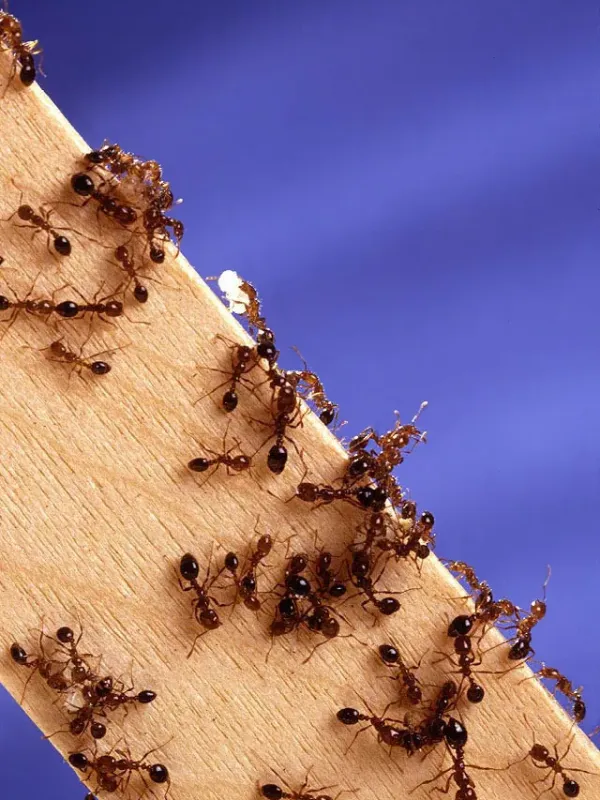
The fire ant (Solenopsis) belongs to the order Hymenoptera and the family Formicidae. These insects are small, typically ranging from 2 to 6 mm in length, and exhibit a reddish-brown or coppery coloration.
The most distinctive feature of this species is a venomous stinger located at the end of the abdomen. The venom contains solenopsin, an alkaloid that causes intense pain, burning, and itching in humans and animals.
They construct prominent soil mounds, which can reach up to 40 cm in height. Beneath these mounds lies a complex underground network of tunnels that allows the colony to thrive and expand rapidly.
Fire ants are highly aggressive. If their mound is disturbed, thousands of worker ants emerge simultaneously to attack the threat, demonstrating remarkable coordination and defense mechanisms.
As a highly invasive species, they reproduce through nuptial flights of queens. Once fertilized, the queen establishes a new colony, allowing the species to spread across vast agricultural regions quickly.
What it damages
Fire ants cause significant damage to a variety of agricultural crops, including vegetables, fruits, and grains. They frequently feed on germinating seeds, leading to sparse plant density and crop loss.
The workers chew through plant stems, roots, and fruits, particularly targeting succulent tissues rich in sugars and proteins, which often results in the wilting and eventual death of young seedlings.
A major agricultural threat is their symbiotic relationship with aphids and other sap-sucking insects. The ants protect these pests from natural predators, leading to massive infestations that devastate crop health.
By nesting directly in agricultural soil, fire ants disrupt the root systems of crops, interfering with nutrient and water uptake and causing severe stress to the growing plants.
In mechanized farming, the presence of numerous mounds creates significant obstacles, damaging harvesting equipment and posing a constant danger to farm workers during field operations.
Signs of infestation
The primary sign of infestation is the emergence of numerous earthen mounds across the field, often clustered near the base of cultural plants or along irrigation lines and garden paths.
Increased ant activity, combined with extreme aggression when the soil or vegetation is disturbed, is a clear indicator that the area has been colonized by fire ants.
A noticeable spike in aphid populations on leaves and stems occurs because the ants actively farm and protect these pests, fostering their survival and spread throughout the plantation.
Plants show clear signs of distress, such as sudden wilting, yellowing leaves due to root damage, or visible physical damage on fruits and stems caused by the ants' persistent feeding.
The occurrence of painful, itchy pustules on the skin of workers after tending to the crops is an unmistakable sign of the presence of this dangerous ant species in the environment.
Control measures
Mechanical destruction of mounds is largely ineffective as the colonies quickly rebuild, often relocating nearby. A strategic approach involving targeted chemical and biological tools is required.
The most effective method involves the use of slow-acting bait formulations. Worker ants carry the toxic bait back into the colony, ensuring the destruction of the queen and the entire nest.
In large-scale farming, approved insecticides applied as soil treatments or localized mound injections are utilized to manage heavy infestations and limit the expansion of the colony.
Biological control methods include the introduction of natural enemies, such as parasitic phorid flies, which specifically target fire ants and help suppress their population in the long term.
- Deployment of slow-acting granulated baits.
- Integrated pest management targeting sap-sucking insects.
- Consistent scouting for new mounds across the farm area.
- Application of biological fungicides based on Beauveria bassiana.
Taxonomy
- Latin name
- Solenopsis
- Order
- Hymenoptera
- Family
- Formicidae
- EPPO code
- SOLESP
Discussion
No discussions yet — be the first.