
Shepherd ant
Plagiolepis custodiens
Description
How to identify
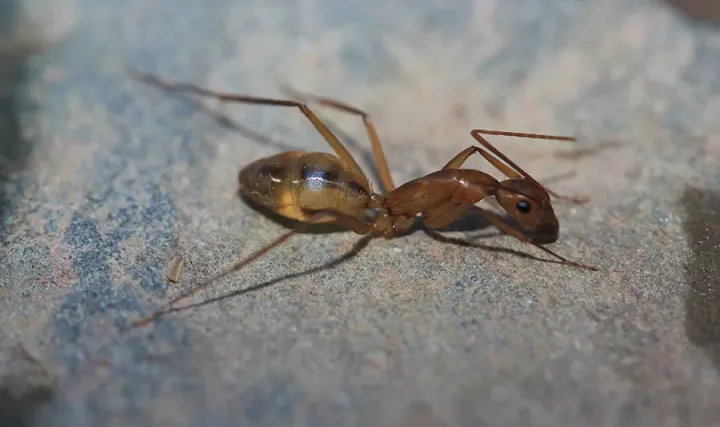
The shepherd ant (Plagiolepis custodiens) is a small but highly aggressive ant species native primarily to Southern African regions. Adult individuals are characterized by their brownish-black coloration and remarkable agility, allowing them to rapidly colonize agricultural environments.
Workers of this species possess a robust mouthpart structure, but their defining behavior is the complex social association with sap-sucking insects. Using the scientific name Plagiolepis custodiens is crucial for identifying these ants as primary protectors of honeydew-producing pests.
Nests of this species are frequently located in the soil directly at the base of trees or cultivated crops. They form large colonies with high populations of workers that constantly patrol the surrounding plant life.
The biology of this species is intrinsically linked to the maintenance of aphid populations. The ants provide protection against natural predators such as ladybirds and predatory bugs, effectively managing the pest population for their own gain.
Their life cycle is typical of the Formicinae subfamily, involving egg, larval, pupal, and adult stages. The queen's high fertility allows the colony to grow rapidly whenever there is a stable food source like honeydew available.
What it damages
The primary damage caused by Plagiolepis custodiens is an indirect impact on agricultural production. While they do not consume plant tissue directly, their behavior critically affects the health of vegetable and orchard crops.
The main targets include crops prone to aphid, mealybug, and scale insect infestations. This includes citrus trees, vineyards, ornamental shrubs, and various vegetable crops that suffer from sap exhaustion caused by these sucking insects.
Because the ants actively drive away predators that feed on aphids, the aphid population grows exponentially on the plant. This leads to stunted growth, leaf deformation, and a significant drop in the market quality of the harvest.
Additional damage arises from the accumulation of honeydew (secreted by aphids) on plant surfaces, which promotes the growth of sooty mold. This significantly impairs the photosynthetic efficiency of the leaves and the plant's overall development.
In severe cases, this ant-aphid symbiosis can lead to the death of young seedlings or the loss of substantial portions of the crop due to weakened plant immunity and the spread of viruses transmitted by the sucking insects.
Signs of infestation
The first sign of shepherd ant presence is the active movement of ant trails along tree trunks and plant stems. They move constantly between the nest and the aphid colonies, maintaining their symbiotic relationship.
Large aggregations of aphids on young shoots, buds, or the undersides of leaves are often accompanied by heightened ant activity. If aphids do not attempt to scatter when disturbed, it is a clear sign that they are under ant protection.
Sticky residue on leaves and branches is a byproduct of honeydew secretion. This stickiness attracts the ants, which patrol these areas even if the aphid population is currently low.
The appearance of a sooty, black mold layer on leaves signals a long-term presence of protected pests. This is a definitive marker that the plant's health has been compromised by the shepherd ant's activity.
Discovering nests at the base of stems or trunks confirms that the population is utilizing the plant as a dedicated feeding site. Excavations around these areas often reveal loose soil and signs of intensive insect movement.
Control measures
Controlling Plagiolepis custodiens requires a multifaceted approach, as eliminating only the ants does not solve the aphid infestation. The primary goal is to disrupt the symbiotic bond between the two insect species.
Applying sticky adhesive bands to tree trunks helps mechanically block ant access to the canopy. This leaves the aphid colonies unprotected, making them vulnerable to natural predators and biological control agents.
Using systemic insecticides to control sap-sucking pests indirectly reduces the ant population by removing their primary food source. It is vital to select products that minimize impact on beneficial pollinators.
The use of slow-acting bait stations, which the workers carry back to the nest, is effective for eradicating the queen and the entire colony. This is often the most successful strategy for radical pest management.
Agricultural practices, including regular tilling of the soil around base areas and weed management, disrupt nest architecture and force the ants to relocate, significantly reducing the stress placed on cultivated plants.
Taxonomy
- Latin name
- Plagiolepis custodiens
- Order
- Hymenoptera
- Family
- Formicidae
- EPPO code
- PLGLCU
Discussion
No discussions yet — be the first.