
Pheidole variabilis ant
Pheidole variabilis
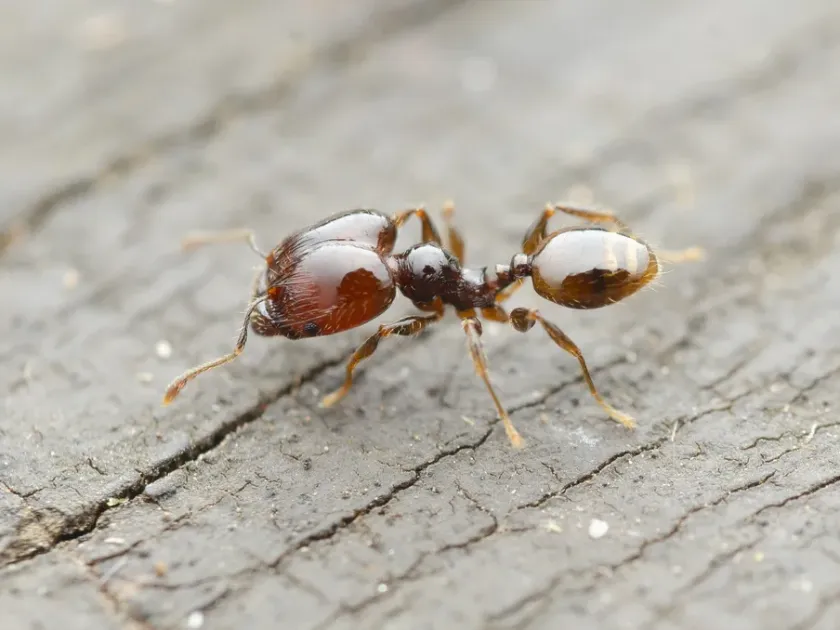
Description
How to identify
The Pheidole variabilis ant belongs to the Formicidae family within the Hymenoptera order. This species is well-known for its significant polymorphism, featuring distinct worker and soldier castes with varied anatomical characteristics.
The coloration of these ants ranges from ocher to reddish-brown. A key visual identifier for this species is the soldier caste, which possesses a disproportionately large head and powerful mandibles, making them easy to distinguish in the field.
They typically construct their nests in the soil, preferring areas with moderate moisture levels which are essential for the development of their brood. The architecture of their nests can be quite extensive.
The colony operates with high social organization, utilizing complex pheromone trails to coordinate foraging efforts. This efficiency makes them very competitive against other local ant species.
While they play a vital role in natural ecosystems by cycling nutrients, their presence in agricultural landscapes often necessitates intervention due to their behavior as crop pests.
What it damages
The primary agricultural damage caused by Pheidole variabilis is their mutualistic relationship with sap-sucking pests like aphids and mealybugs. The ants actively protect these pests from predators, leading to population explosions.
As a result, crops suffer from significant foliage damage, distorted growth, and reduced yield due to the unchecked feeding of the aphids protected by the ants.
In addition to these symbiotic interactions, these ants are known to damage seeds directly by consuming their contents after sowing, leading to poor crop stands and economic loss.
Young seedlings are also vulnerable to attack, as the ants may chew through the stems at the soil level, causing the plant to wilt and eventually die prematurely.
The extensive burrowing activity in the root zone can also disrupt soil structure, leading to localized drying and nutrient stress for the plants during critical growth stages.
When it appears
The activity of Pheidole variabilis begins in the spring when soil temperatures reach levels that allow for foraging. This is the period when they start establishing new foraging trails.
The peak of their activity occurs during the summer months. High temperatures and abundant vegetation provide the perfect conditions for colony expansion and increased aphid protection.
As autumn approaches, the ants gradually decrease their surface activity and retreat deeper into the soil profile to enter a state of dormancy during the colder months.
In irrigated farming systems, where soil moisture remains consistent, the activity period can be significantly extended, allowing for continuous population growth.
Seasonal migration between fields is common as they scout for new food sources, especially when aphid populations on current host plants start to decline.
Signs of infestation
The presence of well-defined ant trails moving across soil surfaces and climbing up plant stems is the most obvious indicator of a Pheidole variabilis infestation.
Heavy aphid clusters on leaves, stems, or fruits that are constantly being attended by ants strongly suggest a symbiotic relationship requiring immediate pest management.
Small mounds of soil around the base of plants or near the nest entrances are clear physical signs that a colony is established in close proximity to the crop.
Patchy crop emergence or seedlings that have been cleanly cut off near the soil line are indicative of seed predation or direct damage by these foraging ants.
Sticky honeydew residues found on leaves are a secondary sign, as this substance is a direct result of aphid feeding and is the primary attractant for the ants.
Control measures
The most effective strategy involves the use of specialized slow-acting insecticide baits, which the workers carry back to the colony to eliminate the queen and the brood.
Cultural practices like regular deep cultivation of soil between rows help to physically destroy nests and disrupt the ants' established foraging pathways.
Managing the aphid population is essential; by using systemic insecticides to control sap-sucking pests, the ants are deprived of their primary food source, often forcing them to move elsewhere.
Barrier methods, such as adhesive bands placed around tree trunks, provide effective protection for fruit trees by preventing the ants from reaching the canopy.
Proactive monitoring of fields allows for the detection of colonies at an early stage, which makes localized control efforts much more efficient and environmentally friendly.
Taxonomy
- Latin name
- Pheidole variabilis
- Order
- Hymenoptera
- Family
- Formicidae
- EPPO code
- PHEIVA
Discussion
No discussions yet — be the first.