
Sculptured harvester ant
Pheidole sculpturata
Description
How to identify
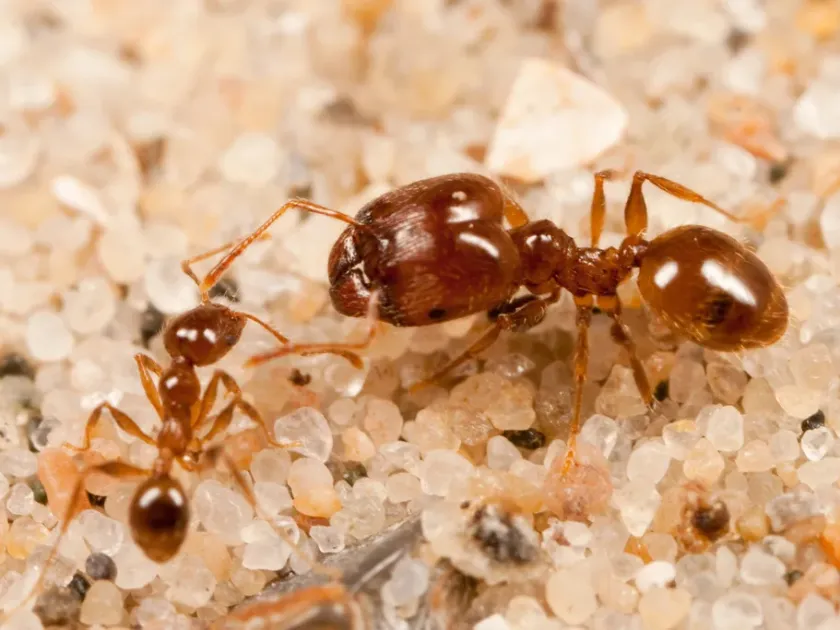
The sculptured harvester ant (Pheidole sculpturata) is a species of ant belonging to the family Formicidae. It is characterized by a strong physical polymorphism, featuring distinct worker and soldier castes with large, powerful heads.
The name comes from the distinct, sculptured, and deeply pitted texture on the head and thorax of these insects. Their coloration typically ranges from reddish-brown to dark brown, with a body covered in sparse hairs.
Workers and soldiers generally measure between 3 and 5 mm in length. A key diagnostic feature is their mandibles, which are evolved for the efficient harvesting, carrying, and processing of seeds.
Their nests are commonly constructed in dry, well-drained soils, often near plant roots or field edges. The entrance to the colony is typically marked by a small crater of excavated soil.
Their biology is centered around foraging for seeds, which they store in underground chambers. This behavior makes them a significant agricultural pest, especially when they target cultivated seeds.
What it damages
The primary damage caused by harvester ants is the intensive gathering of seeds, which leads to poor crop establishment and reduced plant density during the germination phase.
They damage a wide variety of crops, with grain, legume, and vegetable seeds sown directly into the soil being the most vulnerable to their foraging activities.
Beyond seed loss, the ants' digging activities around roots can damage the root systems of young seedlings, causing them to wilt or suffer from stunted growth.
Economic losses occur due to the need for replanting, increased labor costs, and reduced final yields when large numbers of seeds are removed from the soil before germination.
They may also indirectly damage crops by tending to aphid colonies, protecting them from predators in exchange for honeydew, which spreads plant viruses and weakens the host plants.
When it appears
Activity typically begins in early spring as soil temperatures rise, coinciding with the prime planting season for many crops, making seedlings highly susceptible.
The period of greatest infestation occurs during warm and dry spells, when the ants maximize their forage efforts to build up food reserves for the colony.
The life cycle includes the rearing of brood, which depends heavily on the consistent supply of seeds and other proteins brought into the nest by workers.
Preparation for winter dormancy usually begins in late summer, with ants moving deeper into the soil profile where temperatures remain stable and protected.
In warmer climates, these ants can remain active throughout most of the year, necessitating vigilant monitoring during all phases of crop development.
Signs of infestation
A primary indicator of infestation is the presence of well-defined ant trails leading from nest entrances directly to sown rows or germination patches.
Around the nest entrance, growers can often find discarded plant debris, husks, and partial seed hulls, which are left behind after the ants process their harvest.
Patches of missing plants in the field or hollowed-out planting sites are clear signs that the seeds were stolen or consumed before they could emerge.
Excavation of nest sites reveals complex underground galleries containing significant amounts of stored seeds from various cultivated and wild plants.
- Development of aphid colonies on crops near ant mounds.
- Sudden wilting of seedlings without apparent disease symptoms.
- Observation of worker ants carrying seeds back to the colony site.
Control measures
Managing the sculptured harvester ant requires an integrated approach that combines chemical baiting with mechanical soil management techniques.
Using targeted bait stations containing slow-acting insecticides is highly effective, as the workers carry the poisoned food back to the queen and the rest of the colony.
Applying contact or systemic insecticides in areas of high ant activity can provide immediate relief to newly sown crops, preventing large-scale seed loss.
Mechanical control involves deep plowing or frequent tillage of the soil, which disrupts the integrity of the nest and discourages the colony from remaining in the field.
Maintaining soil moisture through proper irrigation can make the environment less desirable for these ants, as they favor dry, easy-to-excavate substrates for their colonies.
Taxonomy
- Latin name
- Pheidole sculpturata
- Order
- Hymenoptera
- Family
- Formicidae
- EPPO code
- PHEISC
Discussion
No discussions yet — be the first.