
Pheidole punctulata
Pheidole punctulata
Description
How to identify
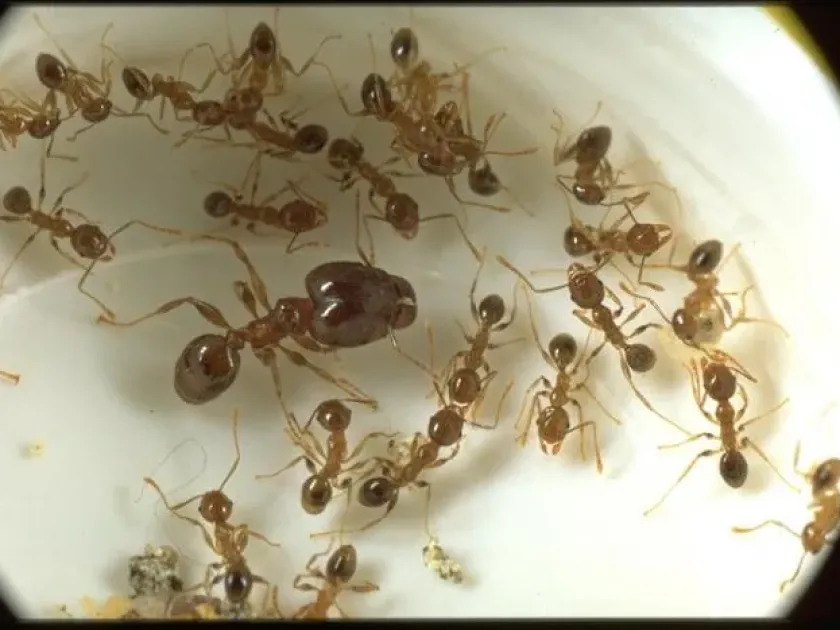
Pheidole punctulata belongs to the order Hymenoptera, family Formicidae. This species is characterized by a strong morphological caste system, where workers are divided into minor workers and larger soldiers with disproportionately large heads.
The body color ranges from yellowish-brown to dark brown, and the cuticle exhibits a distinct punctate (pitted) texture, which gives the species its scientific name. Antennae are 12-segmented, ending in a prominent three-segmented club.
Nests are typically constructed in the soil, often situated beneath stones, plant debris, or around the base of crops. These ants are known for forming polygynous colonies, meaning multiple queens exist within a single nest, leading to rapid expansion.
Workers are highly active foragers, creating well-defined trails to navigate across fields. They rely on these trails to connect nesting sites with food sources, often utilizing natural cover to protect themselves from predators.
The development cycle consists of egg, larva, pupa, and adult stages. Under favorable temperature and humidity conditions, the colony maintains continuous breeding activity, which can lead to significant infestations within a single growing season.
What it damages
The primary economic damage caused by Pheidole punctulata is indirect, stemming from their mutualistic relationship with sap-sucking insects like aphids, mealybugs, and scale insects. Ants actively protect these pests from natural predators.
This protection leads to massive outbreaks of aphids on crops, resulting in leaf curling, stunted shoot growth, and severe plant stress. This significantly impacts yield quality and overall crop productivity.
Ants also frequently damage germinating seeds by consuming the endosperm, leading to poor emergence. Furthermore, in greenhouse settings, they may disturb the soil around seedlings, damaging root systems and causing plant wilting.
The honeydew excreted by the protected aphids acts as a substrate for sooty mold fungi. These fungi cover leaves and fruits, severely inhibiting photosynthesis and reducing the market value of the produce.
High infestation levels are particularly problematic for citrus groves, coffee plantations, and various vegetable crops. The presence of these ants also complicates integrated pest management (IPM) by hindering biological control agents.
Control measures
The most effective strategy involves using toxic bait stations containing slow-acting insecticides. Workers carry the bait back to the nest, ensuring the destruction of the queens and the eventual collapse of the entire colony.
Managing sap-sucking insect populations is critical. By eliminating aphids and mealybugs through systemic insecticides or biological controls, the primary food source for the ants is removed, forcing them to relocate.
Physical barriers, such as sticky bands applied to tree trunks, are highly effective in preventing ants from accessing the canopy and protecting their livestock of aphids.
Cultural control practices, such as regular soil cultivation and weeding, disrupt nesting sites and destroy established ant trails. Keeping fields free of weeds prevents the ants from maintaining reservoir populations.
- Application of specialized gel baits.
- Use of physical sticky barriers on tree trunks.
- Systematic management of honeydew-producing pests.
- Frequent soil disturbance to disrupt nest structure.
Taxonomy
- Latin name
- Pheidole punctulata
- Order
- Hymenoptera
- Family
- Formicidae
- EPPO code
- PHEIPU
Discussion
No discussions yet — be the first.