
Pheidole pallidula
Pheidole pallidula
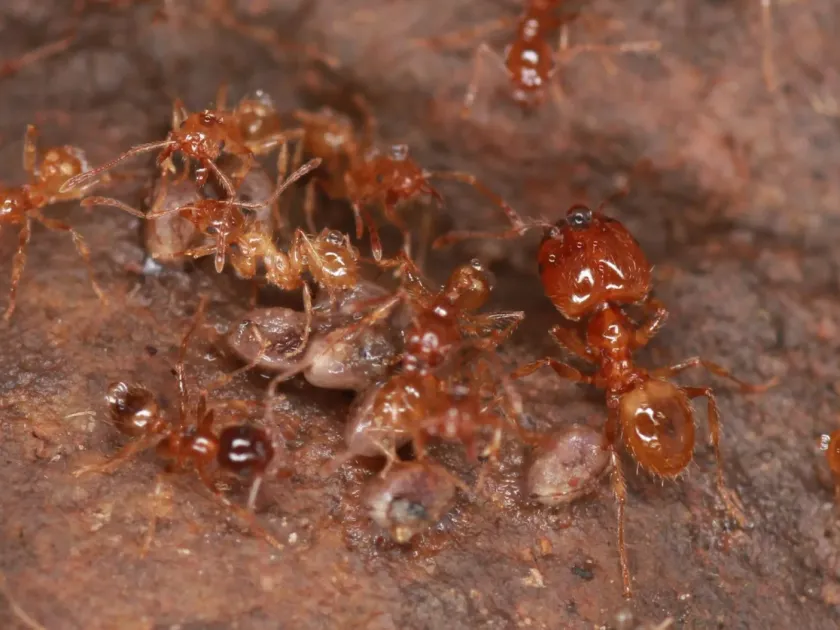
Description
How to identify
Pheidole pallidula is a small ant species belonging to the family Formicidae. This species is well-known for its pronounced polymorphism, featuring both small minor workers and larger major workers (soldiers) with disproportionately large, powerful heads.
The body color ranges from yellowish-brown to dark brown. A distinctive morphological feature of this genus is the two-segmented petiole between the thorax and abdomen, combined with strong mandibles designed for seed crushing.
These ants typically build their nests in the soil, favoring dry, sunny, and undisturbed areas. The nest entrance is usually a small, clear hole often surrounded by a crater of excavated soil or sand particles.
The life cycle follows a complete metamorphosis: egg, larva, pupa, and adult. They are known for polygyny, meaning a colony can have multiple queens, which allows for extremely rapid population growth and expansion under favorable conditions.
They are primarily active during warmer months. In Mediterranean climates, they can maintain activity throughout most of the year, often moving deeper into the soil profile during extreme drought or heat to maintain moisture balance.
What it damages
The primary agricultural damage caused by Pheidole pallidula is the harvesting and consumption of seeds. By collecting seeds of cereals and vegetables from the soil, they reduce seedling density and overall crop yields.
These ants may also damage young seedlings by gnawing on the stem base. This action often leads to the wilting and eventual death of young plants during the critical germination phase, causing significant patchiness in agricultural fields.
Pheidole pallidula ants are notorious for protecting honeydew-producing insects such as aphids and mealybugs. By defending these pests from natural predators, the ants indirectly exacerbate the damage caused by sap-sucking insects to the host crops.
Extensive tunneling activity in the root zone disrupts the soil structure and exposes delicate root hairs to air, negatively affecting plant nutrition and water uptake. This can result in stunted growth and increased susceptibility to diseases.
In orchard settings, these ants have been observed feeding on ripe fruit with high sugar content, causing superficial damage that invites secondary pathogens, fungal decay, and rot, which compromises the marketability of the harvest.
Signs of infestation
The most visible sign of an infestation is the presence of small, neatly formed soil mounds surrounding nest entrances throughout the field or garden. These craters are particularly conspicuous after light rain or irrigation.
Forager trails are another key indicator. You may observe distinct lines of ants traveling between the nest and a food source. If workers are seen carrying seeds or plant fragments, the infestation is confirmed.
Patchy or uneven germination of crops despite optimal sowing conditions is a strong sign of seed-harvesting ants. Digging around missing seedlings often reveals empty seed hulls discarded by the ants near the nest entrance.
A heavy infestation of aphids on plant stems, accompanied by constant ant traffic, confirms a mutualistic relationship. If natural predators of aphids are absent despite high aphid populations, ant interference is highly likely.
Yellowing of leaves and signs of drought stress in plants that are otherwise well-irrigated may indicate root system disturbance due to ant tunneling activity directly beneath the plant’s root crown.
Control measures
The most effective strategy involves using delayed-action toxic baits. Worker ants carry the bait back to the nest, sharing it with the queens and larvae, which leads to the total collapse of the colony from within.
Cultural control measures, such as frequent soil cultivation and tilling, physically destroy nest galleries and disrupt the colony's foraging structure, forcing the ants to abandon the site.
Contact insecticides can be applied directly to nest entrances during periods of peak foraging activity. However, this method is usually less effective than baits for deep-nesting species and requires careful timing to be successful.
Exclusion methods, such as applying sticky barriers or diatomaceous earth around the base of trees and crops, can prevent foragers from reaching the canopy and protecting honeydew-producing insects.
Integrated pest management focusing on the reduction of aphid and mealybug populations effectively limits the ants' food source, making the environment less hospitable and encouraging them to migrate elsewhere.
Taxonomy
- Latin name
- Pheidole pallidula
- Order
- Hymenoptera
- Family
- Formicidae
- EPPO code
- PHEIPA
Discussion
No discussions yet — be the first.