
Big-headed ant
Pheidole megacephala
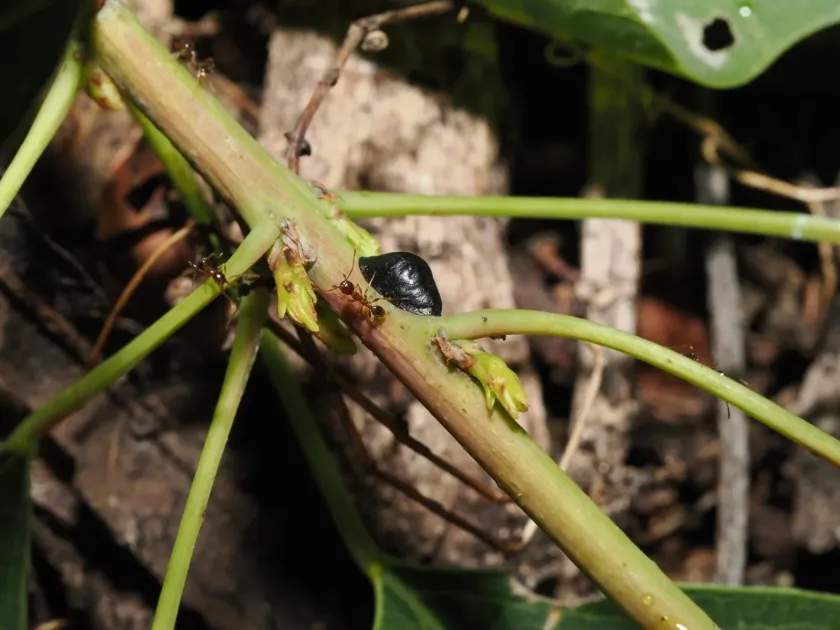
Description
How to identify
The big-headed ant (Pheidole megacephala) is a species of the family Formicidae, known for its polymorphic worker caste, which includes both minor workers and larger soldiers.
The species is easily recognized by the soldiers, which have disproportionately large, heart-shaped heads. Their body coloration ranges from yellowish-brown to dark brown.
Measuring about 2–3 mm in length, these ants are highly aggressive and are recognized as one of the world's most invasive ant species, frequently displacing native fauna.
They establish extensive colonies in the soil, often under debris, rocks, or near the base of plants, creating interconnected subterranean tunnels that span large areas.
Reproduction is rapid, and the species is capable of establishing supercolonies, especially in warm, humid climates where they thrive throughout the year.
What it damages
Big-headed ants cause significant indirect damage by tending and protecting sap-sucking insects like aphids, mealybugs, and scale insects from their natural predators.
By protecting these honeydew-secreting pests, the ants facilitate their population explosion, leading to stunted plant growth, leaf curling, and the spread of plant diseases.
A wide range of crops is affected, including coffee, citrus, macadamia, and various ornamental plants, leading to substantial economic losses in plantations and nurseries.
Direct damage occurs when these ants construct nests in the root zones of young plants, causing root disturbance and dehydration, which often leads to the death of the crop.
Their presence disrupts the natural balance in orchards, making biological pest control ineffective and forcing farmers to rely on chemical interventions.
Signs of infestation
A primary sign of infestation is the dense aggregation of aphids or mealybugs on leaves and shoots, with ants visibly swarming around them for protection.
The presence of distinct ant trails along tree trunks, stems, or soil surfaces clearly indicates a nearby colony and their established foraging routes.
Sticky honeydew residues on leaves, often accompanied by black sooty mold growth, are classic symptoms of the sap-sucking pests that these ants manage.
Small, loose piles of soil scattered around the bases of plants or along garden beds are typical entrance mounds to their underground tunnel systems.
High ant activity around plant roots or garden borders, combined with the absence of other ant species, often suggests that Pheidole megacephala has taken over the area.
Control measures
The most effective strategy involves the use of slow-acting toxic baits, which are collected by workers and carried back to the nest to eliminate the queens.
Applying non-drying sticky barriers or pesticide-treated bands around tree trunks prevents ants from climbing into the canopy to protect aphid colonies.
Controlling the honeydew-producing pests (aphids and scale) using systemic insecticides is essential to cut off the ants' food supply and discourage their presence.
Maintaining a clean cultivation environment by removing debris, wood piles, and weeds reduces the availability of suitable nesting sites for the ants.
Integrated pest management (IPM) practices, including regular monitoring and spot treatments, are recommended to maintain low population levels and prevent colony expansion.
Taxonomy
- Latin name
- Pheidole megacephala
- Order
- Hymenoptera
- Family
- Formicidae
- EPPO code
- PHEIME
Discussion
No discussions yet — be the first.