
Pheidole ant
Pheidole fervens
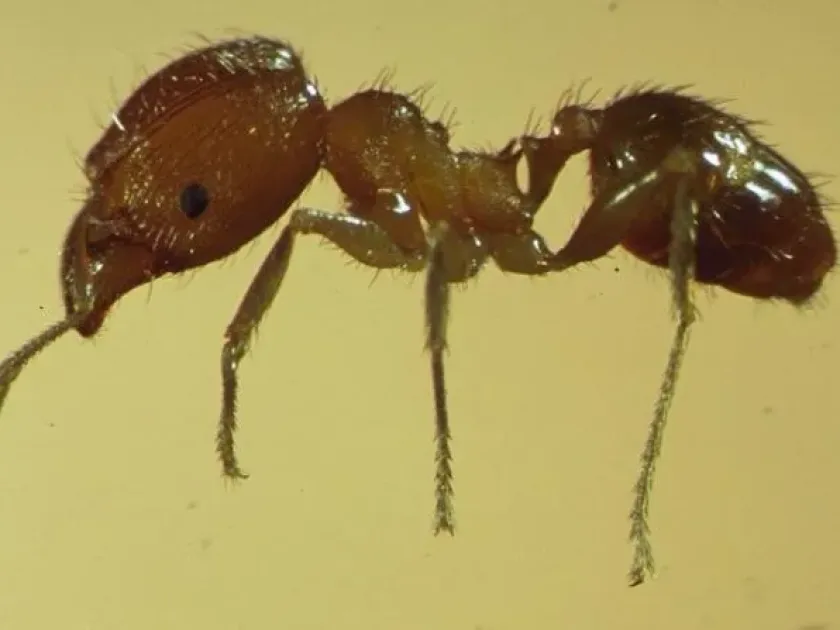
Description
How to identify
The Pheidole ant (Pheidole fervens) belongs to the Formicidae family (order Hymenoptera). This species is well-known for its distinct caste system, featuring both workers and soldier ants.
Soldier ants are easily recognizable by their disproportionately large heads, which they use for defense and processing food. Their body color typically ranges from yellow-brown to dark reddish-brown.
These ants build their nests primarily in the soil, often located under rocks, wood, or near the root systems of various plants. Their colonies can become quite populous over time.
They are highly active foragers, constantly searching for food sources. Their biological structure allows them to recruit large numbers of workers rapidly to exploit resources.
The development cycle follows the standard stages of egg, larva, pupa, and adult. The speed of colony growth is highly dependent on environmental humidity and temperature.
What it damages
The primary agricultural threat posed by Pheidole fervens is their symbiotic relationship with sap-sucking insects such as aphids, scales, and mealybugs.
By protecting these insects from natural predators, the ants facilitate massive outbreaks of pests, which damage plants by draining nutrients and transmitting viral diseases.
Vegetable crops, fruit trees, and ornamental plants are all at risk. Young seedlings are particularly vulnerable, as aphids clustered on tender shoots can cause significant stunting.
In greenhouses, these ants can physically disrupt the soil around roots and act as vectors for harmful microorganisms, spreading them across the planting area.
The economic impact is manifested through reduced yields, damaged foliage, and the increased labor and chemical costs required to manage the secondary pest infestations.
When it appears
Activity usually begins in early spring as soil temperatures rise. Their peak foraging activity is observed during the summer months when food resources are most abundant.
During the warmer seasons, the colonies expand rapidly. Winged reproductive individuals (alates) may emerge at certain times of the year to start new colonies.
Activity levels taper off as autumn approaches, though they may remain active year-round in temperature-controlled environments like greenhouses or heated structures.
Winter survival is achieved by nesting deep within the soil where temperatures remain relatively stable, allowing the colony to endure colder climates.
Proactive monitoring in early spring is essential to curb the growth of the population before they establish strong connections with aphid colonies on your plants.
Signs of infestation
The presence of large aphid or scale populations on young leaves and shoots is the most common indicator. If you see active ant trails leading to these pests, they are likely Pheidole ants.
Sticky honeydew secretions on the surface of leaves are a clear sign of aphid activity, which is usually maintained and defended by the ants.
Small mounds of disturbed soil or circular holes near the base of stems indicate the location of their nesting sites in the garden.
Deformed, curled, or yellowing leaves indicate that plants are under stress from heavy aphid feeding, supported by the protective presence of ants.
During dry weather, you may notice ants moving in clear lines along paths or stems as they navigate to and from their primary food sources.
Control measures
Successful control requires a multi-faceted approach. Targeted use of slow-acting bait stations is often the most effective way to eliminate the entire colony, including the queen.
Direct chemical application is often ineffective because it only kills the worker ants visible on the surface. Baits, however, are carried back to the nest to poison the queen.
Installing sticky barrier bands on fruit trees prevents ants from climbing up, successfully isolating the aphids from their protectors.
Managing the aphid population itself is crucial; without their "livestock," the ants will often abandon the plant or become less of an issue.
- Deploy gel or granular ant baits for colony elimination.
- Use sticky tree bands to block access to the canopy.
- Control sap-sucking insects with systemic insecticides.
- Regularly till the soil near nest sites to disrupt tunnels.
- Keep the area clean by removing excessive plant debris.
Taxonomy
- Latin name
- Pheidole fervens
- Order
- Hymenoptera
- Family
- Formicidae
- EPPO code
- PHEIFE
Discussion
No discussions yet — be the first.