
Bicarinata soldier ant
Pheidole bicarinata
Description
How to identify
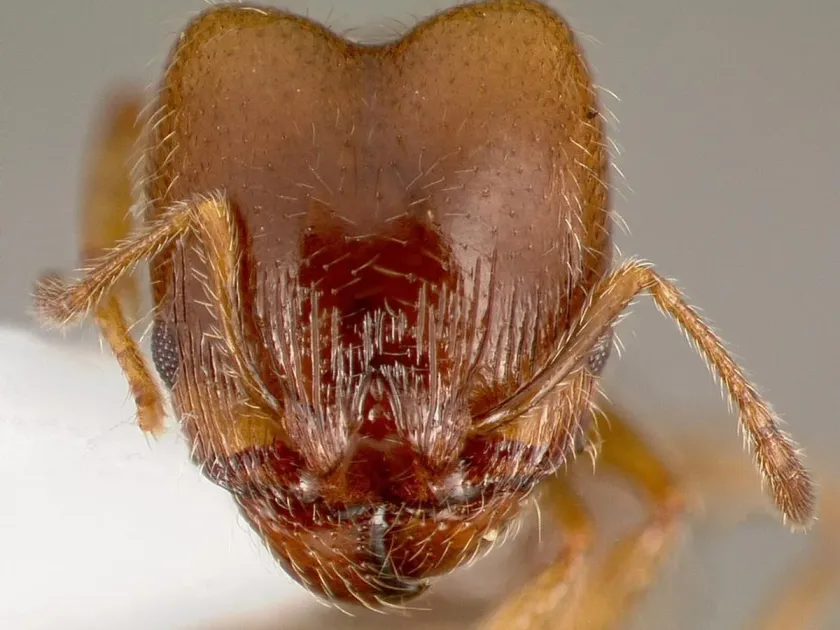
The Bicarinata soldier ant Pheidole bicarinata belongs to the Formicidae family, order Hymenoptera. This species is characterized by distinct polymorphism, where the soldier caste possesses a disproportionately large head with powerful mandibles.
Worker ants of this species typically exhibit yellowish-brown to reddish coloration. Their bodies are covered with fine hairs, and a key diagnostic feature is the presence of two distinct keels on the occipital portion of the head, reflected in their scientific name.
Body size generally ranges from 2 to 4 millimeters. The soldier caste is notably larger than the workers, allowing them to perform critical functions such as colony defense and processing hard food sources, including various plant seeds.
Nests are predominantly subterranean, often located in protected areas under stones, logs, or in loose, dry soil. They are known for constructing intricate tunnel systems beneath the surface.
Taxonomy of this species requires careful microscopic examination, as Pheidole is considered one of the most diverse and taxonomically challenging genera of ants globally.
What it damages
The primary agricultural damage is caused by the collection of seeds directly from the soil shortly after planting. Ants actively forage for grain and other crop seeds, transporting them back to their nests for food storage.
These pests cause significant damage to vegetable seedlings by feeding on tender stem tissues and root systems during the germination stage, often resulting in sparse stands and reduced yields.
Indirect damage occurs through the protection and dissemination of aphids and other sucking insects. The ants guard these pests from natural predators to feed on the honeydew they produce, which triggers outbreaks of sap-sucking pests.
In greenhouse settings, ant activity can compromise soil structure around plant roots, potentially leading to desiccation of the root system in pots or containers.
- Corn and cereal grains
- Small-seeded vegetable crops
- Flower seedlings
- Containerized and greenhouse plants
When it appears
The activity level of Pheidole bicarinata is directly linked to soil temperature and moisture levels. Peak foraging activity occurs during the spring and summer months when colonies are most actively reproducing.
The highest risk to crops occurs during the critical window of seed germination. The scent of germinating seeds and the availability of starches attract foraging workers to newly sown fields.
During the summer, colonies may migrate toward water sources or aphid colonies located on fruit trees or shrubs, effectively expanding their foraging range across the property.
As autumn temperatures drop, activity decreases significantly as colonies move deeper into the soil for overwintering, ceasing surface foraging and seed collection.
In climate-controlled greenhouses, however, the activity cycle can persist throughout the year, necessitating continuous monitoring of the growing substrate for ant colonization.
Signs of infestation
Initial signs of an infestation include the appearance of characteristic soil mounds around nest entrances, which are often found directly within garden beds or in close proximity.
A sudden increase in ant traffic on plant stems is a tell-tale sign, especially if colonies of aphids or scale insects are present on the host plants.
Field inspections may reveal localized patches of missing seedlings, where plants have been destroyed at the root level, often accompanied by visible ant activity near the remains of the seeds.
Finding specific damage, such as hollowed-out seeds extracted from the topsoil, provides clear evidence of seed-harvester ant activity in the area.
In greenhouse environments, signs include soil settling within containers and damage to fine, young rootlets, leading to plant wilting despite adequate watering.
Control measures
The use of slow-acting toxic baits is highly effective, as foraging ants transport the bait back to the nest, resulting in the elimination of the entire colony, including the queen.
Cultural control methods involve deep soil cultivation to disrupt nesting galleries, combined with regular irrigation, which creates unfavorable conditions for colony maintenance.
Managing aphid populations is essential. Removing the source of honeydew renders the area significantly less attractive for colonization by this ant species.
Applying barrier treatments, such as sticky bands on tree trunks or perimeter dusting with approved insecticides, helps restrict the movement of ants into sensitive crop areas.
In commercial plant production, specialized insecticides containing fipronil or other registered active ingredients are used according to regional agricultural safety regulations.
Taxonomy
- Latin name
- Pheidole bicarinata
- Order
- Hymenoptera
- Family
- Formicidae
- EPPO code
- PHEIBL
Discussion
No discussions yet — be the first.