
Pheidole harvester ants
Pheidole
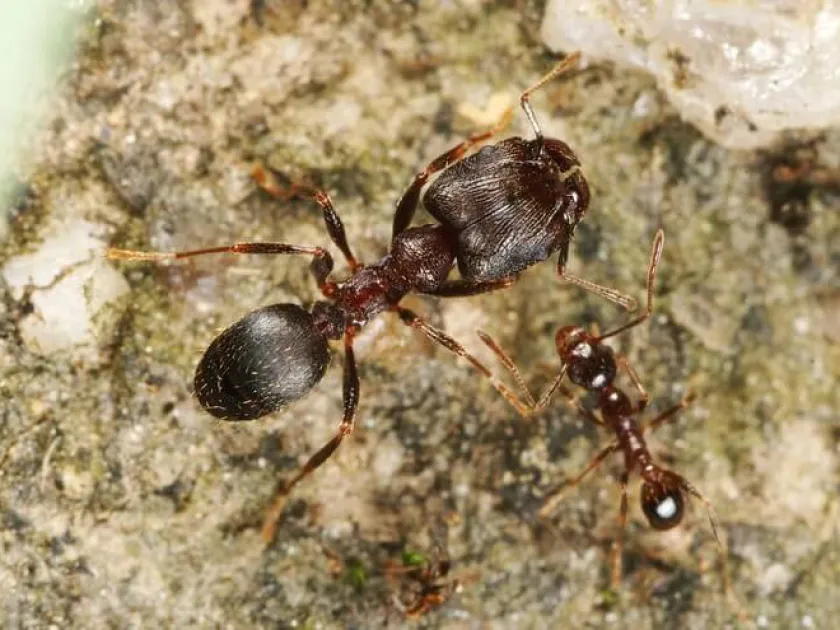
Description
How to identify
The genus Pheidole belongs to the family Formicidae and the order Hymenoptera. These ants are known for being dimorphic, meaning their colonies consist of distinct physical castes, including large-headed «soldiers» and smaller «minor workers».
They are identifiable by the presence of a two-segmented waist (pedicel) and prominent spines on the thorax. Their color ranges from light yellow-brown to deep dark brown, with sizes typically ranging from 2 to 5 millimeters.
Pheidole ants primarily nest in the ground, often choosing locations near roots or under natural shelters like stones and woody debris. They are well-adapted to various soil types and thrive in environments with sufficient moisture.
Their biological success is linked to their specialized mouthparts, which allow them to process tough seeds and plant matter. This behavior makes them significant competitors for resources within agricultural fields.
The colony structure is highly organized, centered around a queen that ensures continuous reproduction. The development cycle includes egg, larval, pupal, and adult stages, with workers strictly divided by their specific roles in colony maintenance.
What it damages
The primary economic damage caused by Pheidole is the theft of seeds. During the planting season, these ants actively forage and carry away seeds, leading to sparse plant stands and requiring costly re-sowing of fields.
Beyond seed consumption, Pheidole ants act as mutualists for honeydew-secreting insects like aphids. By protecting aphid colonies from natural predators, they cause rapid pest outbreaks, leading to plant stunting and viral transmission.
Subterranean activities, such as tunnel building around root zones, can cause significant damage to seedlings. The disruption of soil structure creates air pockets, leading to root drying and preventing proper nutrient uptake.
In cases of high infestation, Pheidole ants can damage ripening fruits that touch the ground. These feeding marks create entry points for secondary pathogens and fungi, drastically reducing the quality and shelf-life of the harvest.
Persistent colony presence on a farm creates localized patches of crop failure. This reduction in density directly correlates to lower total field yields and increased operational expenses for pest management.
When it appears
Ant activity typically begins in early spring as soil temperatures climb above +12...+15°C. This period is critical as the ants forage aggressively to support the rapid growth of the spring brood.
The peak of their harmful activity corresponds with the primary sowing period. Since seeds remain in the upper soil layers for several days, they are highly accessible to harvester ants, which can detect them through chemical cues.
Summer months are characterized by the expansion of existing nests and constant surveillance of aphid populations on crops. The ants remain active during the entire growing season to secure food supplies.
Autumn brings a shift in activity as the colony prepares for overwintering. They stockpile energy reserves, which again increases foraging intensity on available seeds or plant matter before the first frosts.
Winter induces diapause, where the colony moves deep into the soil profile to stay below the frost line. Activity remains minimal until the cycle repeats with the arrival of spring warmth.
Signs of infestation
A primary sign of Pheidole presence is the appearance of small soil mounds (nests) near crop rows. Around these entrances, one can often find piles of empty seed husks or plant debris.
Visual identification of ant trails leading from the nests toward crops or aphid-infested plants is a strong indicator of their presence. These trails are usually well-established and heavily traveled during daylight hours.
The unexpected persistence of aphids on plant tips, even when predators like ladybugs are present nearby, often suggests that ants are actively shielding the aphids from natural enemies.
Wilting and yellowing of young seedlings can indicate root disturbance. Upon closer inspection, one may find that the soil around the base is loose or hollowed out, which is a classic sign of ant nest construction.
In sandy or loose soils, small craters or localized depressions around plant stems reveal the intensity of their digging efforts. This loss of soil contact severely weakens the stability of the plant.
Control measures
The most effective management strategy involves the use of specialized bait treatments. These baits are designed to be gathered by workers and carried deep into the nest, ultimately eliminating the queen and collapsing the colony.
Soil-applied insecticides, such as fipronil or diazinon, can be used at planting to establish a chemical barrier around the seed furrow, effectively protecting seeds and young roots from foraging damage.
Regular mechanical cultivation of the soil is an effective way to disrupt ant tunnels and force the colony to relocate. This process prevents the establishment of deep, long-term nesting sites in fields.
Controlling aphid populations with systemic insecticides indirectly manages Pheidole colonies by removing their primary carbohydrate source, making the crops less attractive for ant patrolling.
- Application of biological control agents like Beauveria bassiana to infect and control ant populations.
- Implementation of physical barriers or sticky bands around trees/stalks where possible to block access to aphid-infested areas.
- Maintaining optimal irrigation to prevent excessive soil dryness, which is favored by many harvester species for nesting.
Taxonomy
- Latin name
- Pheidole
- Order
- Hymenoptera
- Family
- Formicidae
- EPPO code
- PHEISP
Discussion
No discussions yet — be the first.