
Paratrechina ant
Paratrechina
Description
How to identify
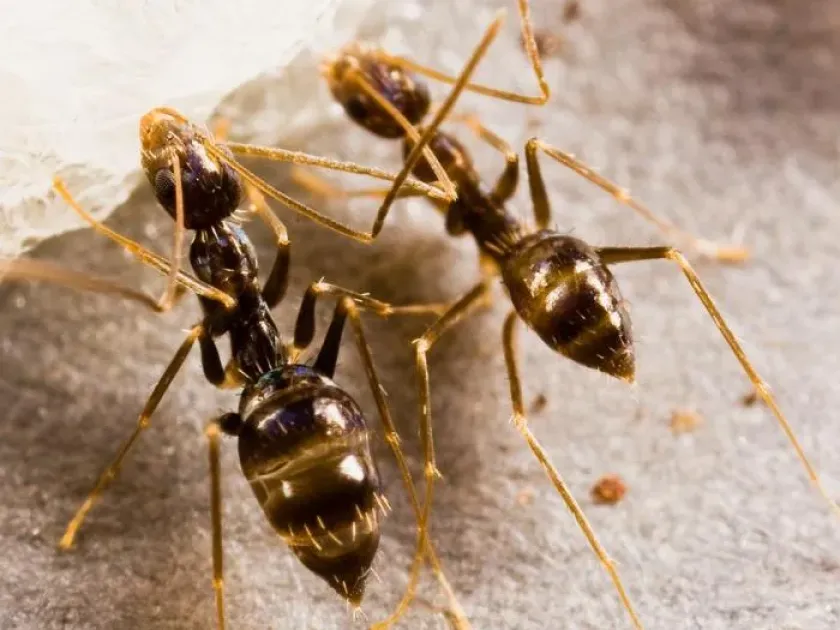
The Paratrechina genus belongs to the Formicidae family (order Hymenoptera). These are small ants, usually dark brown or black in color, known for their quick movements.
A key identifying feature is the presence of long, coarse, standing hairs on their body and limbs, which are often visible under moderate magnification.
Their antennae consist of twelve segments and lack a distinct club at the tip. The body structure exhibits a characteristic propodeum, which is essential for accurate taxonomy.
Unlike some mound-building species, many Paratrechina ants prefer nesting in soil, decaying wood, or under natural debris found in gardens and greenhouses.
With worker sizes typically ranging from 2 to 3 millimeters, they are easily overlooked until the population reaches a significant level.
What it damages
While these ants do not consume plant tissue directly, they act as primary protectors of honeydew-producing insects such as aphids, scales, and mealybugs.
By tending these pests and defending them against predators, the ants facilitate massive outbreaks of sap-sucking insects that debilitate host plants.
As a result, plants suffer from stunted growth, leaf deformation, and yellowing, often leading to a significant loss in crop yield and quality.
Furthermore, their nesting activity in the root zone can cause mechanical damage to seedlings, occasionally disrupting nutrient and water uptake.
The excessive honeydew secretion left on leaves promotes the growth of sooty mold, which inhibits photosynthesis and reduces the overall vigor of the affected plants.
When it appears
Activity generally begins in early spring as soil temperatures rise, prompting the workers to emerge from their overwintering sites in the soil.
Peak population activity is typically observed during the mid-summer months when weather conditions are optimal for both the ants and their aphid colonies.
Nuptial flights, which lead to the establishment of new colonies, often occur during warm, humid weather, facilitating rapid spread across the field or garden.
As autumn approaches, activity levels decline as the colony retreats deeper into the soil to prepare for the winter period.
In greenhouses and climate-controlled indoor environments, they may maintain active foraging behavior throughout the entire year, posing a constant threat.
Signs of infestation
The most reliable sign of an infestation is the observation of persistent ant trails leading directly to plants infested with aphids or scales.
A high density of small black ants on stems, buds, or the underside of leaves indicates that they are actively farming and protecting sap-sucking pests.
The presence of sticky honeydew residue or black sooty mold on foliage is a strong indicator of an unchecked pest complex involving these ants.
The discovery of numerous small soil craters or excavations around the base of ornamental or vegetable plants suggests the presence of a nearby colony.
Sudden wilting or chlorosis of plants, despite adequate moisture, may indicate root zone disturbance caused by extensive ant nesting activities.
Control measures
Managing these ants requires a combination of physical barriers, such as sticky traps or grease bands, applied to the trunks of trees and shrubs.
Effective management also necessitates the control of the aphid or scale populations they tend, using appropriate biorational or chemical insecticides.
Bait stations containing slow-acting insecticides are highly effective, as they allow the workers to carry the toxic material back to the queen.
- Routine soil cultivation to disrupt nest integrity
- Removal of weeds that serve as alternate hosts for honeydew pests
- Sanitation to remove debris where colonies might establish
In protected cultivation environments, specialized granular baits should be applied to nest entrances to achieve targeted population suppression.
Taxonomy
- Latin name
- Paratrechina
- Order
- Hymenoptera
- Family
- Formicidae
- EPPO code
- PAATSP
Discussion
No discussions yet — be the first.