
Pachycondyla chinensis
Pachycondyla chinensis
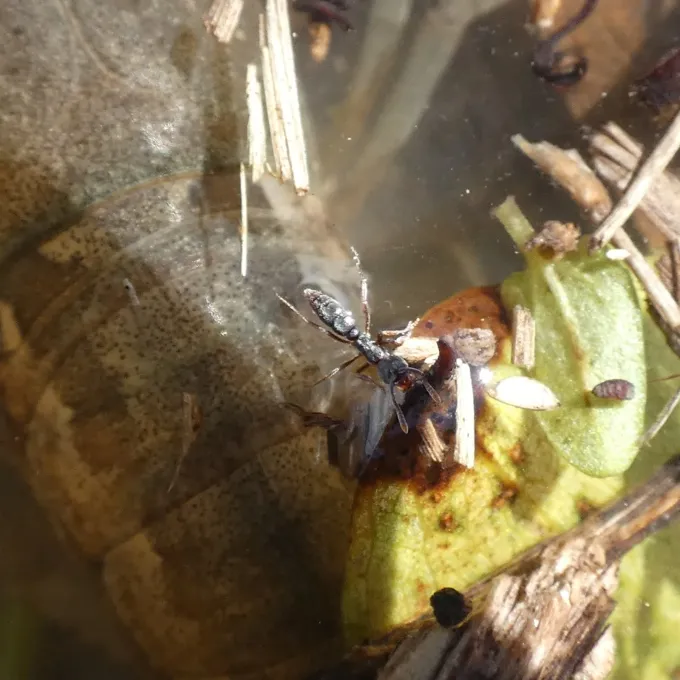
Description
How to identify
Pachycondyla chinensis (commonly known as the Asian needle ant, recently reclassified as Brachyponera chinensis) is an invasive ant species belonging to the Ponerinae subfamily. Workers are typically 3–5 mm long and possess a dark brown to black coloration.
The ants have a slender body covered in fine hairs and are equipped with a potent sting. Unlike many other invasive ants, they are relatively slow-moving but can deliver painful stings if disturbed.
Taxonomically, they are part of the order Hymenoptera and the family Formicidae. They are known for their preference for moist environments, often nesting in decaying wood, leaf litter, or the soil at the base of plants.
Their life cycle involves the typical egg, larva, pupa, and adult stages. Because of their adaptability, they can establish dense colonies in urban and suburban landscapes, often outcompeting native ant populations.
Proper identification is crucial; they are often found in hidden, moist areas. Homeowners should look for dark-colored ants that do not form conspicuous mounds but instead inhabit pre-existing cavities.
What it damages
While Pachycondyla chinensis is not a primary herbivore, it causes significant damage to garden ecosystems. Their nesting habits involve heavy excavation around root zones, which leads to root disruption and plant desiccation.
They act as guardians for honeydew-producing insects such as aphids and scale insects. By protecting these pests from natural predators, they cause a rapid increase in pest populations, leading to severe plant infestation.
The primary concern for many gardeners is the medical risk; the ants possess a venomous sting that causes intense pain and allergic reactions in humans, making garden maintenance difficult.
In greenhouses, these ants can disrupt the balance of integrated pest management (IPM) programs by interfering with beneficial predatory insects, making it harder to control other greenhouse pests.
Their presence often indicates a shift in the local ecosystem, where native species are displaced, potentially leading to long-term soil health issues and reduced vigor in ornamental and crop plants.
Signs of infestation
The most common sign of an infestation is the presence of the ants themselves, often found in groups under decaying logs, stones, or mulch. They do not build large, visible anthills, which allows them to spread unnoticed.
An unusual spike in aphid populations on shrubs or ornamental trees, combined with the presence of ants actively protecting them, is a strong indicator of an established colony.
- Painful stings while gardening or moving landscaping materials.
- Sudden wilting or stunted growth of plants near mulch or moist wood.
- Visible trails of black ants in shaded, moist corners of the garden.
- Presence of ants in pots or at the base of trees.
- Complete absence of other local ant species in the area.
Inspect the roots of containers or pots if you suspect an infestation, as these ants frequently utilize the moist soil within the pots for their nesting sites.
Monitoring the garden at dusk or in the early morning can reveal foraging workers, as they are most active during these times in temperate climates.
Control measures
Effective management begins with habitat modification. Remove decaying timber, excess mulch, and unnecessary stone piles to reduce the number of favorable nesting sites around the garden.
Targeted use of bait stations is the most effective chemical control method. Since these ants are foragers, they will carry toxic bait back to the nest, ultimately eliminating the queen and the entire colony.
Biological control options include the use of entomopathogenic fungi, which can be applied to nest sites, though success rates vary based on soil moisture and temperature conditions.
When working in infested areas, personal protection is essential. Wear long sleeves, gloves, and boots to prevent stings, and avoid working barefoot in areas where these ants are known to reside.
Regular inspections and spot-treatments are critical. Once established, colonies are difficult to remove completely, so early detection and consistent pressure on the population are key to preventing a widespread invasion.
Taxonomy
- Latin name
- Pachycondyla chinensis
- Order
- Hymenoptera
- Family
- Formicidae
- EPPO code
- PCHDCH
Discussion
No discussions yet — be the first.