
Ochetellus ant
Ochetellus
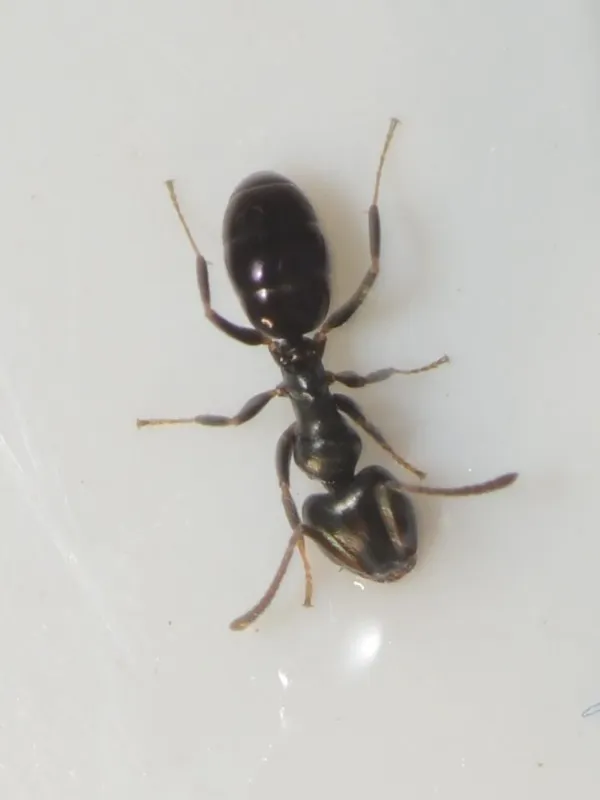
Description
How to identify
The Ochetellus ant (Ochetellus glaber) is a species belonging to the family Formicidae and the subfamily Dolichoderinae. These are small, highly mobile ants known for forming large, well-organized colonies.
Worker ants are typically dark brown to black in color. A defining characteristic of this species is their smooth, hairless, and glossy exoskeleton, which distinguishes them from many other local ant varieties.
They are famous for their foraging behavior, often moving in rapid, distinct trails between their nests and food sources, such as aphid colonies on trees.
Their nests are commonly found in decaying wood, under rocks, or within soil cavities. They often establish nests close to the root zones of garden plants to stay near resources.
Their social structure is highly resilient; if disturbed, they can quickly relocate parts of their colony, making complete eradication challenging without targeting the queen.
What it damages
Ochetellus ants do not directly feed on plant tissues in a way that causes structural damage, but they are notorious for their role as guardians of sap-sucking pests.
They maintain a mutualistic relationship with aphids, mealybugs, and scale insects, collecting the sugary substance known as honeydew secreted by these pests.
By protecting these sap-suckers from natural predators like ladybirds and lacewings, the ants facilitate massive outbreaks of pests, leading to severe plant stress and nutrient loss.
This relationship results in the buildup of sooty mold, a fungus that grows on honeydew, which covers leaves and significantly reduces the plant's ability to photosynthesize.
Additionally, these ants may cause minor damage to thin-skinned fruits as they explore for sweet juices, often introducing pathogens into the fruit tissue during the process.
When it appears
The activity of Ochetellus ants typically begins in early spring, as temperatures rise and the soil warms up, triggering the movement of the colony.
Their peak foraging activity aligns with the vegetative growth cycle of garden plants, specifically when aphid populations start to proliferate in late spring and early summer.
During hot summer months, they become highly active, expanding their trails across garden surfaces and structures in a continuous search for sugar-rich food sources.
As autumn arrives and temperatures drop, their activity levels decline significantly, and the colonies start to concentrate their efforts on surviving the winter period.
The lifecycle is continuous during the warmer months, allowing the colony to produce multiple generations, which means a small infestation can grow rapidly if left untreated.
Signs of infestation
A primary indicator of an Ochetellus ant presence is the appearance of distinct, persistent foraging trails moving up and down the trunks of trees and shrubs.
Large, thriving colonies of aphids on plant tips accompanied by patrolling ants are a classic sign of this pest's involvement in your garden's ecosystem.
Leaves that feel sticky to the touch, due to the presence of honeydew, followed by the appearance of a dark, powdery sooty mold, indicate a significant infestation.
Small mounds of soil or disturbed dirt at the base of plants often reveal where the ants have been excavating or establishing access routes to the roots.
If you observe fruits with tiny holes or damaged surfaces, it is likely that the ants are feeding on the sap or juices leaking from those wounds.
Control measures
The most effective strategy for long-term control is the use of bait stations containing slow-acting gel insecticides, which are carried back to the nest to eliminate the queen.
Installing sticky barriers on tree trunks creates an effective physical block, preventing ants from accessing the aphid colonies in the canopy of the trees.
Reducing the primary food source is crucial; managing aphid and scale populations effectively will naturally cause the ant population to relocate in search of better food.
- Tilling the soil around trees to disturb nesting sites.
- Applying specialized ant-deterrent glue bands.
- Encouraging natural predators such as lady beetles.
- Removing decaying wood and organic debris from the garden.
Chemical intervention should be used as a last resort, ensuring that selected products target the ants specifically while minimizing risks to beneficial garden pollinators.
Taxonomy
- Latin name
- Ochetellus
- Order
- Hymenoptera
- Family
- Formicidae
- EPPO code
- OCHESP
Discussion
No discussions yet — be the first.