
Nylanderia
Nylanderia
Description
How to identify
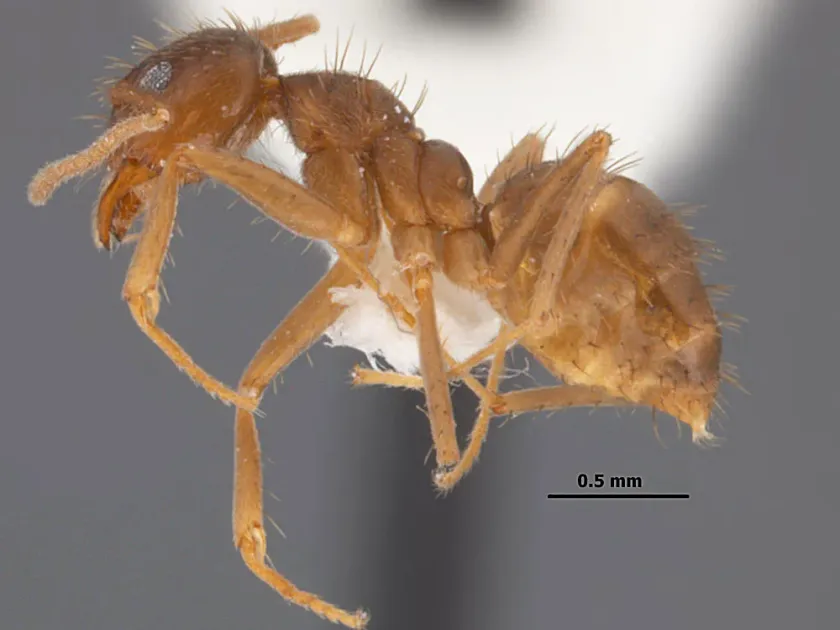
Nylanderia is a genus of small ants within the Formicidae family, belonging to the Hymenoptera order. The most notable species, Nylanderia fulva, is commonly referred to as the "tawny crazy ant" due to its distinctive behavior.
These ants are characterized by their rapid, erratic, and unpredictable movement patterns. They are typically reddish-brown in color, measuring about 2-3 mm in length, and possess notably long antennae.
A key identifying feature is their tendency to form massive "supercolonies" containing thousands of queens. Unlike many other ants, they do not build traditional mounds but prefer to nest in crevices, organic debris, or soil cavities.
They do not have a functional stinger, but they bite and use formic acid, which they spray as a primary defense mechanism and as a tool for hunting small prey.
Identification of the specific species usually requires expert analysis under a microscope, as morphological differences between closely related Nylanderia species are often minute.
What it damages
The primary agricultural damage caused by Nylanderia is indirect. They are known for "farming" sap-sucking insects like aphids, mealybugs, and scale insects, protecting them from predators to feed on the honeydew they excrete.
By preventing natural control, these ants allow sap-sucking pest populations to explode, which leads to severe plant stress, wilting, and reduced overall crop vigor.
Nylanderia ants can cause physical damage by nesting within the root systems of trees and shrubs, disrupting soil integrity and causing desiccation or root damage to young plants.
In greenhouses and agricultural facilities, these ants pose a significant threat to electrical infrastructure, sensors, and irrigation control systems, often causing short circuits by nesting inside electronic equipment.
The excessive honeydew secretion encourages the growth of sooty mold, which coats the leaves, reduces photosynthesis, and significantly damages the market value of both fruits and ornamental plants.
When it appears
The activity level of Nylanderia is highly dependent on ambient temperature. In warmer climates, these ants can remain active throughout the entire year.
The peak period for colony expansion and the establishment of new nests occurs during the spring and summer months, when food availability and environmental humidity are optimal.
As temperatures drop, these ants seek refuge in warmer locations, such as buildings, greenhouse structures, or deep within the root zones of perennial plants to survive the winter.
In controlled environments like greenhouses or nursery facilities, the seasonal cycle is largely bypassed, allowing the pest to cause damage continuously if conditions remain stable.
Early monitoring in the spring is critical, as detecting small scout populations allows for intervention before they establish a dominant presence across the property.
Signs of infestation
The most visible sign of infestation is the presence of large, erratic-moving groups of ants trailing along tree trunks, stems, and structural foundations of greenhouses.
Finding dense colonies of aphids or mealybugs that are constantly being tended by ants is a strong indicator of an active Nylanderia presence.
The presence of debris, bits of dry vegetation, or soil inside electrical control boxes and equipment housing is a specific behavioral marker for this genus.
Premature wilting of plants that have sufficient water can be a sign that a colony has established a nest in the root zone, disturbing the plant's ability to absorb moisture.
Frequent equipment malfunctions or the discovery of dead ants within electronic circuit boards are significant signs of a severe infestation that requires immediate attention.
Control measures
Standard contact insecticides are often ineffective against Nylanderia because of their massive population numbers and rapid recovery rates; therefore, baiting is the preferred control method.
Using slow-acting, toxic baits that foraging ants transport back to the nest is the most effective way to eliminate the colony and the queens simultaneously.
Managing sap-sucking insects is essential; by controlling aphids and scale insects, you remove the primary food source that supports the ant colony's growth.
Cultural control practices, such as removing organic debris, fallen timber, and potential nesting materials around the farm, are crucial to discourage colony establishment.
For high-value equipment, implementing physical barriers or specialized repellent coatings can prevent the ants from entering and nesting inside sensitive electronic components.
Taxonomy
- Latin name
- Nylanderia
- Order
- Hymenoptera
- Family
- Formicidae
- EPPO code
- NYLASP
Discussion
No discussions yet — be the first.