
Myrmica specioides ant
Myrmica specioides
Description
How to identify
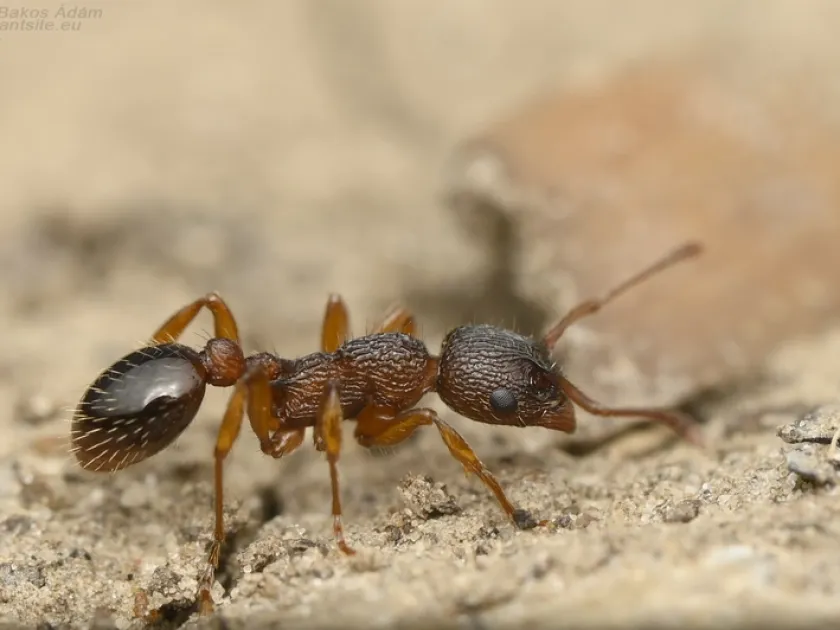
The Myrmica specioides is a species of ant belonging to the order Hymenoptera and the family Formicidae. These insects are small, typically measuring between 4 and 5 millimeters in length, with coloration ranging from yellowish-brown to reddish-brown.
A distinctive morphological feature of this species, common to the Myrmicinae subfamily, is the presence of two segments, the petiole and the postpetiole, located between the thorax and the abdomen. They are equipped with functional stings, which they use defensively when their nests are disturbed.
Nests are typically constructed in soil, under stones, within decaying wood, or amidst the root zones of perennial plants. A single colony can contain hundreds to thousands of individuals, enabling them to exert significant pressure on their immediate environment.
Their life cycle involves complete metamorphosis, consisting of eggs, larvae, pupae, and adults. Unlike many other garden ants, members of this species are known for being particularly aggressive when protecting their territory or their aphid "herds."
Accurate field identification is challenging due to their similarity to other species in the Myrmica genus. Expert verification often requires microscopic examination of specific body parts to distinguish them definitively.
What it damages
The primary damage caused by Myrmica specioides is indirect, resulting from their mutualistic relationship with aphids and scale insects. These ants aggressively protect these sap-sucking pests from natural predators to secure the sugary honeydew they secrete.
As a result, aphids proliferate unchecked, draining vital plant juices and causing stunted growth, leaf curling, and overall loss of plant vigor. The constant presence of ants ensures the survival and expansion of aphid colonies across the host plants.
Mechanical damage occurs when ants build their nests within the root zones of vegetables, flowers, or small fruit bushes. This tunneling activity creates air pockets around the roots, causing the plants to dry out and experience significant nutritional stress.
Furthermore, the physical wounds inflicted by aphids, combined with the ants' movement, create entry points for secondary pathogens, such as fungal and bacterial infections. This degrades the overall health of the garden and increases the necessity for chemical interventions.
By effectively "herding" and relocating these pests to healthy plant tissues, the ants contribute to the rapid spread of infestations throughout the entire garden area, making them a serious nuisance for growers.
When it appears
Activity begins in early spring as soon as soil temperatures consistently exceed 10 degrees Celsius. Worker ants emerge from hibernation to begin foraging and repairing tunnels damaged during the winter months.
Peak activity occurs during the summer months, from June to August, coinciding with the reproductive period of both the ant colony and their aphid partners. This is when the visual evidence of their presence is most pronounced.
As autumn approaches, activity levels gradually decline. The ants move deeper into the soil, beneath the frost line, where the colony enters a state of diapause to survive the winter temperatures safely.
In artificial environments, such as greenhouses or conservatories, where temperatures are maintained at stable, warm levels, the activity of Myrmica specioides can extend far beyond the natural season, posing a risk year-round.
Early-season monitoring is crucial. Detecting the first foraging trails or small mounds in the spring allows gardeners to implement preventative measures before the colonies become fully established and difficult to eradicate.
Signs of infestation
The most reliable sign of an infestation is the observation of consistent ant trails leading from the ground up onto plants infested with aphids. These ants are actively patrolling and guarding the insects.
Small mounds of excavated soil at the base of stems or trunks are clear indicators of subterranean nests. The soil in these areas often feels unusually loose or dry, reflecting the ants' continuous tunneling activity.
Plant distress, characterized by curled leaves covered in a sticky substance known as honeydew, confirms that aphids are present and that ants are likely supporting the infestation. This substance can also attract sooty mold growth.
Localized wilting in parts of the garden where the soil seems unstable or hollowed out is a sign that a colony has made its home directly beneath the root system of affected plants.
Aggressive behavior, where ants swarm or sting upon the slightest disturbance of the plant or soil near the nest entrance, serves as a strong indicator that a significant colony is present and actively defending the area.
Control measures
Effective management requires a strategy that targets the entire colony, including the queen, rather than just the visible workers. Baiting is considered the most successful approach for long-term control.
Using slow-acting gel baits containing insecticides like fipronil or spinosad allows the workers to transport the toxin back into the nest, ensuring that the queen and larvae are eliminated, thereby collapsing the entire colony.
Cultural practices, such as regular soil cultivation, help disrupt the stability of ant nests and force them to migrate. Removing debris and weeds that serve as alternative shelters or host sites for aphids is equally important.
Since the ants rely on aphids for sustenance, managing aphid populations through the use of soaps or natural oils significantly reduces the attractiveness of the plants to the ants, often leading them to relocate elsewhere.
- Applying sticky barriers to tree trunks to prevent ants from accessing foliage.
- Introducing biological controls, such as entomopathogenic fungi (e.g., Beauveria bassiana).
- Using plant-based repellents like garlic or peppermint oil near nesting sites.
- Direct application of liquid insecticides into nest entrances if baits are not viable.
Taxonomy
- Latin name
- Myrmica specioides
- Order
- Hymenoptera
- Family
- Formicidae
- EPPO code
- MYRCSE
Discussion
No discussions yet — be the first.