
Schenck's ant
Myrmica schencki
Description
How to identify
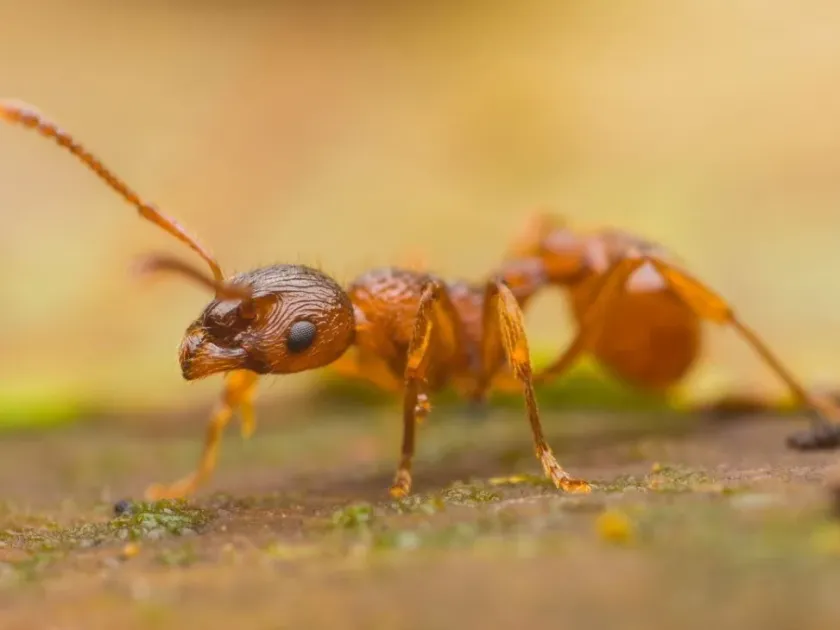
Schenck's ant (Myrmica schencki) is a species of small ants within the Formicidae family, subfamily Myrmicinae. They are recognized by their reddish-brown coloration and well-developed spines on the propodeum.
The workers typically measure 4 to 5 millimeters in length. A key diagnostic feature for identification is the sharply curved or hooked base of the scape (the first antennal segment), which distinguishes them from related species.
These ants form colonies consisting of several hundred to thousands of individuals. The queens are responsible for egg-laying, ensuring the growth and maintenance of the nest over several seasons in suitable environments.
They prefer nesting in dry, warm, and open habitats, frequently placing their nests in the soil near plant roots or under stones, which brings them into direct conflict with agricultural crops.
Schenck's ant is known for its territorial nature and aggressive behavior when its nest or foraging trails are disturbed. They possess a potent sting, which makes manual handling during field scouting difficult.
What it damages
The primary damage caused by Schenck's ant is indirect, resulting from their mutualistic relationship with aphids and other honeydew-producing insects. The ants actively herd and protect aphids from predators.
By protecting these sap-sucking pests from ladybugs and lacewings, the ants facilitate massive outbreaks of aphids on crops such as fruits, vegetables, and ornamental plants, leading to severe leaf curling and stunted growth.
In addition to aphid farming, these ants can occasionally damage germinating seeds or roots by burrowing near the plant base. This activity can cause root desiccation or provide entry points for secondary pathogens.
The honeydew excreted by aphids, which the ants harvest, accumulates on plant surfaces, promoting the growth of sooty mold. This layer blocks photosynthesis and further weakens the affected plants.
Their defensive behavior during harvesting periods often complicates field operations, leading to labor management issues in commercial orchards and berry plantations.
When it appears
The seasonal activity of Schenck's ant begins in early spring, typically in April, when soil temperatures rise enough to trigger foraging behavior among the worker caste.
Peak activity occurs throughout the summer months of June and July, coinciding with the most critical growth stages of many crops. During this time, ant activity on plant stems is at its highest.
As autumn approaches and temperatures drop, foraging activity gradually declines. The colony prepares for the winter dormancy period by retreating to deeper soil levels below the frost line.
Winter is spent in a state of diapause, with the colony remaining inactive until the following spring. Their life cycle is tightly synchronized with the vegetative growth periods of the surrounding vegetation.
Understanding these activity patterns is essential for growers to implement monitoring and control programs during the periods when the ants are most vulnerable or most harmful to the crop.
Signs of infestation
The most reliable sign of an infestation is the presence of distinct ant trails leading from nesting sites in the soil to infested parts of the plants where aphids are feeding.
Visual inspection of leaves and stems usually reveals clusters of aphids being "tended" by the ants. If the ants appear agitated or aggressive when the plant is touched, it confirms their presence and protective behavior.
Nesting sites can often be identified by small mounds of disturbed soil near the roots of crops. Such plants frequently show signs of wilting or nutrient deficiency due to root disturbance.
Sticky honeydew residues on leaves, combined with the presence of black sooty mold, serve as secondary indicators of long-term ant presence and sustained aphid farming activity.
- Defined ant trails on stems and soil
- Clusters of aphids actively attended by ants
- Wilting plants due to root disturbances
- Sticky honeydew residue on foliage
- Sooty mold growth on plant surfaces
Control measures
Effective management of Schenck's ant focuses on disrupting the mutualistic bond between the ants and aphids. Eliminating the aphid population usually forces the ants to abandon the host plant.
Chemical control using insecticidal baits is highly effective. Baits containing slow-acting insecticides are carried by workers back to the nest, ultimately neutralizing the queen and the entire colony.
Regular cultivation and soil turning in fields and orchards disrupt the nest structure, forcing the colonies to migrate and reducing their impact on the root zones of the crops.
Biological control, such as enhancing habitats for natural predators of aphids like lady beetles and lacewings, can significantly reduce the need for aggressive ant management by controlling the food source.
Integrated Pest Management (IPM) strategies, combining cultural practices, biological control, and targeted baiting, offer the most sustainable approach to minimizing losses caused by these ant-aphid complexes.
Taxonomy
- Latin name
- Myrmica schencki
- Order
- Hymenoptera
- Family
- Formicidae
- EPPO code
- MYRCSH
Discussion
No discussions yet — be the first.