
Myrmica scabrinodis
Myrmica scabrinodis
Description
How to identify
Myrmica scabrinodis is a small species of ant in the family Formicidae, commonly found across Europe and parts of Asia.
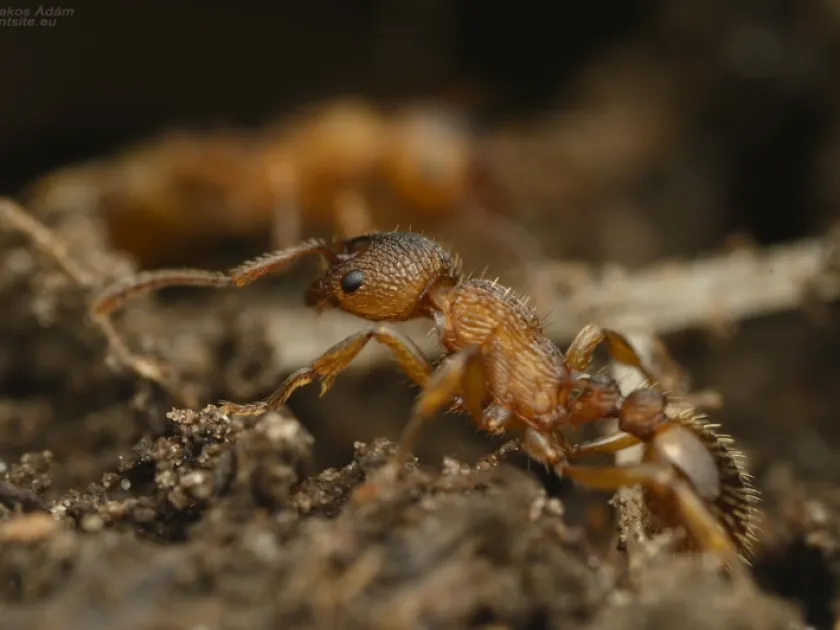
The workers typically measure between 4 and 5 millimeters in length and exhibit a brownish-red coloration that can vary in intensity.
Identification is best achieved by observing the distinct longitudinal rugae (wrinkles) covering the head and thorax, which give the ant a wrinkled appearance.
They possess a functional stinger, which they use to defend their colonies, and they can deliver a sharp, painful sting if threatened.
These ants build their nests in diverse habitats, including soil, under stones, or within rotting wood, showing a strong preference for humid microclimates.
What it damages
The primary concern regarding this species is its mutualistic relationship with aphids and scale insects, which they farm for honeydew.
By actively protecting aphids from natural predators like ladybugs and lacewings, the ants cause a significant increase in aphid population density.
This leads to severe plant stress, stunted growth, and the distortion of young shoots and leaves due to continuous sap extraction by the protected aphids.
The ants themselves can cause damage to plant roots when excavating nests, leading to reduced nutrient uptake and potential plant wilting in small vegetable starts.
Furthermore, they facilitate the spread of fungal pathogens and viral diseases throughout the garden by moving between infested plants.
When it appears
The activity of these ants begins in early spring, as soon as soil temperatures reach approximately 8–10 degrees Celsius.
During the late spring and early summer months, foraging activity increases significantly as the ants tend to the first generations of aphids.
Summer is the period of maximum activity, with constant traffic between their subterranean nests and the infested canopy of garden plants.
As autumn approaches and temperatures drop, foraging behavior declines, and the colony prepares for hibernation in deeper soil layers.
Their life cycle is synchronized with the growth of host plants, ensuring they are present exactly when aphid colonization is most critical for plant health.
Signs of infestation
Clear evidence of an infestation includes the presence of distinct ant trails moving along stems, branches, or across soil surfaces toward plants.
Leaves that are curled, wilted, or yellowed are often signs that aphids are present, and the presence of ants confirms the agricultural threat.
Honeydew accumulation, appearing as a sticky substance on leaves, often becomes colonized by black sooty mold, creating a visible indicator of pest activity.
Disturbed soil, small mounds of earth around the base of vegetable plants, or exposed roots are common indicators of a nearby ant nest.
Frequent encounters with reddish-brown ants on flowering buds are an early warning sign that they are managing aphid colonies in the vicinity.
Control measures
To control this pest, apply non-toxic sticky barriers around the trunks of fruit trees to prevent the ants from reaching the aphids in the canopy.
Using targeted bait stations containing slow-acting insecticides allows the workers to transport the poison into the nest, eliminating the queen and colony.
Implement an integrated pest management strategy that focuses on controlling the aphid population, which effectively removes the ants' food source.
Encourage the presence of natural predators in the garden, which helps maintain the balance and reduces the ants' influence over aphid farming.
- Maintain healthy soil moisture levels and cultivate garden beds regularly to discourage nesting in sensitive areas.
Taxonomy
- Latin name
- Myrmica scabrinodis
- Order
- Hymenoptera
- Family
- Formicidae
- EPPO code
- MYRCSC
Discussion
No discussions yet — be the first.