
Wrinkled ant
Myrmica rugulosa
Description
How to identify
The wrinkled ant, scientifically known as Myrmica rugulosa, is a small ant species belonging to the Formicidae family.
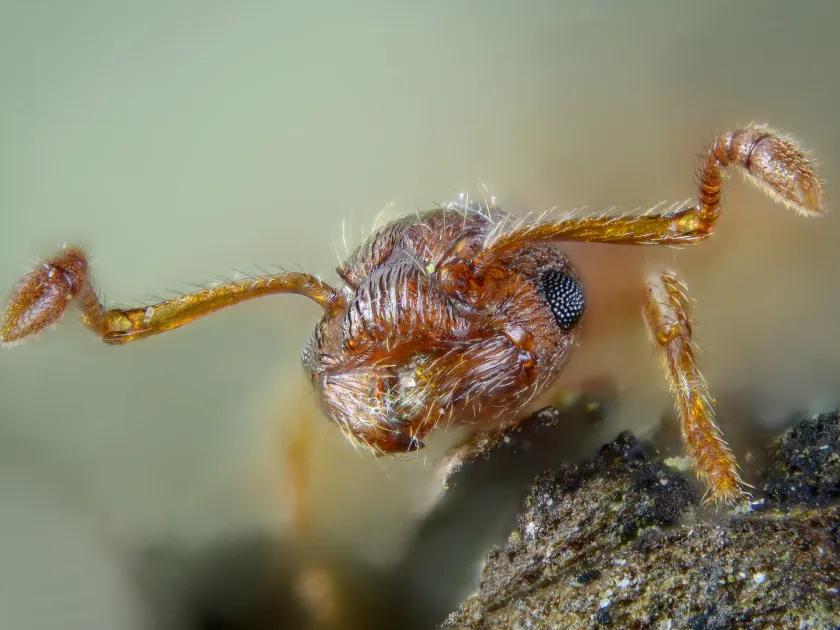
They are characterized by a reddish-brown coloration and a noticeably wrinkled surface on the head and thorax, which serves as a primary diagnostic feature.
These ants typically nest in the soil, often under stones, decaying wood, or within dense grass, forming relatively small colonies compared to other species.
As opportunistic feeders, they play a complex role in the ecosystem, acting as both predators of small insects and gatherers of sugary plant exudates.
They are highly active during the warm months, with workers frequently patrolling vegetation to forage and maintain their symbiotic relationships.
What it damages
The primary agricultural damage caused by Myrmica rugulosa is their symbiotic relationship with aphids, which they farm for honeydew.
By protecting aphids from natural predators, the ants facilitate massive infestations, leading to stunted growth, leaf curling, and overall plant decline.
In addition to aphid farming, these ants can physically damage roots by excavating tunnels, which is particularly detrimental to seedlings and greenhouse crops.
They are also known to feed on fruit, piercing the skin of berries and tomatoes to reach the sweet juices, which leads to post-harvest decay.
Their activity often promotes the spread of weed seeds, which they collect and transport, inadvertently enhancing weed colonization in cultivated areas.
Signs of infestation
Signs of infestation include the presence of numerous tiny entrance holes in the soil near the base of stems or tree trunks.
A high density of ants patrolling a plant is almost always associated with the presence of an aphid colony that they are tending.
Disturbed soil particles found on the surface are evidence of excavation activities and the existence of a nearby subterranean colony.
Wilting of young plants without clear signs of fungal pathogens or drought often suggests that root zones have been compromised by ant tunnels.
Sticky residue on plant leaves, known as honeydew, is a classic sign of the aphid-ant complex, indicating that the plant is under stress.
Control measures
Effective management requires an integrated approach that focuses on disrupting the ant-aphid cycle and reducing population numbers.
Applying sticky barriers or grease bands to tree trunks acts as a physical deterrent, preventing ants from reaching the canopy and protecting aphids.
Using slow-acting toxic baits allows the ants to carry the poison back to the nest, effectively eliminating the colony and the queen.
Frequent mechanical soil cultivation and weeding are essential to disrupt nest sites and encourage the ants to relocate away from sensitive crops.
Biological control agents, such as introducing natural predators of aphids or ants, can help restore balance in greenhouses and large garden areas.
Taxonomy
- Latin name
- Myrmica rugulosa
- Order
- Hymenoptera
- Family
- Formicidae
- EPPO code
- MYRCRU
Discussion
No discussions yet — be the first.