
Myrmica laevinodis
Myrmica laevinodis
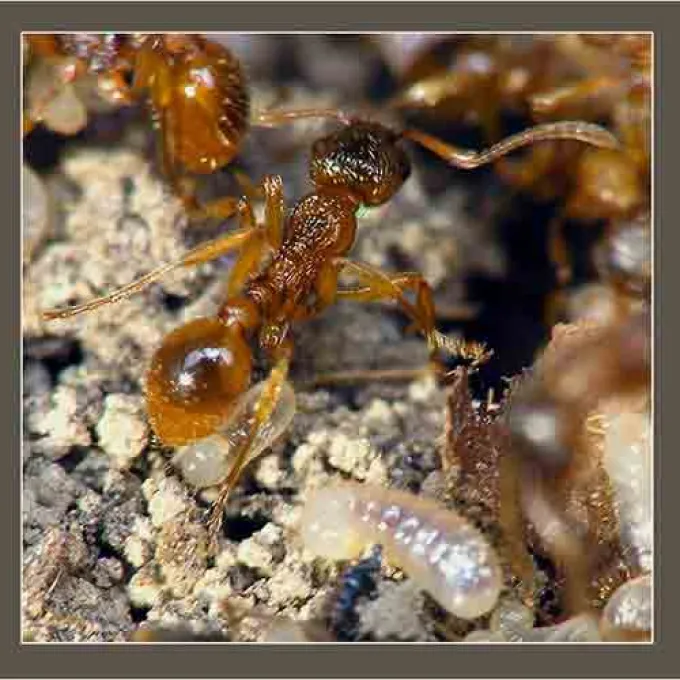
Description
How to identify
Myrmica laevinodis is a small ant species, typically 4–5 mm in length, characterized by a reddish-brown to yellowish-brown coloration. They possess two narrow nodes between the thorax and abdomen, which is a key identification feature for this genus.
Their bodies are covered in fine, dense hair and show distinct sculpturing. These ants are known for their aggression and possess a functional stinger, which they use defensively if their nest is disturbed.
They prefer moist habitats and often establish colonies in soil, under rocks, or within decaying wood. These colonies are polygynous, meaning they have multiple egg-laying queens, allowing for rapid population growth.
Taxonomically, they belong to the Formicidae family, suborder Apocrita, order Hymenoptera. They are highly adaptable predators and scavengers that thrive in diverse landscapes, including domestic gardens and agricultural fields.
The life cycle includes a complete metamorphosis: egg, larva, pupa, and adult. All stages are usually present within the nest during the active season, ensuring continuous colony development and resilience.
What it damages
The primary damage caused by Myrmica laevinodis stems from its symbiotic relationship with aphids. These ants protect aphid colonies from natural predators like ladybugs, allowing aphid populations to explode.
Aphids extract sap from young shoots and leaves, causing severe deformation, curling, and stunted growth. The plants become weakened, making them susceptible to secondary fungal infections and viruses.
Furthermore, their nesting activities can cause mechanical damage. By building tunnels in the root zone, they often disturb the root system, which can inhibit nutrient uptake and expose roots to various pathogens.
In garden beds, they may feed on sown seeds, causing poor germination rates. Additionally, they are known to damage soft fruits like strawberries by feeding on the pulp, which reduces both yield and quality.
Inside greenhouses, their tunnels can undermine the soil structure, creating air pockets around plant roots that interfere with water absorption and promote root desiccation or rot.
When it appears
Activity begins in early spring, once soil temperatures reach approximately 8–10 degrees Celsius. Workers emerge from the nest to forage and expand their territory.
The peak activity period occurs throughout May and June, coinciding with the rapid growth of aphid populations. During this time, ants are highly focused on managing their "livestock" and rearing new larvae.
During the summer months of July and August, colony activity remains high as they expand their nests and maximize resource collection to support the growing colony size.
As autumn approaches and temperatures drop, foraging activity significantly decreases. The ants retreat deeper into the soil to reach more stable temperatures for overwintering.
The colony remains in a state of diapause through the winter months. The cycle repeats the following spring, provided the colony has survived the cold and hasn't been disturbed by winter soil cultivation.
Signs of infestation
The most reliable sign of an infestation is observing consistent ant traffic on the stems of plants, especially where aphids are congregating. This is a clear indicator of a protective symbiotic relationship.
The presence of small soil mounds or disturbed earth around the base of plants or garden borders suggests the location of a nest. Distinct ant trails are often visible leading to food sources.
Leaves curling and the presence of a sticky substance known as honeydew are telltale signs of aphid activity. This honeydew often develops into black sooty mold, indicating a significant infestation.
Unexpected wilting of plants despite adequate soil moisture often points to root damage. Digging slightly around the base may reveal tunnel systems or high ant density in the root zone.
Finding ants directly within ripening fruits, particularly strawberries or other berries, during harvest time is a clear sign that the colony density has become problematic for the garden.
Control measures
Regular cultivation and hoeing of the soil are effective mechanical methods. This destroys the nest architecture and forces the ants to migrate to less disturbed areas.
Sticky bands applied to the trunks of fruit trees create a physical barrier that prevents ants from accessing the canopy, thereby allowing natural predators to control aphid populations effectively.
Chemical control can be utilized in high-density cases using insecticides containing deltamethrin or other systemic agents applied directly to the nest or as targeted soil treatments.
Planting repellent herbs like mint, lavender, or marigolds around vulnerable crops can act as a natural deterrent, as these plants produce oils that confuse the ants' chemical signals.
- Remove weeds that serve as alternative hosts for aphids.
- Use bait stations containing slow-acting insecticides to eliminate the queen.
- Inspect plants weekly for early signs of aphid colonization to intervene quickly.
Taxonomy
- Latin name
- Myrmica laevinodis
- Order
- Hymenoptera
- Family
- Formicidae
- EPPO code
- MYRCLA
Discussion
No discussions yet — be the first.