
Jacobson's Ant
Myrmica jacobsoni
Description
How to identify
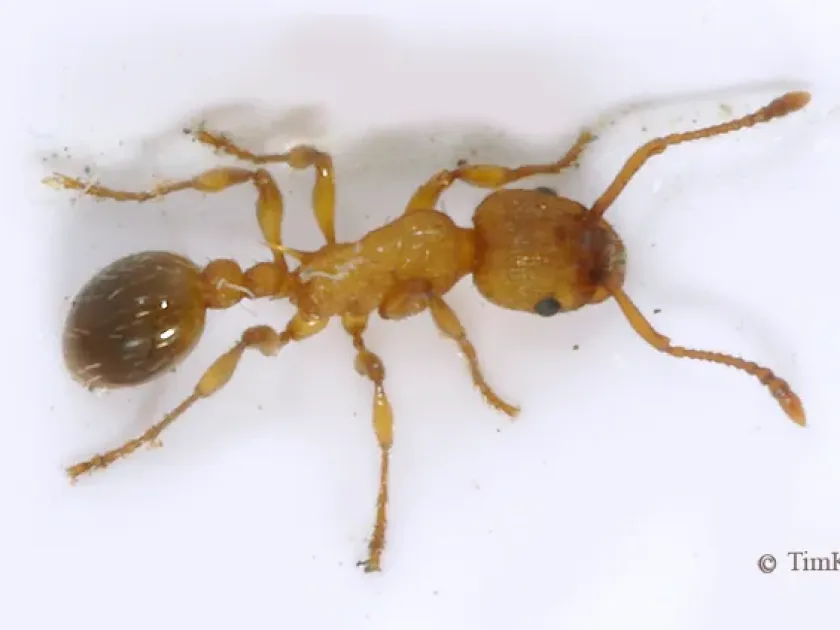
The Jacobson's ant (Myrmica jacobsoni) is a species of ant belonging to the family Formicidae and the order Hymenoptera. They are small insects typically displaying colors ranging from light brown to reddish-brown.
A distinctive morphological feature of this species is the presence of two nodes on the pedicel between the thorax and the abdomen. The body surface is characterized by a fine sculptural mesh, giving the ants a matte appearance.
Worker ants generally reach a length of 3 to 4 millimeters. They possess strong mandibles used for excavating soil and defending their nests, and they are equipped with a stinger capable of delivering a painful bite.
The colonies of this species are typically smaller than those of the common black garden ant. They prefer to establish nests in moist soil, under rocks, or within decaying wood, often hiding them from direct view.
Myrmica jacobsoni colonies are monogynous, meaning they contain only a single queen. This trait makes the colony more susceptible to environmental stress and specific control measures targeting the queen.
What it damages
The primary agricultural damage caused by the Jacobson's ant is its symbiotic relationship with aphids. These ants actively protect aphid colonies on young plant shoots from natural predators like ladybugs.
During nest construction, these ants frequently disrupt the root systems of saplings, which leads to stunted growth and the weakening of vegetables and small berry bushes.
By protecting aphids, these ants facilitate the spread of honeydew, which serves as a substrate for sooty mold. This mold covers leaves, severely hindering photosynthesis and overall plant health.
These ants are also known to carry away seeds during the sowing phase. This activity often results in thin or uneven germination rates, forcing gardeners to perform time-consuming re-seeding.
During dry seasons, Jacobson's ants may damage the soft tissues of ripening fruits resting on the soil, such as strawberries, significantly reducing the marketability and quality of the yield.
When it appears
Ant activity begins in early spring as soon as soil temperatures reach 10–12 degrees Celsius. During this time, they emerge from hibernation and initiate a search for food resources.
Peak activity occurs during May and June, coinciding with the rapid growth of larvae and the need for protein-rich food to feed the expanding colony, often leading to increased aphid-tending behavior.
A nuptial flight of winged individuals typically happens in late summer or early autumn. This dispersal phase allows the species to colonize new areas of the garden or orchard.
As temperatures drop in late autumn, the ants migrate deeper into the soil below the frost line, forming dense clusters to survive the winter dormant phase.
The cycle of damage restarts early in the spring, making early detection and intervention before the aphid population booms essential for effective garden maintenance.
Signs of infestation
The most visible sign of an infestation is the presence of ant trails leading toward fruit trees or shrubs, which indicates that they are colonizing aphid populations in the canopy.
Small mounds of excavated soil or entry holes near the base of plants are common indicators of a nest. If you notice persistent voids in the soil, it suggests underground tunneling activity.
Leaf curling or rolling on the tips of shoots is a reliable symptom that aphids are present and being protected by ants, preventing natural predators from controlling the pest.
A sticky, sugary residue on foliage that eventually turns black due to fungal growth is a classic sign of persistent aphid-ant activity on your ornamental or fruit plants.
If seeds fail to sprout in specific areas of the garden, it is often a sign that ants have raided the area and carried the seeds back to their nests for storage.
Control measures
Installing sticky bands on tree trunks is a highly effective mechanical control method. This barrier prevents ants from reaching the canopy and tending to aphids.
Using bait stations containing boric acid is recommended. Workers carry the poisoned bait back to the nest, ensuring the destruction of the entire colony and the queen.
Regular soil cultivation and hoeing in garden beds disrupt the ants' tunnels, forcing the colony to relocate or die due to the constant disturbance of their nesting environment.
Chemical control using insecticides containing diazinon can be employed in non-harvest areas to eliminate large nests, provided safety guidelines are strictly followed.
- Apply wood ash around the base of plants
- Interplant strong-scented herbs like mint or garlic
- Use physical barriers or sticky tapes on stems
- Regularly rinse foliage with soap-based solutions
- Monitor for aphid presence early in the season
Taxonomy
- Latin name
- Myrmica jacobsoni
- Order
- Hymenoptera
- Family
- Formicidae
- EPPO code
- MYRCJA
Discussion
No discussions yet — be the first.