
Myrmica emeryana
Myrmica emeryana
Description
How to identify
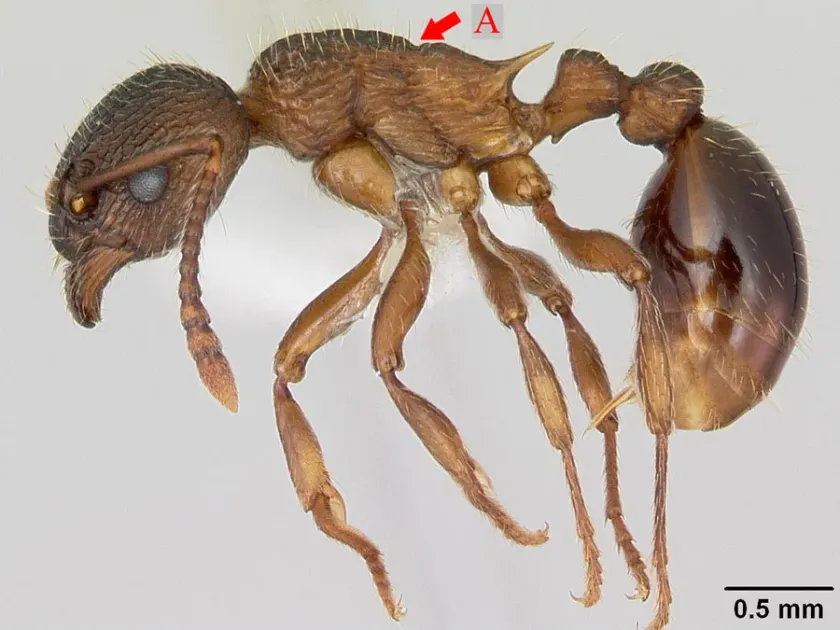
Myrmica emeryana is a species of ant belonging to the Myrmicinae subfamily. These ants are small, typically measuring between 3 and 5 millimeters in length, and exhibit a distinct reddish-brown or yellowish color.
They are characterized by a pair of spines located on the posterior part of the thorax, which is a key diagnostic feature for the Myrmica genus. Their bodies are somewhat rough or sculptured, providing a textured appearance.
These ants form colonies with multiple queens, known as polygyny, allowing the population to expand rapidly in favorable environments. They prefer nesting in soil, under rocks, or within decomposing organic matter.
Socially, they are highly organized and maintain clear foraging trails to reach food sources. This behavior makes them highly visible during the day as they move between their nests and their aphid "herds."
They are resilient ants that can adapt to various climates, which often allows them to become persistent residents in agricultural fields and home gardens if left undisturbed.
##damage##The primary damage caused by Myrmica emeryana is indirect. These ants have a mutualistic relationship with aphids and scale insects, where they protect these pests from predators in exchange for honeydew.
By protecting aphids, the ants ensure that aphid colonies grow unchecked on young shoots and leaves. This leads to heavy sap-sucking, which causes leaves to curl, yellow, and suffer from reduced growth.
The honeydew secreted by protected aphids settles on leaves, promoting the growth of sooty mold. This fungus blocks sunlight, severely hindering the plant's ability to perform photosynthesis and effectively reducing yields.
In addition to aphid management, these ants can physically disturb the soil around the root systems of young seedlings. This creates air pockets that lead to dehydration and, in severe cases, the death of the plant.
Occasionally, they may also target seeds in the soil, collecting them for food during the germination phase. This leads to thinning of crop rows and uneven plant stands, requiring replanting in some areas.
##season##Activity for Myrmica emeryana begins in early spring as ground temperatures rise sufficiently to trigger the emergence of workers from their subterranean nests for foraging.
The peak season occurs throughout late spring and summer. During this time, the aphids are most active on plants, and the ants invest significant energy in guarding these food sources.
As summer temperatures fluctuate, the ants maintain high foraging levels. They are particularly active on dry days, as they rely on the fluid intake provided by the honeydew to maintain colony hydration.
Autumn signals a transition period as activity starts to wane. Workers begin to retreat deeper into the nest, gradually reducing their presence on the soil surface in anticipation of winter.
By late autumn, the ants enter a state of dormancy below the frost line. They remain in this protected environment until the following spring, when the cycle of activity restarts once conditions improve.
##signs##The most common sign of infestation is the presence of distinct foraging trails winding through garden beds or along the stems of trees and ornamental shrubs.
An abrupt increase in the aphid population on the tops of young plants is a clear indicator that ants are protecting them. If the ants are present, the aphids will be found in higher densities than usual.
Evidence of soil displacement, such as small mounds or entrances to tunnels near the base of plants, confirms the existence of an ant colony in the immediate vicinity.
Sticky residue on leaves is a hallmark sign of honeydew accumulation. This sticky surface often attracts dust and dirt, eventually turning black due to the development of sooty mold.
Wilting plants that appear stressed despite sufficient watering often indicate that the ants have compromised the root zone or that the plants are under heavy attack from the ant-tended aphids.
##control##Installing sticky barriers (or grease bands) around tree trunks is a highly effective way to prevent the ants from reaching the aphids in the canopy, forcing a collapse of the aphid colony.
Targeting the ants with bait stations containing slow-acting insecticides is recommended. This allows the workers to carry the toxin back to the nest, effectively eliminating the queens.
Frequent mechanical soil cultivation, such as tilling or deep hoeing between rows, is a simple way to disrupt nest structures and discourage the ants from establishing permanent colonies.
Systemic insecticides applied to control aphids will indirectly discourage ants by removing their primary food source, causing them to move their foraging activities elsewhere.
Encouraging natural predators, such as ladybugs and lacewings, provides a sustainable biological control method, as these insects compete with ants for the aphid population.
Taxonomy
- Latin name
- Myrmica emeryana
- Order
- Hymenoptera
- Family
- Formicidae
- EPPO code
- MYRCEM
Discussion
No discussions yet — be the first.