
Myrmica americana
Myrmica americana
Description
How to identify
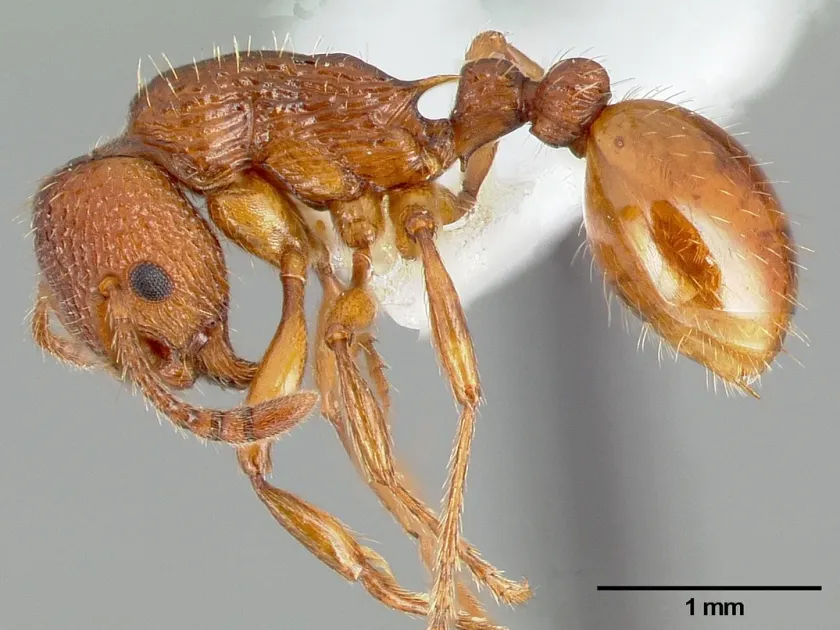
Myrmica americana is a small reddish-brown ant species commonly found in North America. Workers typically measure between 3 and 5 mm in length and possess a noticeable stinger used for defense and prey capture.
The morphology includes characteristic spines on the propodeum, which serves as a key diagnostic feature for the genus. The cuticle has a dull, matte appearance due to deep, rugose sculpturing on the head and thorax.
This species thrives in moist, shaded environments, often nesting under stones, logs, or directly within the soil. Colonies are typically polygynous, meaning they contain multiple queens, contributing to high reproductive success and colony resilience.
As opportunistic omnivores, these ants play various roles in the ecosystem, but their habit of tending aphids often classifies them as pests in garden and agricultural settings.
They belong to the family Formicidae, order Hymenoptera. Due to their aggressive behavior and stinger, human contact with these ants can cause painful stings, necessitating caution during gardening.
What it damages
The primary agricultural damage caused by Myrmica americana stems from their mutualistic relationship with aphids and other honeydew-producing insects. They actively protect these pests from predators, allowing aphid populations to reach destructive levels.
Nesting in the root zones of plants leads to structural damage to the root system. As the ants construct tunnels, they disturb soil aeration and moisture retention, often causing wilting and stunted growth in seedlings.
The presence of these ants in greenhouses or pots can be particularly detrimental, as they may displace potting soil and expose roots to the air, causing them to dry out rapidly.
Honeydew secreted by aphids encouraged by the ants serves as a substrate for sooty mold. This fungal growth coats the leaves, significantly reducing the efficiency of photosynthesis and impacting overall plant health.
Furthermore, their constant movement between plants facilitates the spread of pathogens, potentially increasing the incidence of viral and fungal diseases across a crop field.
When it appears
Activity begins in early spring as soil temperatures rise, prompting workers to emerge from their overwintering chambers to expand nests and search for food.
Peak activity occurs throughout the summer months. During this period, the demand for high-protein food to support brood development is at its highest, and their aphid-tending behavior is most intense.
As autumn approaches and temperatures drop, colony activity decreases. The ants retreat to deeper soil levels or insulated nesting sites to undergo overwintering.
Monitoring for ant activity during late spring is crucial. Early detection of nests allows for management before the aphid populations become unmanageable in the garden.
The ants remain inside their nests during cold periods, though they are well-adapted to surviving winter, making them a recurring problem each season if not properly managed.
Signs of infestation
A clear sign of an infestation is the presence of well-worn foraging trails that lead directly to aphid-infested plant stems. The ants can often be seen moving rapidly along these routes.
Small entry holes in the soil, often surrounded by loose soil mounds near the base of a plant, indicate an active colony residing in the immediate root zone.
A sticky, shiny residue on leaves, known as honeydew, indicates the presence of aphids, which in turn suggests that the ants are actively farming these pests in the vicinity.
Sudden wilting of plants despite adequate irrigation often points to root disturbances caused by ants nesting below the plant.
Observation of high ant density on flowers or succulent plant parts is a strong indicator of an ongoing infestation that requires immediate attention.
Control measures
The most effective long-term management strategy is the use of slow-acting bait stations. The ants carry the bait back to the queen and the brood, resulting in the elimination of the entire colony.
Physical barriers like sticky traps or grease bands around tree trunks prevent ants from accessing the aphid colonies, effectively leaving the aphids vulnerable to natural predators like ladybugs.
Regular cultivation of the soil near plant beds disrupts nesting sites and prevents the establishment of stable colonies.
- Application of specialized ant-specific insecticides (granular or liquid).
- Use of natural repellents such as peppermint oil or diatomaceous earth.
- Planting aromatic herbs like lavender or mint to deter colony establishment.
- Prioritizing the management of aphid populations to reduce the attractiveness of the site to ants.
Taxonomy
- Latin name
- Myrmica americana
- Order
- Hymenoptera
- Family
- Formicidae
- EPPO code
- MYRCAM
Discussion
No discussions yet — be the first.