
Myrmelachista
Myrmelachista
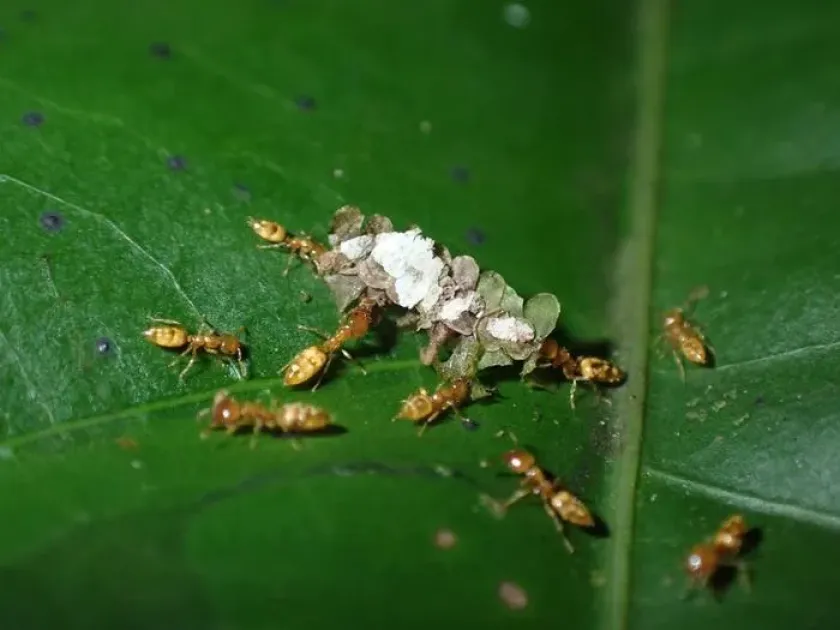
Description
How to identify
Myrmelachista is a genus of ants within the Formicidae family, known for their arboreal lifestyle. These insects are unique in their ability to excavate and nest within the living tissues of plants.
These ants are generally small, enabling them to move efficiently through the internal galleries they carve out inside stems and branches of their host plants.
A key biological trait of this genus is their mutualistic association with sap-sucking insects like scales and mealybugs, which they protect to harvest honeydew.
Identification is usually confirmed by the presence of entrance holes in the bark or stems, with worker ants frequently observed patrolling these specific entry points.
The colony structure is complex, often consisting of numerous galleries housing larvae and pupae deep within the wood, which makes the colony difficult to eradicate.
What it damages
Myrmelachista species primarily affect tropical crops, including coffee and cacao trees, where they cause significant economic loss through physical destruction.
By excavating galleries within the stems, the ants physically weaken the plant, compromising its structural integrity and interfering with the transport of water and nutrients.
The secondary damage is often more severe: the ants aggressively protect scale insects and mealybugs, leading to massive infestations of these pests and subsequent sooty mold growth.
This combined pressure leads to stunted tree growth, heavy leaf drop, and reduced quality and quantity of crop yield over time.
In young plantations, a heavy infestation of Myrmelachista can lead to the rapid decline and death of the host tree due to extensive internal damage.
Signs of infestation
The most reliable sign of an infestation is the appearance of small, consistent holes in the bark or stems, which serve as access points for the ants.
Observe the plant canopy for high populations of mealybugs or scale insects; if they are being tended by ants, it is a strong indicator of a Myrmelachista presence.
Stunted, deformed, or yellowish foliage indicates that the plant's vascular system has been impacted by the extensive tunneling activity inside the branches.
Black sooty mold on the foliage is a telltale sign that the plant is suffering from the excreta of the sucking pests protected by the ants.
Swollen or distorted areas on the stems often reveal where the ants have created internal chambers to house their brood and the queen.
Control measures
Effective management focuses on the use of slow-acting toxic baits, which are carried by the ants back to the nest to eliminate the entire colony, including the queen.
Pruning and burning affected branches is an essential physical control method to reduce the population density within an orchard or plantation.
Controlling the population of scale insects and mealybugs with systemic insecticides is crucial, as this removes the food source that sustains the ant colonies.
Installing sticky bands around the trunks of the trees can prevent worker ants from moving between branches, limiting the spread of the infestation.
- Regular phytosanitary inspection of trees.
- Integrated pest management using targeted baits.
- Removal and destruction of heavily tunneled wood.
Taxonomy
- Latin name
- Myrmelachista
- Order
- Hymenoptera
- Family
- Formicidae
- EPPO code
- MYRHSP
Discussion
No discussions yet — be the first.