
Monomorium viridum
Monomorium viridum
Description
How to identify
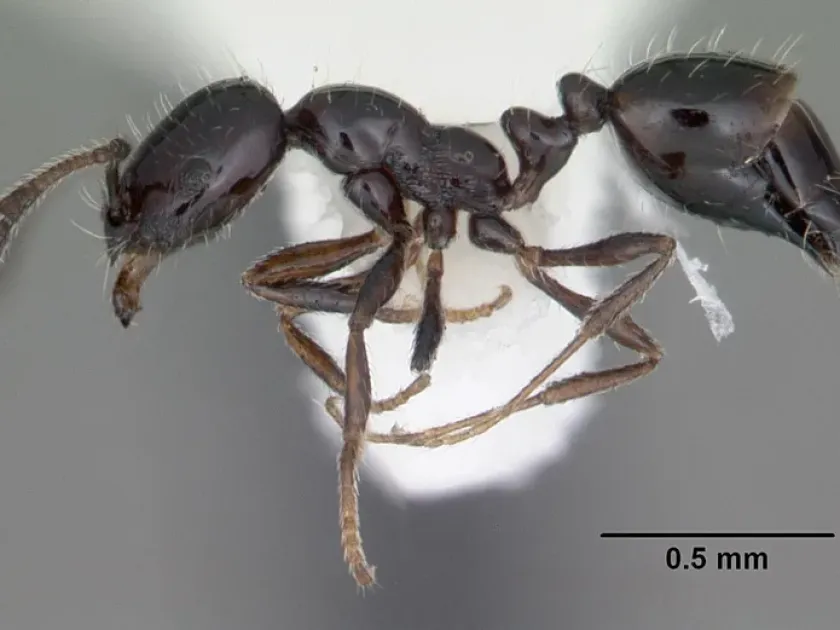
Monomorium viridum is a species of ant belonging to the family Formicidae and the order Hymenoptera. It is known for its small size and a subtle greenish hue on its exoskeleton.
Workers are typically 2 to 3 millimeters long and possess a distinct two-segmented waist, which is a key identifying characteristic for the subfamily Myrmicinae.
These ants are polygynous, meaning their colonies often contain multiple queens. This biological feature allows them to multiply rapidly and colonize garden areas effectively.
They prefer to nest in warm, well-drained soil, often found beneath rocks, mulch, or near the base of garden plants where environmental conditions are stable.
Due to their small size and secretive nature, these ants often go unnoticed by gardeners until they have already established large foraging territories.
What it damages
The primary damage caused by Monomorium viridum is their mutualistic relationship with aphids and scale insects. They protect these pests from predators, allowing them to flourish.
By nesting near plant roots, they disturb the soil and can cause moisture loss, leading to the dehydration and wilting of sensitive young seedlings.
They can also damage fruit crops by feeding on the soft flesh of ripening berries, which renders the produce unmarketable and susceptible to rot.
The constant traffic of ants around stems and leaves can interfere with plant growth, often causing mechanical stress on delicate buds and flowers.
- Fruit and berry crops: strawberries, raspberries.
- Vegetable seedlings.
- Ornamental shrubs and decorative garden plants.
When it appears
The activity of Monomorium viridum begins in early spring as soon as soil temperatures reach a level sufficient for the ants to emerge and begin foraging.
Peak activity and colony expansion occur during the warmest summer months, when food availability and suitable nesting temperatures are at their highest.
In autumn, as temperatures drop, the ants reduce their foraging activity and focus on relocating to deeper, warmer sections of the soil to survive the winter.
The development cycle from egg to adult is relatively fast during the summer, which contributes to the rapid population growth within the colony.
During the winter, the colony enters a state of diapause, remaining inactive in the ground until the first signs of spring warmth arrive.
Signs of infestation
The most obvious sign of an infestation is the presence of ant trails along stems, branches, and trunks of garden plants leading to aphid colonies.
Yellowing or curling leaves, accompanied by sticky honeydew deposits, are clear indicators that ants are tending to sucking pests on your plants.
Small mounds of soil appearing around the base of garden plants are a frequent sign that a nest has been constructed in the root zone.
Direct damage to ripening fruits, showing small pits or excavated areas, indicates that ants have been feeding on the produce.
Large numbers of small, greenish-tinged ants constantly moving on specific plants are a definitive signal that intervention is required.
Control measures
Using targeted bait stations containing slow-acting insecticides is the most effective way to eliminate the entire colony, including the queens.
Physical barriers, such as sticky bands or specialized tree trunk guards, can prevent ants from reaching the canopy where they protect aphids.
Effective control of aphid populations is essential, as eliminating their primary food source makes the garden much less attractive to the ants.
Regular cultivation of the soil, such as hoeing or tilling, disrupts the ants' nesting sites and forces them to relocate or abandon the area.
Encouraging natural predators, such as ladybugs or lacewings, can help manage aphid numbers, thereby indirectly reducing the presence of ants.
Taxonomy
- Latin name
- Monomorium viridum
- Order
- Hymenoptera
- Family
- Formicidae
- EPPO code
- MONOVI
Discussion
No discussions yet — be the first.