
Pharaoh ant
Monomorium pharaonis
Description
How to identify
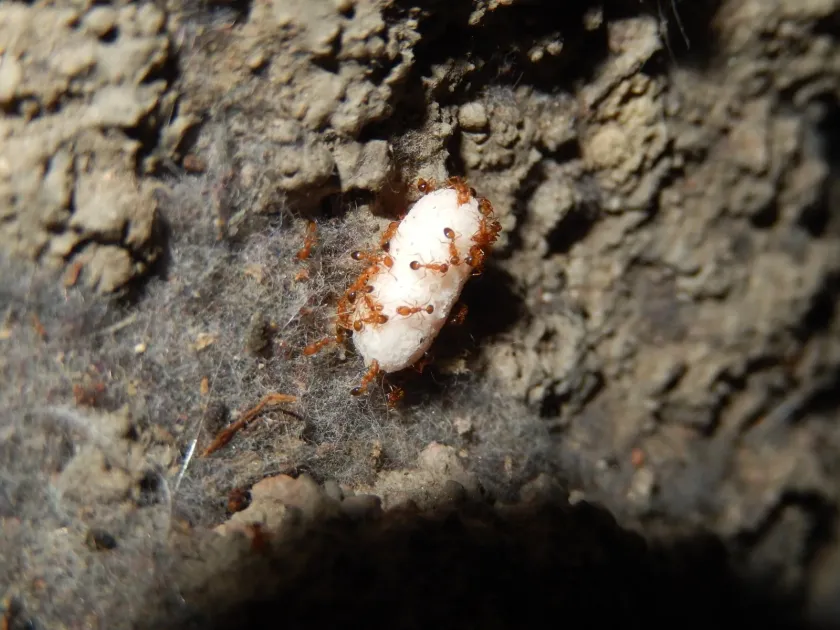
The Pharaoh ant (Monomorium pharaonis) is a small, invasive species, with worker ants typically measuring only 2 millimeters in length.
Their bodies are light yellow to reddish-brown in color, often with a darker abdomen. They are highly adaptive and thrive in warm, humid artificial environments.
Unlike many other ant species, they exhibit polygyny, meaning their colonies contain multiple reproductive queens, which makes eradication exceptionally difficult.
Classification: Order Hymenoptera, Family Formicidae. They are known for hitchhiking on nursery stock and greenhouse equipment to colonize new areas.
They do not build large mounds but instead create small, hidden nests in structural gaps, electrical conduits, and potting soil.
What it damages
Pharaoh ants are primarily harmful because they tend to aphids, scale insects, and mealybugs, protecting them from predators in exchange for honeydew.
This protective relationship leads to an explosion in secondary pest populations, resulting in stunted plant growth and the spread of sooty mold.
When nesting inside containers, their tunneling activities can damage sensitive root systems, causing plants to wilt and lose vigor.
They can act as vectors for various plant pathogens, spreading fungal spores through their constant movement across the greenhouse canopy.
In cases of high infestation, they may feed directly on tender plant tissues, germinating seeds, or flower buds in search of moisture and nutrients.
When it appears
In greenhouses and indoor nurseries, Pharaoh ants remain active year-round, as they are not reliant on outdoor temperatures to survive.
Colony growth is fastest when temperatures are between 25 and 30 degrees Celsius, which is standard for most horticultural facilities.
There is no specific winter dormancy period for this species in heated greenhouses, allowing populations to expand unchecked throughout the colder months.
The dispersal phase, involving the emergence of reproductive individuals, can happen at any time if the local climate is stable and food resources are abundant.
Agronomists should be particularly vigilant in spring, as this coincides with the primary season for aphids and scale insect colonization on new plant growth.
Signs of infestation
The most reliable sign of an infestation is the presence of distinct ant trails leading from nesting sites to water sources or aphid colonies.
Sticky, shiny residue on leaves, known as honeydew, indicates that sucking insects are present, and Pharaoh ants are almost certainly attending to them.
Finding small amounts of displaced soil or debris on potting benches or the surface of pots often indicates nesting activity within the root zone.
Seeing worker ants foraging on equipment, around irrigation lines, or near water reservoirs suggests a well-established colony nearby.
Sudden, unexplained outbreaks of secondary pests despite prior pesticide applications are a classic indicator of ant-mediated protection of those pests.
Control measures
Control strategies must target the queen population; spraying workers only provides temporary relief while the colony continues to multiply.
The use of slow-acting toxic baits is the gold standard, as workers carry the poison back to the nest, eliminating the queens and the brood.
Integrated Pest Management should include the aggressive control of honeydew-producing insects to starve the ants of their primary food source.
- Install physical barriers on bench legs.
- Sanitize all imported plant material and tools.
- Remove organic debris and weeds from the greenhouse floor.
Chemical control should rely on gel baits containing Fipronil or Hydramethylnon, ensuring the treatment is placed safely away from direct plant contact.
Taxonomy
- Latin name
- Monomorium pharaonis
- Order
- Hymenoptera
- Family
- Formicidae
- EPPO code
- MONOPH
Discussion
No discussions yet — be the first.