
Little black ant
Monomorium minimum
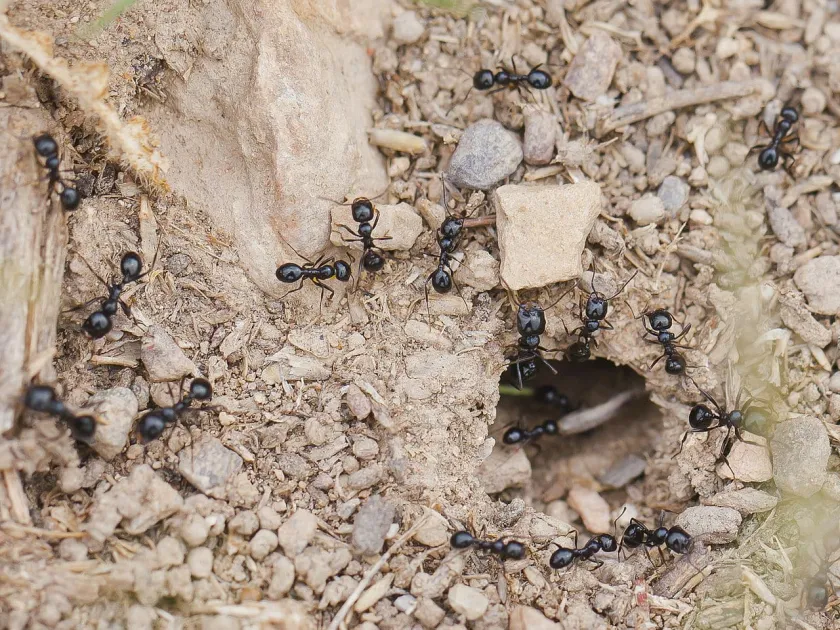
Description
How to identify
The little black ant, Monomorium minimum, is a tiny insect belonging to the Formicidae family. Workers are approximately 1.5 to 2 mm long and have a distinct dark brown to black color with a glossy surface.
These ants are known for their polygynous colonies, meaning they feature multiple queens, which allows the colony size to increase rapidly across agricultural and home areas.
They typically construct nests in soil, under rocks, near tree bases, or inside structural cracks, often selecting sites that provide easy access to moisture and potential food sources.
Little black ants are highly active during the day, using complex chemical pheromone trails to communicate and navigate towards abundant food supplies like honeydew.
Their life cycle includes complete metamorphosis: egg, larva, pupa, and adult. Depending on ambient temperatures, a new generation can complete its development within a few weeks.
What it damages
The primary concern regarding Monomorium minimum in agriculture is their mutualistic relationship with aphids, mealybugs, and scales. Ants protect these sucking pests from natural predators.
This protection leads to massive outbreaks of aphids on crops, which causes leaf curling, shoot stunting, and can lead to the transmission of viral plant diseases.
Ants also damage seeds in the soil by consuming the endosperm, which significantly impacts germination rates, especially for small-seeded horticultural crops.
In greenhouses and nursery environments, they can nest directly in potting containers, displacing soil and damaging delicate root systems as they dig tunnels.
They are also known to invade flowers, causing mechanical injury to petals and reproductive parts while harvesting nectar, thereby reducing fruit quality and yield.
When it appears
Activity typically begins in early spring as soil temperatures rise, with peak foraging occurring during the warm summer months when aphid populations are at their highest.
In indoor agricultural settings, such as commercial greenhouses, these ants can remain active throughout the entire year due to consistent climate control.
Nuptial flights of reproductive individuals usually take place during mid-summer, facilitating the spread of the species to new areas of the orchard or field.
As temperatures begin to drop in autumn, colonies often consolidate and move towards more stable environments, including building foundations or deep soil layers.
Winter survival is typically achieved through reduced metabolic activity in deeper nests, allowing the colony to re-emerge promptly as soon as spring temperatures arrive.
Signs of infestation
The most reliable sign of an infestation is the presence of distinct ant trails moving along stems and branches toward dense clusters of aphids or mealybugs.
- Honeydew accumulation on foliage, which eventually turns into sticky patches and attracts sooty mold.
- Small, crater-shaped piles of loose soil near the base of garden plants or along walkways.
- Sudden wilting of container plants caused by nest building inside the potting soil.
- Interference with beneficial insects that would otherwise naturally suppress pest populations.
Persistent presence of ants on specific plant parts is a diagnostic indicator that they are "tending" a colony of sucking insects that need to be controlled.
Control measures
A successful management strategy requires an integrated approach that targets both the ants and the pests they protect, such as aphids and scales.
Baiting is considered the most effective control method, as foragers carry the insecticide back to the colony, effectively eliminating the queen and workers.
Applying sticky bands or barrier traps to tree trunks is a physical control method that prevents ants from reaching the canopy, thereby exposing aphids to natural enemies.
Maintaining clean garden borders and removing debris helps eliminate nesting sites, forcing the ant population to relocate away from valuable crop areas.
While chemical sprays may provide short-term relief, systemic insecticides should be used carefully to avoid harming pollinators and other beneficial insects within the ecosystem.
Taxonomy
- Latin name
- Monomorium minimum
- Order
- Hymenoptera
- Family
- Formicidae
- EPPO code
- MONOMI
Discussion
No discussions yet — be the first.