
Flower ant
Monomorium floricola
Description
How to identify
The flower ant (Monomorium floricola) is a small species of ant within the family Formicidae, recognized as a significant pest in greenhouses and tropical environments.
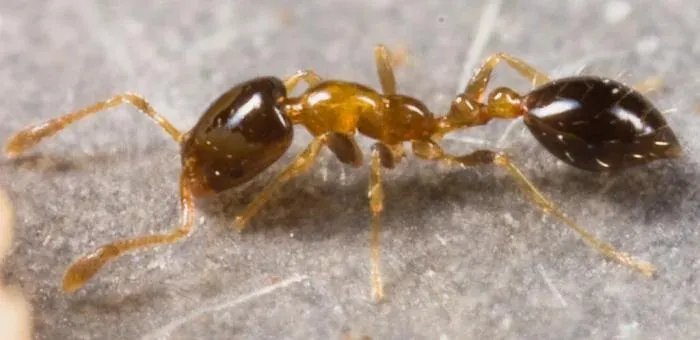
The worker ants are very small, measuring approximately 1.5–2 mm in length, and typically display a bicolored body with dark brown or black segments.
This species is highly social and polygynous, meaning their colonies often contain multiple queens, facilitating rapid population expansion and survival.
They are highly adaptive to human-made structures and are frequently transported globally through international trade of ornamental plants and soil.
Though they are not typically aggressive toward humans, their ecological impact in agricultural settings is substantial due to their symbiotic relationships.
What it damages
The flower ant acts as a major pest by protecting sap-sucking insects, such as aphids, mealybugs, and scale insects, from their natural predators.
By providing protection and transport, these ants ensure the survival and proliferation of the aphids, which in turn severely damage the host plants.
The host plants suffer from loss of sap, stunted growth, flower abortion, and structural deformation caused by the explosion in the aphid population.
Additionally, the honeydew secreted by these sap-suckers promotes the growth of sooty mold, a black fungal layer that blocks photosynthesis.
- Ornamental greenhouse plants and flowers.
- Citrus and various fruit-bearing shrubs.
- Vegetable crops in indoor cultivation systems.
When it appears
As a tropical-origin species, the flower ant is active year-round in controlled indoor environments like greenhouses and residential interiors.
Their activity levels are highly dependent on temperature; they thrive and reproduce rapidly in conditions between 22°C and 30°C.
In outdoor environments, they are limited to tropical and subtropical climates, remaining active as long as temperatures remain above the threshold for development.
Indoor infestations do not follow seasonal patterns, allowing colonies to persist indefinitely provided there is moisture and access to food sources.
New colonies can be established throughout the year when infested pots or cuttings are introduced to a new environment.
Signs of infestation
The primary visual indicator is the presence of distinct ant trails across the soil surface or climbing up the stems of infested plants.
An unexpected increase in aphid or mealybug populations on young growth, accompanied by ant activity, confirms the presence of these pests.
The accumulation of sticky honeydew on the leaves is a classic sign, often followed by the development of black sooty mold on the leaf surfaces.
If ants are observed constantly tending to insects on a plant, it is a clear sign that the ants have colonized the root zone or a nearby structure.
Physical wilting and general decline of the plant despite adequate watering often suggest a hidden infestation of these ants and their associated partners.
Control measures
Effective management requires the use of slow-acting toxic bait gels that allow worker ants to carry the poison back to the queens and brood.
It is essential to concurrently treat the plant for the associated sap-sucking pests using systemic insecticides to eliminate the ants' primary food source.
Quarantine new plant material upon arrival to ensure that nests hidden in the potting medium do not spread to existing collections.
Maintaining high hygiene standards in greenhouses, including the removal of debris and excessive moisture, helps to discourage nesting.
Barriers such as sticky tapes around plant pots can effectively prevent ants from accessing the foliage, thereby reducing their protective influence over aphids.
Taxonomy
- Latin name
- Monomorium floricola
- Order
- Hymenoptera
- Family
- Formicidae
- EPPO code
- MONOFL
Discussion
No discussions yet — be the first.