
Monomorium destructor
Monomorium destructor
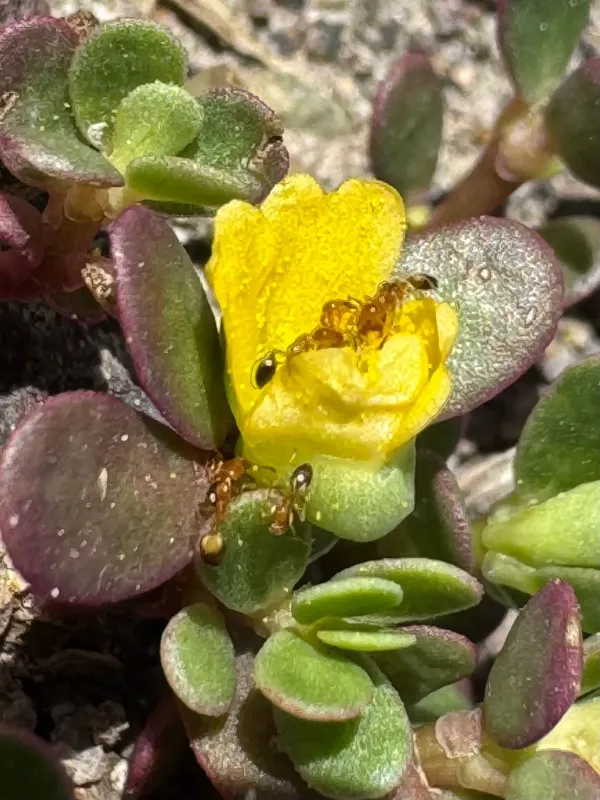
Description
How to identify
Monomorium destructor is a small, invasive ant species within the family Formicidae. Adult workers are approximately 2–3 mm in length and display a color range from yellowish-brown to dark brown.
They are characterized by a polymorphic social structure, meaning multiple worker sizes exist. The species is polygynous, with colonies housing multiple queens, which facilitates rapid population growth.
The ant's body features a distinct two-segmented petiole (waist) and a sting. Their small size allows them to infiltrate nearly any structure, including sensitive agricultural installations.
Unlike many native ant species, they are highly aggressive when defending territory or foraging, often driving out other insect populations in the vicinity.
Proper identification usually requires professional microscopic examination, focusing on the configuration of their antennae and thoracic structure to confirm the species.
What it damages
Monomorium destructor is a notorious pest in greenhouses and agricultural settings. They cause direct damage by feeding on plant tissues, specifically roots, stems, and newly sprouted seedlings.
The ants frequently farm aphids, mealybugs, and scale insects, protecting them from natural predators. This symbiotic relationship leads to severe infestations of sap-sucking pests.
They are known for damaging electrical systems by chewing through wire insulation, which disrupts automatic irrigation, heating, and lighting systems, leading to secondary crop loss.
Seeds stored or planted in trays are often consumed by workers, leading to poor germination rates and the necessity of re-seeding entire cultivation areas.
The cumulative stress caused by these ants results in stunted plant growth, increased susceptibility to secondary fungal diseases, and a significant reduction in overall crop yield.
When it appears
In temperature-controlled greenhouses or storage facilities, Monomorium destructor maintains active status throughout the year, as they do not require a winter diapause.
In outdoor environments, their activity levels track with seasonal warming, typically peaking from late spring through early autumn when soil temperatures are high.
During drought periods or cold snaps, these ants often migrate into human-made structures or deeper soil layers to seek consistent moisture and stable heat.
Their life cycle is highly temperature-dependent; high thermal levels significantly accelerate development from egg to adult, allowing for multiple generations per season.
Because they are highly adaptable, they can persist in various microclimates, making them a year-round threat in regions with mild to tropical winters.
Signs of infestation
The most common sign of an infestation is the presence of distinct foraging trails along the base of greenhouse walls, irrigation lines, or structural supports.
An unusual and sudden increase in aphid or mealybug populations on previously healthy plants often indicates that ants are tending these insects.
Visual evidence of small, irregular holes on succulent stems or exposed roots in the soil is a classic symptom of direct feeding damage caused by these ants.
Frequent ant activity around electrical control panels, sensors, or automated timers is a red flag for localized nesting or significant foraging presence.
Aggregations of workers near water sources, such as drips from irrigation valves, suggest that a nesting site is established in the immediate area.
Control measures
Managing Monomorium destructor requires an integrated pest management (IPM) strategy because they are difficult to eliminate with standard contact insecticides alone.
- Application of slow-acting toxic baits containing fipronil or hydramethylnon, which workers carry back to the colony to kill the queens.
- Regular cleaning and moisture management to remove attractive food sources and nesting spots within the cultivation area.
- Sealing cracks, crevices, and entry points in greenhouse structures to prevent further migration.
- Active suppression of aphid and scale insect populations to reduce the ants' motivation to forage on the plants.
- Monitoring with adhesive traps to identify and treat hotspots before the colony expands throughout the facility.
Success depends on the consistent placement of baits and the coordination of treatments across all greenhouse compartments to prevent re-colonization.
Taxonomy
- Latin name
- Monomorium destructor
- Order
- Hymenoptera
- Family
- Formicidae
- EPPO code
- MONODE
Discussion
No discussions yet — be the first.