
Antarctic ant
Monomorium antarcticum
Description
How to identify
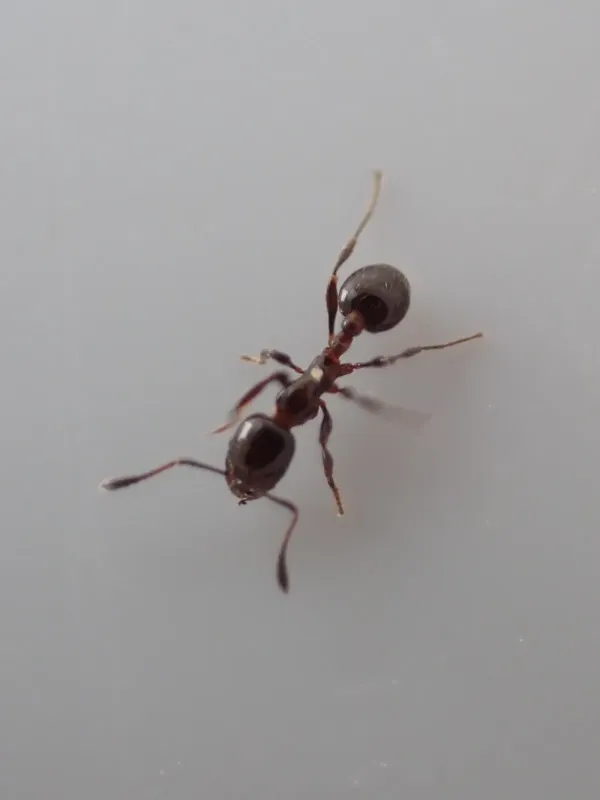
The Antarctic ant (Monomorium antarcticum) is a small, opportunistic species of ant, native to New Zealand, known for its high adaptability to varying environmental conditions.
Workers are typically 2–3 mm long and display a dark brown to black coloration, with a physical structure that includes a two-segmented pedicel between the thorax and abdomen.
They are known for forming large, polydomous colonies, which means they maintain multiple nest sites, making them particularly difficult to eradicate once they establish themselves in an area.
These ants are highly social insects with a well-defined caste system; they rely on environmental cues and temperature stability to manage the development of their extensive brood.
Identification in the field is facilitated by their foraging behavior, as they often form distinct trails when moving between nest sites and abundant food sources like aphid colonies.
What it damages
The primary economic damage caused by Monomorium antarcticum is its mutualistic relationship with honeydew-producing insects, such as aphids and scale insects, which they actively protect.
By preventing natural predators like ladybugs from accessing aphids, the ants enable the pest population to flourish, causing severe sap depletion and stress to the host plants.
Ants themselves can occasionally cause direct damage by feeding on young sprouts, germinating seeds, and floral buds, especially when natural sugar sources become scarce in the environment.
Their nesting activities in the soil often disturb the root zones of vegetable crops and seedlings, leading to air pockets around roots that can cause plants to wilt and fail to thrive.
Furthermore, the physical movement of these ants contributes to the dispersal of plant pathogens and the spread of sooty mold, which can severely degrade the quality of harvested crops.
Control measures
Effective management begins with controlling the primary pests that attract ants; by eliminating aphid populations, you remove the food source that sustains the ant colonies.
Physical barriers, such as sticky bands applied to the trunks of fruit trees, are highly effective at preventing ants from reaching the canopy and protecting their livestock.
Baiting is the most recommended chemical control method, as it relies on workers carrying toxicant-loaded bait back to the nests to kill the queens and colony members effectively.
Regular maintenance of the agricultural environment, including the removal of debris, stones, and excess mulch near crops, reduces the number of suitable sites for nesting.
Integrated Pest Management (IPM) protocols should emphasize the use of horticultural oils and soaps to manage aphids, combined with habitat modification to discourage permanent ant settlement.
Taxonomy
- Latin name
- Monomorium antarcticum
- Order
- Hymenoptera
- Family
- Formicidae
- EPPO code
- MONOAN
Discussion
No discussions yet — be the first.