
Monomorium
Monomorium
Description
How to identify
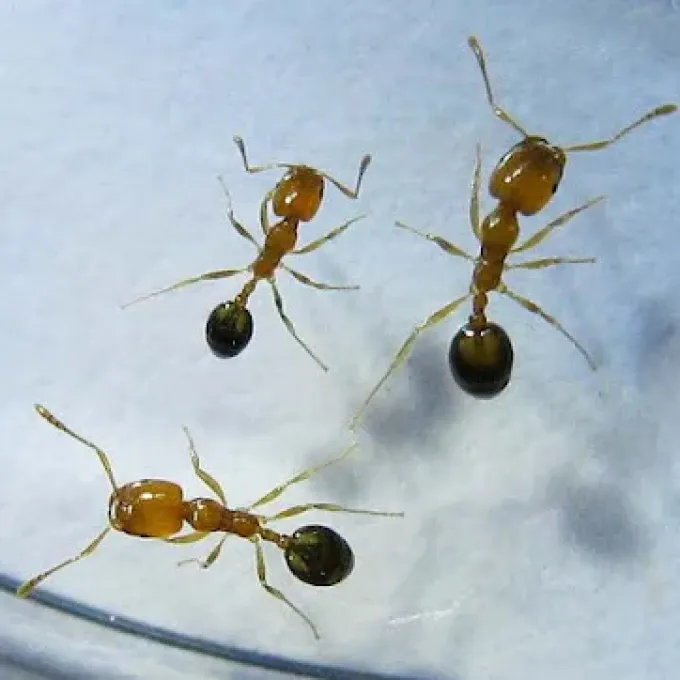
Monomorium is a genus of ants belonging to the family Formicidae and the order Hymenoptera. These ants are notoriously small, typically measuring between 2 to 3 mm in length, and vary in color from light yellow to deep reddish-brown or black.
One of the key biological features of this genus is their social structure, which often includes polygyne colonies, meaning multiple queens coexist within a single nest. This makes their colonies exceptionally resilient and difficult to eradicate.
The morphological identification of Monomorium involves observing the narrow petiole, which consists of two distinct segments. Their antennae usually end in a well-defined club of three segments, which is a diagnostic feature used by entomologists.
They undergo a complete metamorphosis: egg, larva, pupa, and adult. Due to their small size and adaptability, they can thrive in greenhouses, indoor environments, and agricultural fields where they establish hidden nests in the soil.
Worker ants are opportunistic foragers that travel long distances along established chemical trails, making them highly efficient at finding food sources and protecting their territory from competitors.
What it damages
While they do not feed on plant tissue directly as a primary diet, Monomorium ants cause significant indirect damage by tending and protecting sap-sucking insects like aphids, mealybugs, and scale insects.
By preventing natural predators from reaching these pests, the ants enable aphid populations to reach levels that cause severe plant stress, leaf curling, and overall reduction in crop health and yield.
In greenhouses and nurseries, these ants can build nests within the root zones of seedlings or potted plants. Their excavating activities disrupt the soil, damaging delicate root hairs and often leading to plant dehydration or death.
The honeydew excreted by the aphids they farm becomes a growth substrate for sooty mold, a black fungus that covers leaves and impairs the plant's ability to perform photosynthesis efficiently.
In some cases, Monomorium ants may also feed on the seeds of germinating plants or damage the reproductive parts of flowers, leading to poor fruit set and reduced quality of harvested agricultural products.
Signs of infestation
The most common sign of an infestation is the presence of consistent, narrow ant trails moving along greenhouse structures, irrigation lines, or the surface of the soil around affected plants.
A sudden, unexplained surge in aphid or whitefly populations on specific plants is a strong indicator that ants are tending these insects and protecting them from beneficial predatory insects.
Finding small mounds of fine, loose soil around the base of stems or at the edges of containers suggests that a nest has been established nearby, compromising the physical stability of the root environment.
A sticky residue on the foliage, followed by the appearance of a dark, powdery fungal growth (sooty mold), confirms the presence of sap-sucking insects supported by an active ant colony.
Increased nighttime or early morning ant activity around flower buds or young succulent shoots is another primary sign that they are harvesting nectar or tending to colony-sustaining pests.
Control measures
Effective management of Monomorium requires targeting the entire colony, including the queens, rather than just the visible workers. Baiting systems are generally considered the most effective control method.
Using slow-acting, insecticide-laced bait is highly recommended because it allows foraging workers to carry the poison back to the nest, eventually eliminating the queens and collapsing the colony structure.
Cultural control practices, such as consistent soil cultivation and removing debris, help destroy established nests and make the environment less hospitable for colony relocation.
- Applying sticky barriers to the trunks of fruit trees to prevent ants from accessing the canopy.
- Utilizing companion planting or botanical extracts to repel ants from sensitive growing areas.
- Strict monitoring and early intervention to manage aphid populations, thereby removing the ants' primary food source.
In commercial greenhouse settings, systemic insecticides or granular treatments approved for soil application can be used, ensuring all safety precautions are followed to protect the environment and workers.
Taxonomy
- Latin name
- Monomorium
- Order
- Hymenoptera
- Family
- Formicidae
- EPPO code
- MONOSP
Discussion
No discussions yet — be the first.