
Western velvet ant
Liometopum occidentale
Description
How to identify
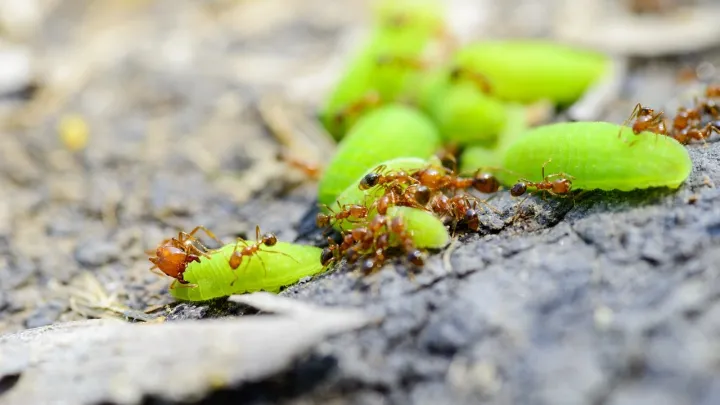
The Western velvet ant (Liometopum occidentale) belongs to the order Hymenoptera, family Formicidae. It is characterized by its distinctively velvety body surface and significant polymorphism among workers.
Physically, these ants often display a reddish-orange thorax and a dark, almost black abdomen. They utilize pheromone trails extensively, allowing them to organize efficiently within the garden environment.
They typically construct nests within rotting wood, inside living or dead tree trunks, or in the soil near root systems. Their colonies can grow to be quite large and are known for their defensive behavior.
Identification is easiest by observing their movement patterns on tree trunks. Unlike mound-building ants, they prefer discreet locations, making them harder to spot until a large colony is established.
Their life cycle is highly dependent on symbiotic relationships with honeydew-producing insects like aphids, which are essential for the colony's nutritional needs.
What it damages
The primary damage is indirect, caused by their intensive "farming" of sap-sucking insects. By protecting aphids and scales from natural predators, the ants allow these pests to proliferate unchecked.
This massive aphid population drains essential nutrients from the tree, causing leaf curling, stunted growth, and general physiological stress to the host plant.
The accumulation of honeydew on foliage encourages the growth of sooty mold, a fungus that forms a dark coating, effectively blocking sunlight and inhibiting photosynthesis.
When nesting inside trees, they expand existing cavities and bore into the wood, creating entry points for secondary infections, fungi, and further decay of the structure.
In extreme cases, large colonies may aggressively target young saplings, damaging the bark at the root collar, which compromises the tree's vascular system and can lead to death.
When it appears
Activity begins in early spring, as temperatures rise, allowing workers to emerge and begin colony maintenance and foraging for the first spring aphid blooms.
Summer is the period of peak activity, with constant movement between the nest and the canopy to harvest honeydew and manage their aphid "herds."
As autumn sets in, the colony gradually reduces outdoor activity, retreating deeper into the wood or soil to prepare for winter hibernation or diapause.
The rate of colony growth is heavily influenced by the seasonal climate; consistent warmth and moisture during the spring and summer enable faster development of larvae.
During prolonged dry spells, these ants increase their foraging efforts, often scavenging for plant moisture and becoming more destructive to the bark and tender shoots of plants.
Signs of infestation
Clear trails of ants moving rhythmically up and down tree trunks are the most visible sign of an infestation, usually leading to aphid clusters in the upper branches.
A sticky residue on leaves and branches, known as honeydew, is a tell-tale sign that sap-sucking insects are present and being protected by the ants.
The appearance of black sooty mold on the foliage is a secondary symptom, indicating that ants have been protecting aphid colonies on the tree for an extended period.
Loose soil or debris pushed out from cracks in the bark or near the tree base indicates the presence of a nest entrance within the structure of the tree.
Visible decline in tree health, including yellowing leaves, premature leaf drop, and distorted new growth, suggests that the ant-aphid association is significantly impacting the plant.
Control measures
Effective management requires a multi-pronged approach, focusing on mechanical barriers like sticky traps installed around the trunk to isolate the canopy.
Using slow-acting toxic baits is a highly recommended strategy, as foraging workers will carry the poison back to the nest, eliminating the queen and the entire colony.
Controlling the aphid population is critical; by removing the ants' food source through the use of systemic or contact insecticides, they are forced to leave the tree.
Cultural practices, such as pruning damaged branches and removing dead wood, eliminate the nesting sites required for the ants to establish their colonies.
- Installation of adhesive tree bands.
- Application of bait stations targeting the colony.
- Regular insecticide treatments for aphid control.
- Sanitary pruning and removal of infested wood.
Taxonomy
- Latin name
- Liometopum occidentale
- Order
- Hymenoptera
- Family
- Formicidae
- EPPO code
- LIOMOC
Discussion
No discussions yet — be the first.