
Liometopum ant
Liometopum
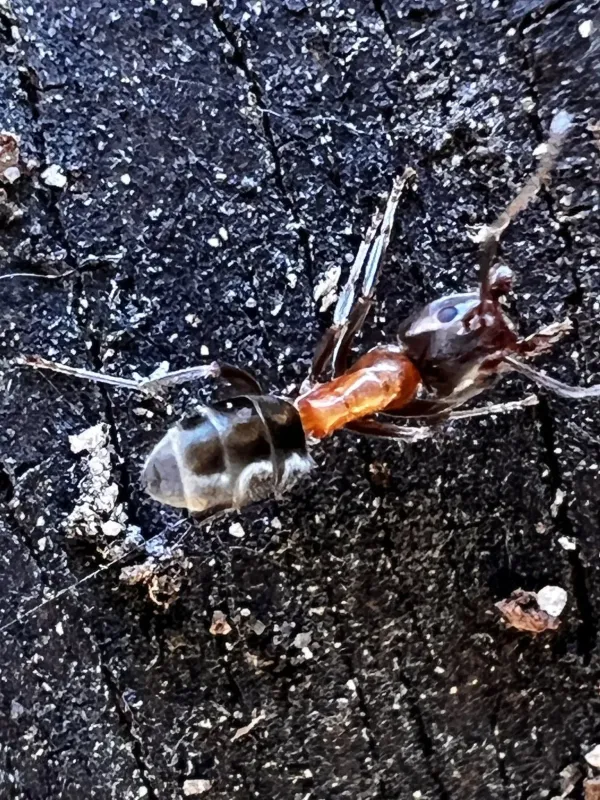
Description
How to identify
Ants of the genus Liometopum belong to the family Formicidae and the subfamily Dolichoderinae. These are moderately large ants, with worker individuals typically ranging from 4 to 7 mm in length.
The coloration of these ants is generally dark brown to black, often with a subtle shine. They are characterized by a wide head, twelve-segmented antennae, and a single-segmented petiole.
These ants are known for their ability to secrete specific chemical compounds from their glands, which produce a distinct odor when the colony is disturbed or threatened.
The development of the colony is typical for social insects, passing through egg, larva, and pupal stages. In Liometopum, pupae are often contained within protective, silk-like cocoons.
They are primarily arboreal, showing a strong preference for old, decaying hardwood trees where they construct their nests within existing cavities or rotting wood.
What it damages
These ants typically target weakened hardwood trees, including oaks, poplars, and various orchard species like apple trees. They do not feed on healthy wood directly.
Their primary impact is the mechanical damage they cause by expanding existing cracks, hollows, or rotten areas within the trunk to accommodate their growing colony.
They act as guardians for aphids and other sap-sucking insects, protecting them from natural predators. This symbiotic relationship leads to increased aphid populations, which severely stress the host plant.
The tunnels created by the ants create entry points for secondary infections, such as fungi and bacteria, which can accelerate the wood rot process significantly.
In severe cases, the structural integrity of the tree is compromised, leading to the weakening of branches and, ultimately, the death of the tree if the infestation remains unchecked.
When it appears
The seasonal activity begins in early spring as temperatures rise, typically when the ambient air temperature consistently stays above 10-12 degrees Celsius.
Worker activity reaches its peak during the mid-summer months, corresponding with the period of rapid larval development and expansion of the colony's nest structures.
As autumn approaches, the ants begin to prepare for dormancy, moving their brood into deeper, more insulated sections of the tree trunk to survive the coming cold.
Winter is spent in a state of diapause inside the protective galleries of the tree, where the insects survive on energy reserves and the relative stability of the wood environment.
Their life cycle is highly synchronized with the tree's growth cycle, as they rely heavily on honeydew produced by aphids that thrive on the new spring foliage of the trees.
Signs of infestation
The most visible sign of an infestation is the presence of large numbers of black ants moving in defined trails along the bark, especially near wounds or existing cavities.
Fine wood dust or frass found at the base of a tree is a clear indicator that the ants are actively excavating and expanding their gallery system inside the wood.
Sticky honeydew residue on the leaves and twigs suggests a thriving aphid colony, which serves as a primary food source for the ant colony residing in the trunk.
Tapping the tree trunk may produce a hollow, dull sound, indicating that significant portions of the internal wood have been removed or decayed by the ant activity.
Moist spots or dark sap exudations on the bark often mark the entrances to the ant colony's primary passages, where moisture frequently accumulates due to their activity.
Control measures
Mechanical maintenance, such as cleaning away dead bark and sealing tree wounds with specialized tree wound dressings, is the first line of defense against colonization.
Installing sticky traps or physical barriers around the tree trunks can effectively disrupt the ants' access to the upper canopy, thereby reducing aphid protection.
Controlling aphid populations using systemic insecticides or biological control agents helps reduce the tree's attractiveness to ants by eliminating their primary food source.
Forestry management should prioritize the removal of heavily damaged or hollow trees that serve as reservoirs for ant populations, preventing them from spreading to healthier trees.
For established colonies, targeted insecticide treatments applied directly to the entry points or galleries may be necessary to manage the infestation effectively.
Taxonomy
- Latin name
- Liometopum
- Order
- Hymenoptera
- Family
- Formicidae
- EPPO code
- LIOMSP
Discussion
No discussions yet — be the first.