
Argentine ant
Linepithema
Description
How to identify
The Argentine ant (Linepithema humile) is a highly successful invasive species belonging to the Formicidae family, known for its significant impact on global agriculture.
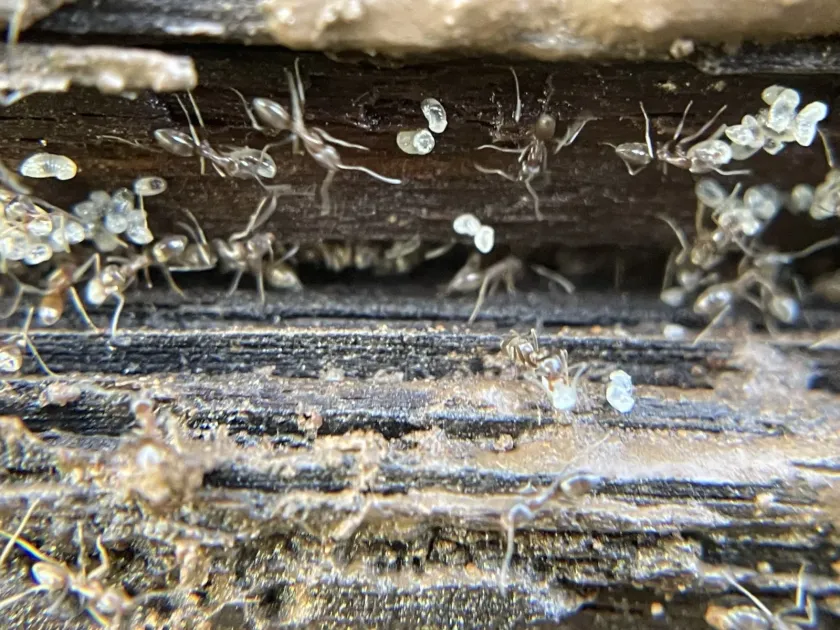
Workers are uniform in appearance, about 2–3 mm long, and light to dark brown, lacking the distinct odor typically associated with other common house ant species.
They form massive, interconnected supercolonies with multiple queens, which allows them to thrive and expand aggressively into new territories.
This species is exceptionally adaptable and dominates the environments it enters, rapidly displacing native ant species and beneficial insects.
Due to their high level of cooperation, they can survive severe environmental changes and resist most standard eradication efforts.
What it damages
The primary economic damage caused by Argentine ants is the indirect protection of honeydew-producing pests like aphids, mealybugs, and scale insects.
By fending off natural predators and parasitoids, the ants allow these sap-sucking insects to multiply, which severely weakens plants and stunts growth.
Infested crops, including citrus, grapes, and various ornamental shrubs, suffer from leaf yellowing, shoot deformation, and the development of sooty mold.
In addition to agricultural damage, they often invade greenhouses, irrigation systems, and residential areas, causing nuisance and contaminating food supplies.
In cases of extremely high population density, they may even damage plant roots or interfere with workers during harvest operations.
When it appears
Activity typically begins in early spring, as temperatures rise and the ants start foraging for food to support their growing colonies.
Summer is the peak season for foraging, as the energetic demands of the expanding colony are at their highest during this warm period.
In regions with mild winters, the Argentine ant remains active throughout the year, meaning they can cause continuous damage to perennial crops.
Migration often occurs during periods of extreme heat or drought, as colonies seek out moisture sources provided by irrigated fields and garden landscapes.
During the cooler autumn months, colonies may consolidate in protected areas, including root zones, wood piles, or building foundations, to prepare for winter.
Signs of infestation
The most reliable sign of an infestation is the presence of persistent, trunk-climbing trails of ants moving between the ground and tree canopies.
An abundance of honeydew-producing pests on foliage, which are actively tended by ants, is a clear indicator of a severe Argentine ant problem.
Sticky residue on leaves and branches, often leading to the growth of black sooty mold, is a typical byproduct of their symbioses.
Observing a lack of native insect diversity in the garden or field is a hallmark sign that Argentine ants have overtaken the local ecosystem.
Disturbed soil around nest sites, often found under mulch, rocks, or in decaying organic matter, reveals the presence of large, active colonies.
Control measures
Effective management requires a multi-faceted strategy that targets both the ants and the pests they protect, such as aphids and scale.
- Apply sticky barriers or tree bands to trunks to prevent ants from reaching the foliage and protecting aphids.
- Use slow-acting, bait-based insecticides that foragers can transport back to the nest to neutralize queens.
- Regularly monitor and manage aphid or mealybug populations with appropriate biological or chemical controls to remove the ants' food source.
- Eliminate harborages by clearing debris, weeds, and decaying wood near vulnerable crops.
Because they live in supercolonies, localized control efforts are often insufficient; consistent and area-wide monitoring is required for success.
Taxonomy
- Latin name
- Linepithema
- Order
- Hymenoptera
- Family
- Formicidae
- EPPO code
- LINESP
Discussion
No discussions yet — be the first.