
Spiny ant
Leptothorax echinatinodis
Description
How to identify
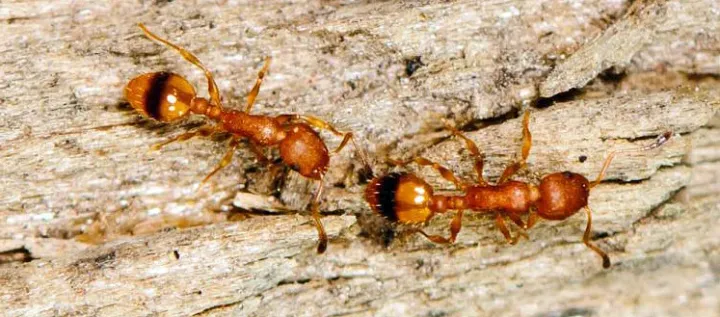
The spiny ant (Leptothorax echinatinodis) is a small species of the Formicidae family, order Hymenoptera. It is easily recognized by the distinct spines on the thorax and its yellowish-brown coloration.
These ants typically nest in small colonies, often occupying wood crevices, tree bark, or hollow stems of various plants. Their secretive behavior makes them difficult to spot during the early stages of infestation.
The lifecycle follows a complete metamorphosis, with the colony structure being highly organized around the queen. They are well-adapted to surviving in diverse temperate climates, utilizing organic debris for nesting.
Adult workers are small, usually ranging from 2 to 3 mm in length. Their bodies are covered in fine setae (hairs), and they are characterized by relatively slow and methodical movement patterns.
Given their preference for woody environments, they are frequently found in orchard settings, where they utilize existing tunnels in trees rather than building elaborate mounds in the soil.
What it damages
The primary economic damage caused by Leptothorax echinatinodis is indirect, as they form mutualistic relationships with aphids, scales, and other sap-sucking insects, protecting them from natural predators.
Fruit trees and ornamental shrubs are the most affected crops. The protection provided by the ants allows aphid populations to reach levels that severely stress the host plant, resulting in leaf curling and shoot stunting.
As the aphids suck the plant sap, the ants collect the honeydew secretion. This accumulation of honeydew can promote the growth of sooty mold, further reducing the photosynthetic capacity of the plant leaves.
Mechanical damage to the plant tissue occurs when these ants expand their nesting sites within the bark or stems, potentially exposing the interior of the plant to fungal pathogens and wood-rotting bacteria.
High ant activity on a tree is a clear diagnostic sign of a secondary infestation by sap-sucking pests that require immediate management to preserve plant health.
Control measures
Effective control strategies focus on disrupting the interaction between the ants and their hosted sap-sucking pests. Sticky barrier bands applied to tree trunks serve as an excellent physical deterrent.
The use of slow-acting toxicant baits, specifically formulated as gels, is highly effective, as the worker ants transport the bait back to the colony, ultimately eliminating the queen and the brood.
Proper orchard sanitation is crucial; removing dead wood, fallen branches, and decaying bark helps eliminate potential nesting sites and reduces the overall ant population in the area.
Managing the aphid population through the application of horticultural oils or soap sprays will make the plant less attractive to the ants, as the honeydew source is removed.
- Installation of sticky trunk barriers.
- Application of specialized ant bait gels.
- Regular sanitation of woody plant debris.
Taxonomy
- Latin name
- Leptothorax echinatinodis
- Order
- Hymenoptera
- Family
- Formicidae
- EPPO code
- LEPXEC
Discussion
No discussions yet — be the first.