
Leptothorax ants
Leptothorax
Description
How to identify
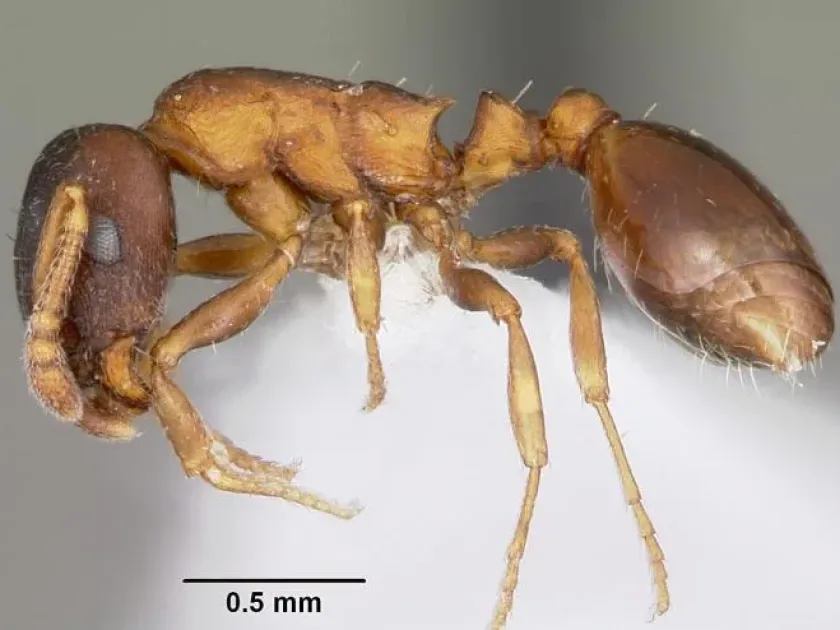
The genus Leptothorax belongs to the family Formicidae (order Hymenoptera). These are small ants, typically measuring between 2 and 4 millimeters in length.
They are characterized by a distinct body shape featuring two nodes on the petiole and a complex thoracic structure. They are often dark brown or yellowish in appearance.
These ants are generally shy and inconspicuous. Unlike some aggressive invasive species, they prefer to build small, decentralized nests in natural cavities.
They are frequently found in decaying wood, beneath tree bark, or inside plant stems. Their colonies are relatively small, often containing only a few hundred individuals.
Identifying them requires careful observation, as their small size allows them to hide effectively within the structural elements of trees and shrubs.
What it damages
Leptothorax ants are not considered major plant pests in terms of direct tissue destruction. They do not feed on healthy plant organs, leaves, or roots.
The primary concern is their association with other garden pests. They often act as tenders for aphids, scale insects, and mealybugs, protecting them from natural predators.
By protecting these sap-sucking insects, they facilitate the spread and population growth of pests that can significantly damage the health and vigor of the plants.
In addition, they may further damage trees by occupying pre-existing galleries created by wood-boring insects, which can expedite the structural decay of the wood.
In nursery or greenhouse settings, their nesting activity in potting media or root zones can occasionally cause stress to young, vulnerable transplants.
When it appears
Ant activity typically begins in early spring, as temperatures rise and the overwintering colonies begin to emerge and resume foraging for food resources.
Summer is the peak period for their reproductive cycle, during which alates (winged reproductive forms) emerge for nuptial flights to establish new colonies elsewhere.
As autumn approaches, the ants scale back their external activity and begin to settle deeper into their wooden shelters to survive the winter dormancy period.
Their activity is strongly regulated by temperature, though the sheltered nature of their nests provides a buffer against extreme fluctuations during the summer months.
Monitoring for these ants is most productive during the late spring and early summer when foraging workers are actively moving along branches and stems.
Signs of infestation
The most common sign of their presence is small, circular holes in bark or decayed wood, which serve as entry points to their hidden internal colonies.
Frequent movement of small dark ants on stems, especially in conjunction with the presence of aphid colonies, is a key indicator of their tending behavior.
Fine sawdust or wood frass at the base of a tree, or under loose bark, indicates that the ants are modifying or expanding their nesting galleries inside the tree.
Discovering small groups of ants under peeling bark or within rotting wood remnants is a direct confirmation of a localized Leptothorax nest.
Unlike larger mound-building ants, Leptothorax do not create large soil nests, so observations should focus primarily on the trees and woody debris themselves.
Control measures
Sanitation is the most effective management strategy. Removing decaying wood, dead branches, and rotten stumps eliminates the primary nesting sites for these ants.
Effective control of aphid and scale populations is essential. By removing the honeydew-producing pests, you naturally discourage the ants from visiting the plants.
Applying sticky, non-drying barrier bands around the trunks of fruit trees can prevent the ants from reaching the canopy where they tend to aphid colonies.
If chemical control is necessary, use bait stations designed for ants. The workers carry the toxicant back to the nest, which can effectively reduce the population.
Promoting a healthy garden ecosystem by encouraging native predators of aphids, such as ladybugs and lacewings, helps suppress the need for direct ant management.
Taxonomy
- Latin name
- Leptothorax
- Order
- Hymenoptera
- Family
- Formicidae
- EPPO code
- LEPXSP
Discussion
No discussions yet — be the first.