
Yellow ghost ant
Lasius umbratus
Description
How to identify
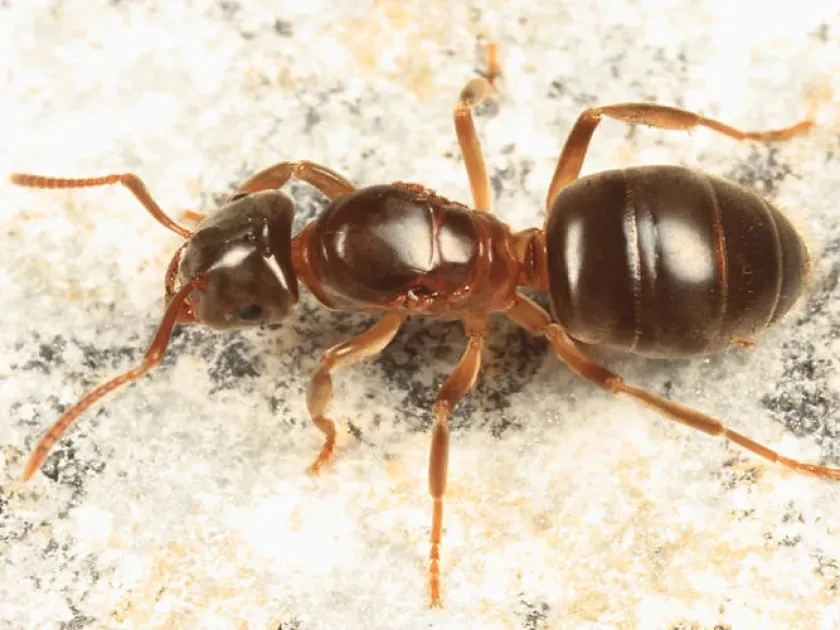
The yellow ghost ant, scientifically known as Lasius umbratus, is a species belonging to the Formicidae family. Workers are characterized by their yellowish-brown color, which provides excellent camouflage within soil and decaying wood.
A unique identifying feature of this species is the distinct lemon-like scent they release when disturbed. They are largely subterranean, preferring to live in dark, humid environments beneath surfaces.
The body size of workers typically ranges from 3 to 5 millimeters. They possess a dense covering of fine hair and a head shape typical of the Lasius genus, which helps them navigate narrow underground passages.
This species is a social parasite. The queen begins a new colony by infiltrating the nests of other Lasius species, where she eventually usurps the resident queen and takes control of the existing workforce.
These ants are commonly found nesting near the roots of old trees, inside rotting stumps, or deep within moist layers of forest or garden debris, making them difficult to spot quickly.
What it damages
The primary damage to plants is indirect, caused by the ant's symbiotic relationship with aphids. These ants actively farm and protect aphid colonies, ensuring their survival against predators.
By protecting aphids, the ants enable these sucking insects to multiply rapidly on young shoots, leading to severe nutrient depletion, leaf curling, and overall stunted plant growth.
Direct damage can occur when ants tunnel near sensitive root systems, causing root exposure or drying out, which weakens the plant's ability to uptake water and essential minerals.
Ornamental plants, fruit trees, and berry bushes are the most frequent targets, often suffering from heavy aphid infestations directly facilitated by the presence of Lasius umbratus.
Furthermore, these ants can facilitate the spread of plant viruses and fungal infections by moving aphids between healthy plant parts, turning localized issues into garden-wide problems.
When it appears
Ant activity begins in early spring as soon as the soil temperatures rise above 10 degrees Celsius, triggering the colony to emerge from its winter dormancy.
The peak activity period occurs during the summer months, particularly in July and August, when winged reproductive individuals emerge for their mating flights to establish new colonies.
Throughout the entire growing season, worker ants are constantly observed tending to aphids, synchronized with the aphid's own reproductive cycles on various host plants.
As temperatures drop in late autumn, the ants move deeper into the soil or lower sections of rotting timber to enter their winter hibernation phase.
The colony structure remains stable throughout the year, with generation turnover allowing for rapid population growth if left unchecked by environmental factors or human intervention.
Signs of infestation
A key sign of infestation is the characteristic lemon-like odor emitted when soil around tree roots or rotting wood is disturbed during maintenance or gardening.
The presence of large aphid populations on young stems that are being actively patrolled by small yellow ants indicates a symbiotic relationship is in place.
Visible trails of small ants moving up and down the trunks of fruit trees, coupled with ants gathering at the base of the tree, suggest a nearby nesting site.
Wilting, yellowing of leaves, and the presence of honeydew (a sticky substance secreted by aphids) are clear indicators that the plants are under heavy attack.
Finding small mounds of loose soil or wood shavings near the base of garden structures or trees is a strong indicator of nesting activity within the immediate vicinity.
Control measures
Effective management requires a two-pronged approach: eliminating the aphid colonies to remove the food source and targeting the ant nest directly to stop the population growth.
Applying sticky barriers or grease bands around tree trunks effectively prevents ants from reaching their aphid colonies, leaving the pests vulnerable to natural predators like ladybugs.
Using bait stations containing slow-acting insecticides is highly effective, as the worker ants carry the toxic substances back to the nest, ultimately eliminating the queen.
Sanitation is crucial; removing decaying stumps, rotting logs, and excessive garden debris prevents the ants from establishing or maintaining their hidden colonies near healthy plants.
- Install sticky bands on tree trunks.
- Use slow-acting poison baits for colony elimination.
- Manage aphid infestations with systemic pesticides.
- Remove decaying organic matter from the garden.
Taxonomy
- Latin name
- Lasius umbratus
- Order
- Hymenoptera
- Family
- Formicidae
- EPPO code
- LASIUM
Discussion
No discussions yet — be the first.