
Pavement ant
Lasius neoniger
Description
How to identify
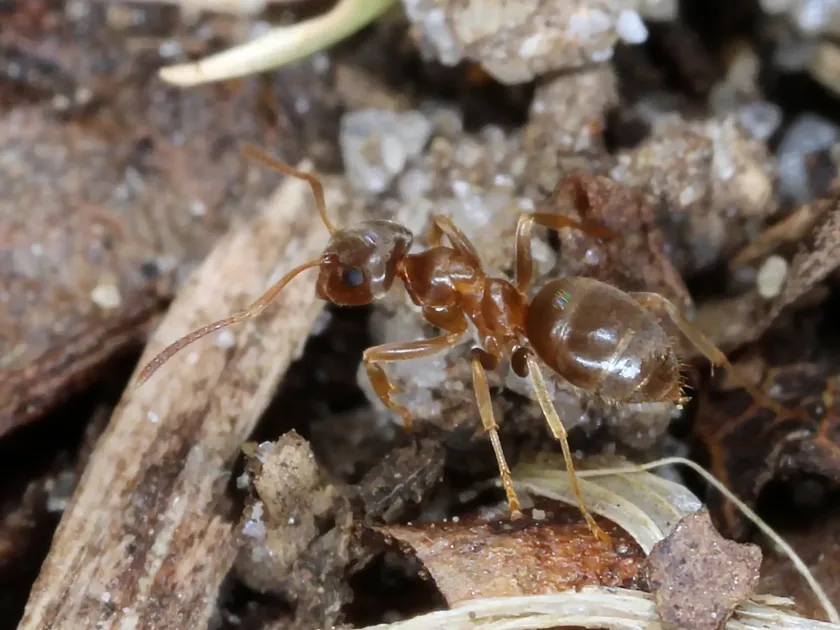
The pavement ant belongs to the order Hymenoptera, family Formicidae. These are small insects, with workers typically measuring between 2 to 4 mm in length.
The body color ranges from light brown to dark brown or nearly black. A distinctive characteristic of the species is the presence of long hairs on the thorax.
Colonies of these ants are characterized by high numbers and can occupy large areas, creating an intricate system of underground tunnels.
The queens of the species are larger than the workers, responsible for reproduction and the establishment of new colonies after the nuptial flight.
They can be identified by the typical small mounds of excavated soil they build on the surface of lawns or near the root zones of cultivated plants.
What it damages
The primary damage from Lasius neoniger involves mechanical injury to the root systems of plants during the construction of nests in the rhizosphere.
This ant species is known for its close association with aphids and other sap-sucking insects, which they actively foster and protect from natural predators.
Damage mainly affects turfgrass, as well as the roots of vegetable crops and young seedlings of fruit trees, often leading to wilting.
Ant activity causes the soil around roots to dry out due to the multitude of underground tunnels, which disrupts the capillary movement of moisture.
In commercial agriculture, their activity can lead to reduced germination rates and stunted growth in young plants due to the disruption of soil structure.
When it appears
The activity period of the pavement ant begins in early spring, as soon as the soil warms up, and lasts until late autumn.
The peak of their harmful activity occurs in mid-summer when the colony is actively breeding and rearing larvae.
Massive nuptial flights of winged individuals are most frequently observed in the late summer, facilitating the colonization of new areas.
The insects overwinter deep in the soil, below the frost line, maintaining the integrity of the colony until the return of warm weather.
Root system damage is most noticeable during drought periods when plants weakened by ant tunneling lose turgor pressure more rapidly.
Signs of infestation
The main sign of infestation is the presence of numerous small craters or mounds of soil ejected onto the surface of lawns, flowerbeds, or gardens.
A second important indicator is the appearance of large aphid colonies on the young shoots of cultivated plants, which are actively guarded by the ants.
Wilting of plants without visible pathogens on the leaves often indicates that ants have chewed through the roots or built a nest directly beneath them.
The soil around affected areas becomes loose and collapses easily under pressure, indicating the existence of subterranean voids.
Increased presence of worker ants on plant stems is an indirect sign that an ant nest is nearby.
Control measures
Controlling the pavement ant requires a comprehensive approach, including both agrotechnical methods and the use of specialized products.
Regular soil cultivation and turning over the soil in areas where nests are found is recommended to destroy the nest structure and force the colony to migrate.
- Application of baits based on stomach-action insecticides.
- Use of contact insecticides in powder or gel form in areas where insects congregate.
- Biological methods aimed at suppressing the population of aphids tended by the ants.
It is important to restrict ant access to crops by using sticky bands on the trunks of fruit trees or barriers on garden beds.
When infestation levels are high, soil insecticides are applied according to the regulations approved for specific agricultural crops.
Taxonomy
- Latin name
- Lasius neoniger
- Order
- Hymenoptera
- Family
- Formicidae
- EPPO code
- LASINN
Discussion
No discussions yet — be the first.