
Lasius grandis
Lasius grandis
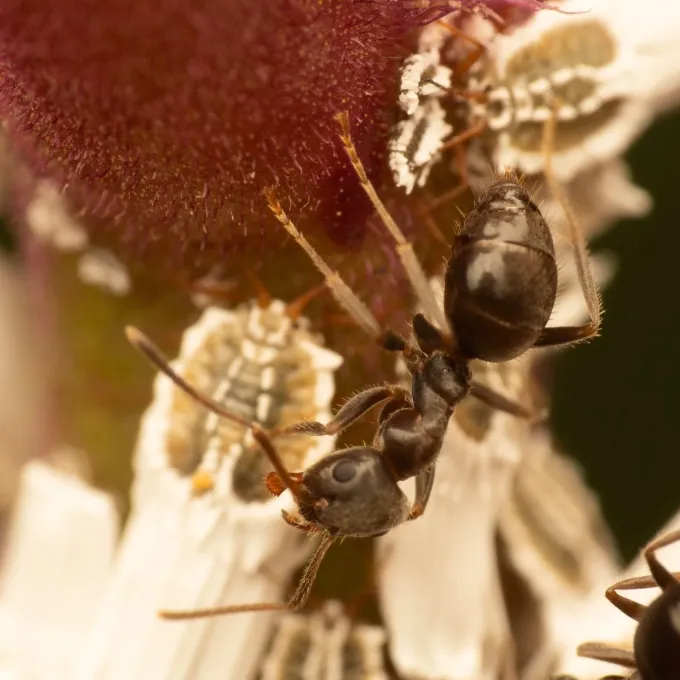
Description
How to identify
Lasius grandis belongs to the order Hymenoptera and the family Formicidae. This ant species is morphologically similar to the common black garden ant, yet it possesses specific biological traits that distinguish it in the field.
The worker ants are typically dark brown or black, ranging in length from 3 to 5 mm. They feature a distinct petiole between the thorax and abdomen, a standard anatomical characteristic for the Lasius genus that aids in accurate identification.
The queens of Lasius grandis are significantly larger than the workers. During the nuptial flight, they possess wings, which are shed after mating, allowing the queen to establish a new colony in a suitable, protected site.
These ants primarily build their nests in the soil, often under stones, tree stumps, or near the root zones of mature trees. They are known for constructing intricate tunnel systems that facilitate efficient movement between the colony and food sources.
A key behavioral identifier is their aggressive protection of their territory and their close, obligate mutualism with aphids. They actively defend aphid colonies from predators, ensuring a steady supply of honeydew for the ant colony.
What it damages
The primary damage caused by Lasius grandis is indirect; it stems from their role as "shepherds" for aphids. By protecting aphid populations from natural predators like ladybugs and lacewings, they allow aphid colonies to proliferate rapidly.
This activity threatens a wide range of plants, including fruit trees, berry shrubs, and various vegetables. Aphids feed on plant sap, leading to stunted growth, leaf curling, and severe stress for the host plant.
The presence of honeydew, a sugary excretion produced by aphids, covers the leaves and fruit. This promotes the growth of sooty mold, which blocks photosynthesis and degrades the quality and marketability of fruits and vegetables.
Furthermore, the ants' tunnel-building activities near the root zones can damage the roots of seedlings, causing localized soil disturbances and disrupting water and nutrient uptake, which may eventually lead to plant death.
In some cases, ants may directly damage flower buds to access nectar, leading to flower drop and reduced yields. This is particularly problematic for sensitive ornamental and fruit-bearing crops during the flowering season.
When it appears
The activity of Lasius grandis typically begins in early spring as soil temperatures rise. As soon as the ants emerge from their winter dormancy, they immediately begin tending to overwintering aphid eggs and early colonies.
Peak activity occurs throughout the summer months, during which the ants are constantly moving along plant stems to transport resources. This is the period of highest risk for gardens and vegetable patches.
The reproductive phase, characterized by the swarming of winged reproductives to establish new nests, usually occurs in mid-to-late summer, facilitating the spread of the colony across the landscape.
As autumn approaches, ant activity gradually wanes as they prepare for hibernation. They retreat into deeper soil layers to avoid frost, effectively sealing the nest and maintaining a safe environment for the queen and larvae.
The total duration of the active season is highly dependent on local climate conditions. Warmer, more temperate regions will see a longer active season, necessitating a more extended period of monitoring and pest management.
Signs of infestation
The most prominent sign of a Lasius grandis infestation is the formation of distinct ant trails on tree trunks. Persistent movement of ants up and down a tree is a reliable indicator of aphid presence in the canopy.
Curled, yellowing, or malformed leaves on terminal shoots are clear indicators of aphid damage. Close inspection of these sites will reveal the aphids being guarded by their ant attendants.
A sticky, shiny residue on leaves, fruit, or even on the ground beneath trees confirms the presence of honeydew. This substance is a strong indicator that a significant aphid-ant complex is active in the vicinity.
Small soil mounds or "craters" around the base of plants or near roots are clear signs of nest building. These mounds are often concealed by mulch or debris, making them harder to spot at first glance.
Sudden wilting of seedlings or young plants, despite adequate irrigation, can indicate that an ant colony has established a nest within the root zone, disturbing the plant's ability to anchor and absorb water.
Control measures
The use of sticky barrier bands (trap belts) on tree trunks is a highly effective cultural control method. This prevents ants from reaching the canopy, leaving aphids vulnerable to natural predators such as ladybugs.
Implementing bait stations containing slow-acting insecticides is an effective way to eliminate the colony. The worker ants carry the bait back to the nest, eventually eliminating the queen and stopping the colony's growth.
Regular cultivation and soil aeration are vital for disrupting ant tunnels and destroying nests. Keeping the soil surface loosened discourages ants from settling in the garden beds near your vegetables.
Natural repellents, such as essential oils, cinnamon, or diatomaceous earth, can be applied to specific areas to deter ants, though these methods require frequent reapplication to remain effective in outdoor settings.
Biological control agents, such as specialized entomopathogenic fungi (e.g., Beauveria bassiana), offer a sustainable and eco-friendly way to manage ant populations without relying solely on chemical treatments.
Taxonomy
- Latin name
- Lasius grandis
- Order
- Hymenoptera
- Family
- Formicidae
- EPPO code
- LASIGR
Discussion
No discussions yet — be the first.