
Jet black ant
Lasius fuliginosus
Description
How to identify
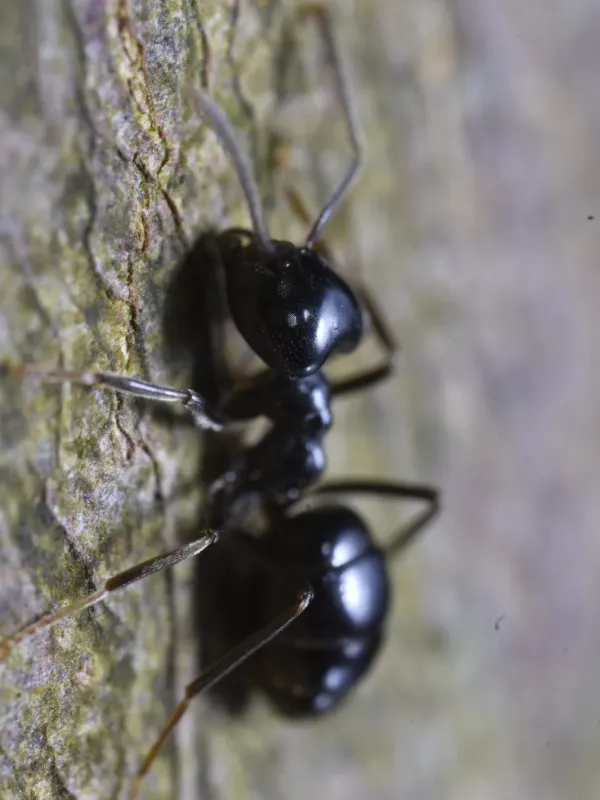
The jet black ant (Lasius fuliginosus) is a species of ant belonging to the order Hymenoptera. As its name suggests, it is easily identified by its shiny, jet-black appearance.
Workers of this species typically measure between 4 and 6 mm in length. Their bodies are smooth, and the head shape is noticeably cordate (heart-shaped), which is a key trait.
Unlike many other ants that nest in soil, these ants primarily nest inside the wood of living or decaying trees. They are known to construct "carton" nests made from chewed wood fibers and fungal mycelium.
They are relatively shy and nocturnal, preferring to move within covered trails. Their presence is often only revealed when a colony becomes quite large or when they venture out to tend aphids.
These colonies can contain tens of thousands of individuals, and the queen can live for many years, leading to a long-term presence in a single tree if left unchecked.
What it damages
The damage caused by the jet black ant is primarily structural. By tunneling into the heartwood of trees, they weaken the trunk, making the tree more susceptible to wind damage.
They prefer deciduous trees, specifically those with existing heart rot or mechanical damage. This often exacerbates the decay already present in older or stressed trees.
Perhaps more significantly, these ants are "aphid farmers." They actively protect colonies of aphids from natural predators, ensuring the aphids thrive and multiply on the tree.
Heavy aphid infestations lead to significant sap loss, stunted growth of young shoots, and the development of sooty mold, which covers the leaves and hinders photosynthesis.
Over time, the combined impact of structural tunneling and the promotion of secondary pests like aphids can significantly shorten the lifespan of garden and orchard trees.
When it appears
Activity generally begins in the early spring, as soon as temperatures remain consistently above 10-12 degrees Celsius. The colony starts to emerge from its winter dormancy.
Peak activity is observed during late May and June, which is the primary window for nest expansion and the establishment of aphid-tending routes on fruit and ornamental trees.
Throughout the summer months, the ants remain highly active, constantly moving between their nests and the canopy to harvest honeydew excreted by the aphids.
As autumn approaches and temperatures drop, the workers slowly reduce their outdoor foraging activity and retreat back into the deeper galleries of the wooden nest.
During the winter, the entire colony hibernates within the insulated wooden structure, remaining inactive until the following spring when the cycle repeats.
Signs of infestation
The most visible sign is the presence of steady, black ant trails running up and down tree trunks. These trails are often quite persistent and concentrated.
Small piles of "frass" or sawdust found near the base of the tree or in crevices of the bark are strong indicators that the ants are actively excavating the wood.
A hollow sound or audible rustling inside the trunk when tapped suggests that the wood has been significantly tunneled, indicating a well-established colony.
Persistent aphid colonies that appear on the leaves despite regular care often signify that ants are nearby, actively shielding the aphids from ladybirds and lacewings.
The discovery of black, paper-like "carton" material within hollows or bark splits is a diagnostic sign of the presence of a Lasius fuliginosus nest.
Control measures
The first line of defense is proper tree maintenance. Seal any cracks, hollows, or large wounds with professional-grade wound sealant to prevent ants from finding entry points.
Sticky bands or mechanical barriers applied to the trunk can successfully disrupt the ants' ability to reach the canopy, effectively cutting off their access to aphids.
Implementing a strict aphid management program using systemic insecticides or horticultural oils can deprive the ants of their primary food source, the honeydew.
If a nest is discovered inside a trunk, targeted application of ant-specific baits or gel insecticides can be effective, as the workers carry the poison back to the queen.
Regular pruning of dead or decaying branches is essential, as these provide ideal nesting sites for the jet black ant. Keep the tree canopy healthy and clear of debris.
Taxonomy
- Latin name
- Lasius fuliginosus
- Order
- Hymenoptera
- Family
- Formicidae
- EPPO code
- LASIFU
Discussion
No discussions yet — be the first.