
Yellow meadow ant
Lasius flavus
Description
How to identify
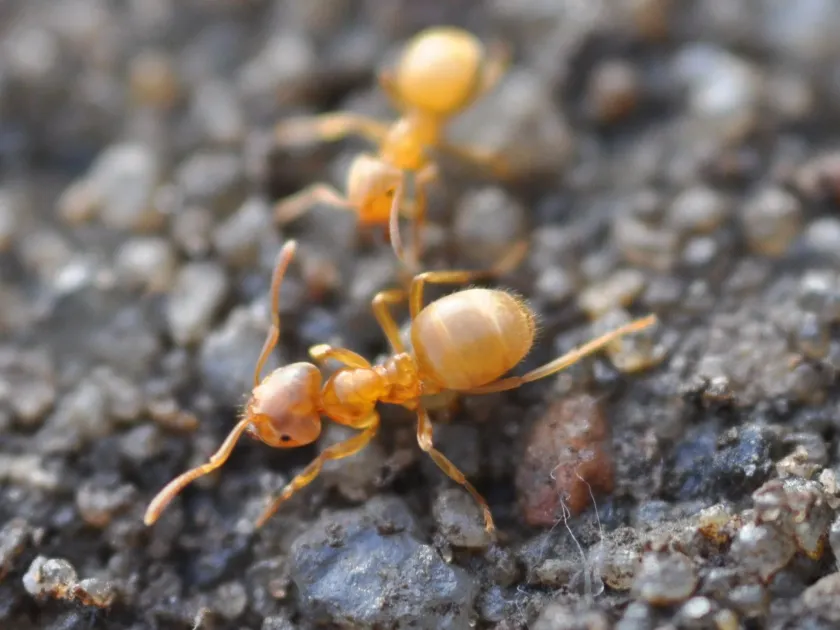
The yellow meadow ant (Lasius flavus) is a small insect belonging to the Formicidae family. They are known for their distinct pale yellowish or amber coloration, which provides excellent camouflage within the soil.
These ants are primarily subterranean, meaning they spend the vast majority of their life cycle beneath the surface. Workers typically measure between 2 and 4 mm, while the queen is larger.
They build complex networks of tunnels and galleries deep underground, often beneath turf, stones, or the roots of perennial garden plants and trees.
The species is known for long-lived colonies that can occupy the same location for many years. Due to their underground lifestyle, their eyes are significantly less developed than those of surface-dwelling ant species.
Their presence is often identified by the appearance of small, fine, loose soil mounds created as they expand their nest structures near plant bases.
What it damages
The primary agricultural damage caused by Lasius flavus is indirect. They function as guardians of aphids, protecting them from predators in exchange for honeydew, a sugary secretion vital to the ants' diet.
By establishing their nests directly within the root systems of crops, vegetables, and ornamentals, they mechanically disturb the soil, often causing roots to dry out or become prone to secondary infections.
The tunnels created by the ants can weaken the structural integrity of the soil around plants, leading to gaps that prevent proper nutrient and water uptake by the roots.
The massive colonies of aphids encouraged by these ants drain the plants of their sap, resulting in stunted growth, leaf curling, yellowing, and an overall reduction in crop yield and vigor.
On lawns, the unsightly mounds of soil they excavate disrupt the turf surface, creating uneven patches that interfere with maintenance and harvesting operations.
When it appears
The activity of the colony begins in early spring as soil temperatures rise. Workers emerge to repair damaged galleries and initiate the expansion of their food-gathering networks.
May and June are peak months for aphid farming. The ants actively transport aphids to fresh, succulent shoots of garden plants, significantly increasing the risk of plant infestation.
During the warmer summer months, particularly in humid or windless weather, the reproductive flight occurs, where winged individuals leave the nest to establish new colonies.
As autumn approaches, the ants transition to preparation for winter. They carefully move aphids and their eggs into deep underground chambers to protect them until the following spring.
During the winter, the entire colony retreats deep into the soil below the frost line, entering a period of low metabolic activity to survive the cold months.
Signs of infestation
The most prominent sign of an infestation is the appearance of small, granular piles of earth at the base of plants, flower beds, or scattered throughout the lawn.
A high density of aphids on plant stems and leaves, combined with the presence of small yellow ants, is a definitive indicator of an established symbiotic relationship.
Plants showing sudden signs of stress, such as wilting or chlorosis despite adequate watering, may indicate that their roots have been compromised by a nearby ant nest.
Digging into the soil near symptomatic plants often reveals the white larvae, pupae, and the intricate tunnel systems characteristic of this specific ant species.
The presence of stunted or sickly plants in localized patches is a strong signal that the root zone is being exploited by an underground ant colony.
Control measures
- Utilize professional-grade gel baits that ants transport into the nest, effectively neutralizing the queen and the entire brood.
- Regular cultivation and deep tilling of the soil around garden beds to disrupt the tunnels and discourage nest establishment.
- Focus on aphid management using soaps or biological controls, as eliminating the food source forces the ants to migrate elsewhere.
- Apply natural deterrents like essential oils, peppermint, or garlic-based sprays around the affected perimeter to discourage re-colonization.
- Maintain soil moisture levels to ensure the ground remains firm, making it less attractive for ant species that prefer loose, airy soil for nesting.
Taxonomy
- Latin name
- Lasius flavus
- Order
- Hymenoptera
- Family
- Formicidae
- EPPO code
- LASIFL
Discussion
No discussions yet — be the first.