
Slave-making ant
Lasius claviger
Description
How to identify
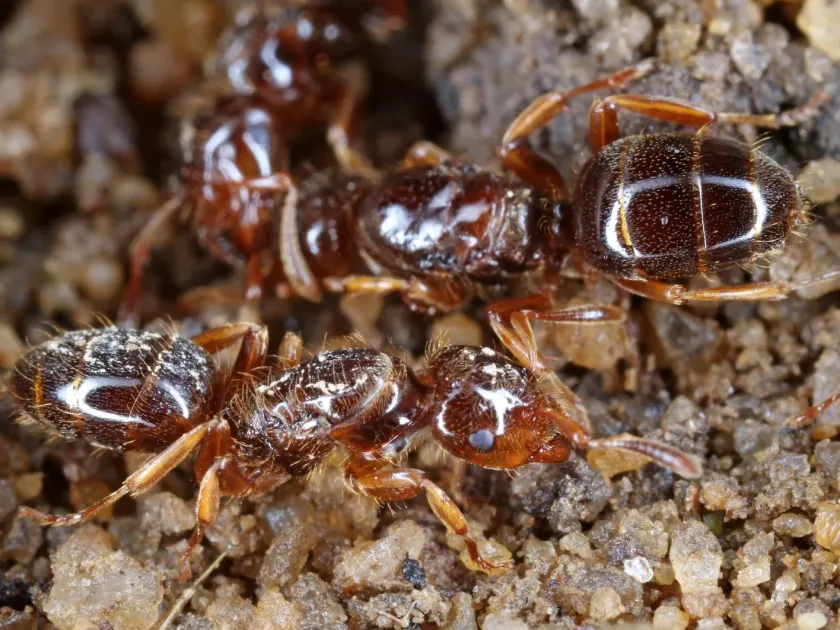
The slave-making ant, scientifically known as Lasius claviger, belongs to the Formicidae family. This species is often recognized by its distinct yellowish-brown color and a specific odor, which they release when threatened.
As subterranean insects, they rarely emerge on the surface. Their morphology is highly adapted to life in soil tunnels, and they are frequently overlooked until the colony reaches a large size.
This species is classified as a parasitic ant that frequently infiltrates the nests of other species to capture larvae. This behavior allows them to expand their workforce significantly without high energy expenditure.
Distinguishing Lasius claviger from other garden ants often requires examining morphological traits such as the arrangement of setae on the body under a microscope.
Queens of this species are larger than workers and are capable of establishing long-lived colonies. They prioritize deep soil depths, which makes physical destruction of their nests difficult without specialized tools.
What it damages
The primary agricultural threat posed by these ants is the active protection of aphids. By shielding aphids from predators, the ants facilitate the destruction of plant tissues by these sap-sucking pests.
Berry bushes and ornamental plants suffer greatly as aphids drain vital nutrients, leading to yellowing leaves, stunted development, and the eventual death of young shoots.
Tunneling activities of the slave-making ant directly disturb root systems. This underground construction creates air pockets that stress plant roots and inhibit water and nutrient absorption.
The secretion of honeydew by aphids, guarded by the ants, promotes the growth of sooty mold, which impairs photosynthesis and reduces the overall decorative value of plants.
In vegetable gardens, these ants can damage the delicate root structures of seedlings, making them more susceptible to drought and pathogenic soil fungi.
When it appears
The life cycle is closely linked to soil temperatures. Activity typically begins in early spring, as soon as the ground thaws and allows for subterranean movement.
Summer marks the peak period of activity, characterized by high rates of aphid farming and colony expansion. This is when the most visible damage to plants occurs.
As autumn approaches, the ants prepare for winter by moving to deeper, more thermally stable soil layers. They remain in a semi-dormant state until the following spring.
Their life cycle involves synchronized generations. Environmental factors such as soil moisture levels can significantly influence the speed of colony growth and reproduction.
Monitoring for signs of activity is most successful during the early growing season when colony expansion is at its most vulnerable stage.
Signs of infestation
A primary indicator of infestation is the dense concentration of ants around the stems of plants, particularly where aphids are found. They work aggressively to protect their food source.
The presence of small mounds of fine, displaced soil around the base of bushes is a classic sign of subterranean tunnel building by Lasius claviger.
Stunted growth or wilting in plants that receive adequate water is another sign of damage. This often indicates that the root system has been compromised by underground tunnels.
Sticky honeydew residues on leaves and stems provide clear evidence of an active aphid population, which is invariably managed by the local ant colony.
Unexpectedly high activity of insectivorous birds near the soil surface may indicate the presence of a colony, as they forage for ant larvae and workers.
Control measures
The most effective strategy for managing Lasius claviger is the use of slow-acting toxic baits. These are carried back to the colony, eventually eliminating the queen.
Controlling the aphid population is essential to reducing the ant presence. Without their managed "cattle," the ants are likely to move their colony to more favorable territory.
Sticky traps or physical barriers placed around the trunks of trees and bushes can disrupt the transit of worker ants, preventing them from accessing the aphid colonies.
- Regular soil tillage to disturb subterranean tunnel networks.
- Using essential oil sprays, such as peppermint or citrus, as natural deterrents.
- Application of bio-pesticides containing the Beauveria bassiana fungus.
Chemical control should be applied sparingly, targeting only the areas of high infestation to avoid harming beneficial soil insects and pollinators.
Taxonomy
- Latin name
- Lasius claviger
- Order
- Hymenoptera
- Family
- Formicidae
- EPPO code
- LASICL
Discussion
No discussions yet — be the first.