
Cornfield ant
Lasius alienus
Description
How to identify
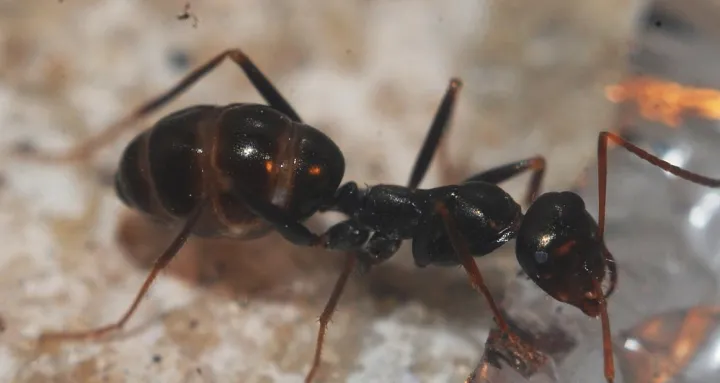
The cornfield ant Lasius alienus is a small insect, typically measuring 2.5 to 4.5 mm in length. Its body color ranges from dark brown to black, covered with fine, dense hairs that give the ant a matte appearance.
Unlike other common house-invading ants, this species prefers nesting in open areas, under stones, or within dry, warm soil. They build extensive underground tunnel systems that can support large colonies, making them a common sight in cultivated fields.
Identification can be challenging for non-specialists due to their similarity to other Lasius species. Accurate recognition usually involves examining the lack of long standing hairs on the scapes and legs, often requiring a magnifying lens.
Colonies are highly mobile and industrious. When a colony is disturbed, they exhibit rapid and chaotic movement, quickly spreading across the soil surface to relocate their larvae or protect the queen.
They are primarily outdoor dwellers, which distinguishes them from species that seek shelter inside residential buildings, though they remain significant threats to agriculture and horticulture.
What it damages
The cornfield ant is notorious for its mutualistic relationship with aphids and mealybugs. By protecting these sap-sucking insects from predators and transporting them to healthy plants, the ants directly contribute to widespread pest infestations.
Root system damage is a frequent consequence of their nesting habits. As they excavate soil around the roots of vegetable crops, they create air pockets that cause roots to dry out, leading to stunted growth or premature wilting.
They are known to damage strawberry and other fruit crops by nibbling on the surface of ripe berries to access the sugary juices. This feeding damage often invites secondary pathogens like mold and rot to destroy the fruit.
In greenhouses and seedling trays, their activity can be devastating. They frequently nest inside containers, causing the soil to shift and depriving young roots of essential contact with moist, nutrient-rich substrate.
Furthermore, these ants act as mechanical vectors for various plant diseases. By moving between plants to tend to aphids, they spread viral and fungal spores, further weakening the health of the vegetable or flower garden.
When it appears
The activity cycle of the cornfield ant begins in early spring, as soon as the soil temperatures rise consistently above 10°C. Initial movement is focused on scouting for food and maintaining the entrance of the nest.
Summer is the peak season for their activity, specifically from June through August. During these months, the colony expands rapidly, and their attendance of aphid colonies on fruit trees and bushes becomes highly intense.
As autumn temperatures drop, the ants gradually retreat deeper into the soil to reach levels that remain stable during the winter. They enter a state of dormancy, staying inactive within their nests until the next spring warming period.
Signs of infestation
The most visible sign of an infestation is the presence of small dirt mounds or tunnel openings in the soil around plant stems. If these appear in clusters, it indicates a well-established colony nearby.
Frequent observation of ants traveling in distinct lines to reach trees or ornamental plants is a clear indicator of aphid management. If you see ants patrolling leaves, there is likely a thriving colony of sap-suckers present.
Areas of the lawn or garden beds where grass or seedlings suddenly turn yellow and wither are often caused by subterranean nesting that has compromised the plant's root stability.
Control measures
Successful management of the cornfield ant requires a holistic approach that targets the nest itself rather than just the visible workers. Baiting is considered the most efficient long-term solution.
- Deploying slow-acting insecticidal baits that the ants carry back to the queen and larvae.
- Regular cultivation of soil around plants to disrupt nest structure and discourage colonization.
- Applying sticky barriers to tree trunks to prevent ants from accessing their aphid "herds" in the canopy.
- Prioritizing aphid control, as removing their food source diminishes the ants' interest in the plants.
- Using natural deterrents like diatomaceous earth or horticultural oils around the base of vulnerable plants.
Persistent monitoring and consistent application of these methods will effectively lower the population of Lasius alienus in your garden without the need for excessive chemical spraying.
Taxonomy
- Latin name
- Lasius alienus
- Order
- Hymenoptera
- Family
- Formicidae
- EPPO code
- LASIAL
Discussion
No discussions yet — be the first.