
Meat ant
Iridomyrmex purpureus
Description
How to identify
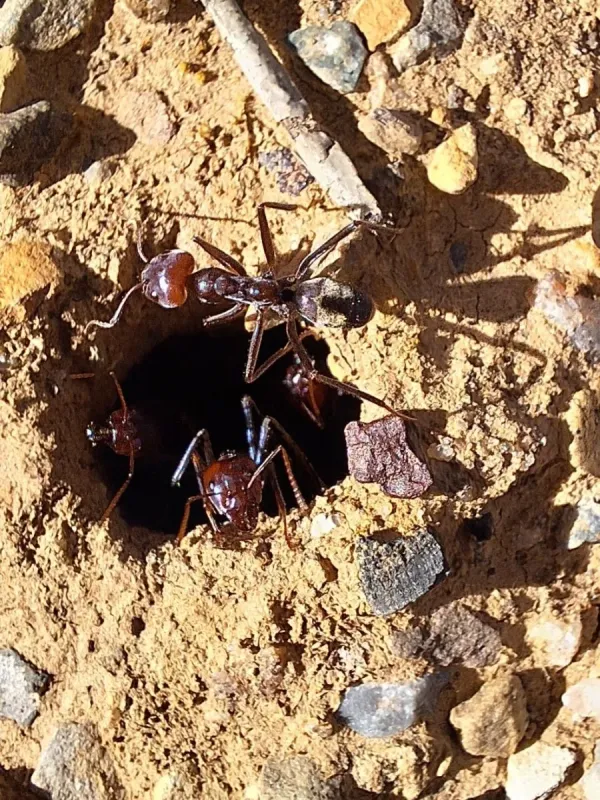
The meat ant (Iridomyrmex purpureus) is a prominent member of the Formicidae family, widely known for its aggressive territorial nature and complex colony structures.
Workers are medium-sized, typically measuring 5-7 mm in length, with a distinctive reddish-purple head and thorax contrasting with a darker, bluish-black abdomen.
They are famous for constructing extensive mound nests, often decorated with small pebbles, gravel, or sand, which serve as landmarks for their foraging trails.
These ants are highly efficient foragers, occupying large territories and displacing other ant species through sheer numbers and aggressive behavior.
The colonies are characterized by a highly developed social organization, with multiple entrance holes leading to deep, well-ventilated tunnel systems.
What it damages
The primary economic damage caused by meat ants stems from their mutualistic relationship with sap-sucking insects like aphids, scales, and mealybugs.
Meat ants actively farm these pests, collecting the honeydew they excrete, and in return, they protect these insects from natural predators like ladybirds and lacewings.
This protection allows aphid populations to explode, leading to heavy infestation, leaf curling, shoot deformation, and significant loss of plant vigor.
In some cases, meat ants can cause direct damage to tender plant tissues, including buds and young flowers, as they forage for moisture and nutrients.
Nesting activities can also be detrimental, as digging tunnel networks directly beneath the root zone can disrupt plant water uptake and weaken the root system.
When it appears
The activity level of meat ants is strictly temperature-dependent, with foraging peaking during the warmer months of late spring and throughout the summer.
During the spring, as soil temperatures rise, the colony increases its activity to expand nest sites and initiate the season's foraging efforts.
Mid-summer represents the period of maximum worker activity, as high demands from the brood require constant food supply from aphid colonies.
As autumn approaches and temperatures drop, foraging activity starts to wane, and the ants focus on securing the nest for the cooler months.
In warmer climates, these ants may maintain activity for most of the year, posing a continuous threat to susceptible agricultural and ornamental plantings.
Signs of infestation
Clear evidence of an infestation includes the presence of well-defined ant trails moving up and down the trunks of trees or stems of shrubs.
Large, visible mounds made of gravel or small stones in garden beds or around the base of trees are classic indicators of a nearby meat ant nest.
The presence of shiny, sticky honeydew on foliage is a strong indicator that sap-sucking insects are present and likely being tended by meat ants.
A sudden decline in the effectiveness of natural aphid predators often signals that ants are actively interfering with the biological control process.
Wilting of plants without obvious signs of disease can often be traced back to subterranean root damage caused by the excavation of nest galleries.
Control measures
Managing meat ants requires an integrated approach that targets both the ant colony itself and the honeydew-producing pests they protect.
The use of slow-acting gel baits is highly effective, as the worker ants transport the bait back to the nest, eventually eliminating the queen and the entire colony.
Applying sticky adhesive bands or physical barriers to the trunks of fruit trees effectively prevents the ants from reaching the canopy and protecting aphids.
Chemical control of aphid populations is essential, as removing the source of the honeydew makes the plants less attractive to the ants, forcing them to relocate.
- Disturbing nest mounds through repeated cultivation and soil turnover.
- Maintaining a weed-free area to remove secondary food sources.
- Encouraging natural predators by providing diverse habitats.
- Regular monitoring and spot-treating ant trails with contact insecticides.
Taxonomy
- Latin name
- Iridomyrmex purpureus
- Order
- Hymenoptera
- Family
- Formicidae
- EPPO code
- IRIDPU
Discussion
No discussions yet — be the first.