
Iridomyrmex gracilis
Iridomyrmex gracilis
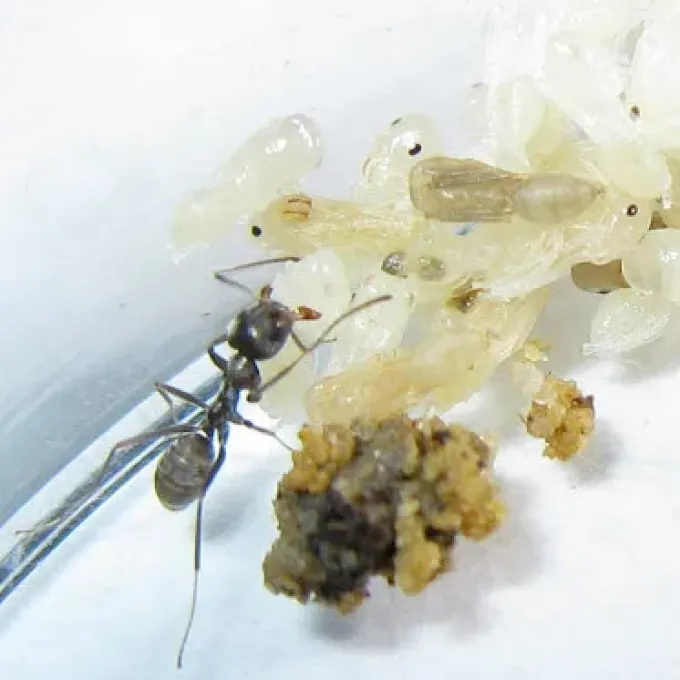
Description
How to identify
Iridomyrmex gracilis is an ant species within the order Hymenoptera, family Formicidae. They are recognized by their slender bodies and fast, erratic movements, often observed on vegetation.
These ants are generally small, exhibiting a dark brown to black coloration, occasionally with a slight metallic sheen. Their body structure is elongated, which distinguishes them from many other local species.
Their colonies usually inhabit areas with loose soil, often choosing spots near the base of plants. This positioning provides them with quick access to both foraging areas and underground protection.
The biology of this species is heavily centered on mutualism with sap-sucking insects like aphids and scale insects. They provide protection to these pests in exchange for honeydew.
The life cycle follows a holometabolous development, including egg, larval, pupal, and adult stages. Larvae are dependent on protein-rich food brought into the nest by worker ants.
What it damages
The primary damage caused by Iridomyrmex gracilis is indirect. By protecting aphids and scale insects, they allow these pests to proliferate, leading to severe sap depletion in plants.
Plants infested with aphid colonies guarded by these ants show stunted growth, leaf curling, and yellowing. The constant loss of sap prevents the plant from maintaining its physiological balance.
In some cases, these ants directly damage plant tissue. They have been observed chewing on the epidermal layer of young shoots and buds to access plant juices or reach protected glands.
Their nesting habits can negatively impact the root system of seedlings. Continuous digging around the roots causes soil loosening and dehydration, which stresses the plant significantly.
The presence of these ants is often associated with a decline in harvest quality. Reduced nutrient intake leads to lower yield and increases the plant's susceptibility to secondary pathogens.
When it appears
Activity starts in early spring as the soil warms. Once the temperature reaches a sufficient threshold, workers begin foraging and expanding their search for honeydew sources.
Peak activity occurs throughout the summer months when aphid populations are at their highest. During this time, the ants are highly aggressive in defending their "livestock" on plants.
In late summer and early autumn, the ants focus on building reserves for the winter period. Activity continues until temperatures drop significantly enough to trigger dormancy.
Wintering occurs deep within the soil, where the colony remains inactive to conserve energy. The nests are maintained at stable temperatures, allowing them to survive cold spells.
In warmer climates or during mild seasons, some level of foraging activity can persist later into the year, provided that temperatures remain within the active range.
Signs of infestation
The most prominent sign is the presence of established ant trails leading directly to the tips of plant branches. These trails indicate active guarding of aphid or scale populations.
Sticky honeydew secretions found on foliage are a clear indicator of infestation. This substance often promotes the growth of sooty mold, which further degrades plant health.
Small mounds or holes appearing near the base of stems or trunks are signs of nest building. This activity indicates that the colony is firmly established in the immediate vicinity.
Gradual wilting of young shoots and deformation of leaves, even in the absence of obvious diseases, are symptoms of heavy aphid pressure facilitated by these ants.
Aggressive swarming of ants on fruits or flowers is another alert signal. It shows that the ants are actively utilizing the plant as a food source or protection zone.
Control measures
Effective control requires an integrated approach that targets both the ants and the sap-sucking insects they protect. Breaking the symbiosis is key to reducing pest populations.
Physical barriers like sticky bands around tree trunks are highly successful. By blocking access, you prevent the ants from reaching the foliage and protecting aphids from predators.
Systemic insecticides are recommended for controlling the aphid population. Once the aphids are eliminated, the ants naturally move away in search of other food sources.
- Deploying bait stations with attractants and slow-acting toxins to eradicate the colony.
- Regular soil cultivation around plants to disrupt underground nest structures.
- Applying entomopathogenic fungi as a biological alternative for soil-based ant control.
When applying any chemical treatment, always ensure the products are suitable for the specific crop and follow the instructions to avoid phytotoxicity and ensure safety.
Taxonomy
- Latin name
- Iridomyrmex gracilis
- Order
- Hymenoptera
- Family
- Formicidae
- EPPO code
- IRIDGR
Discussion
No discussions yet — be the first.