
Iridomyrmex
Iridomyrmex
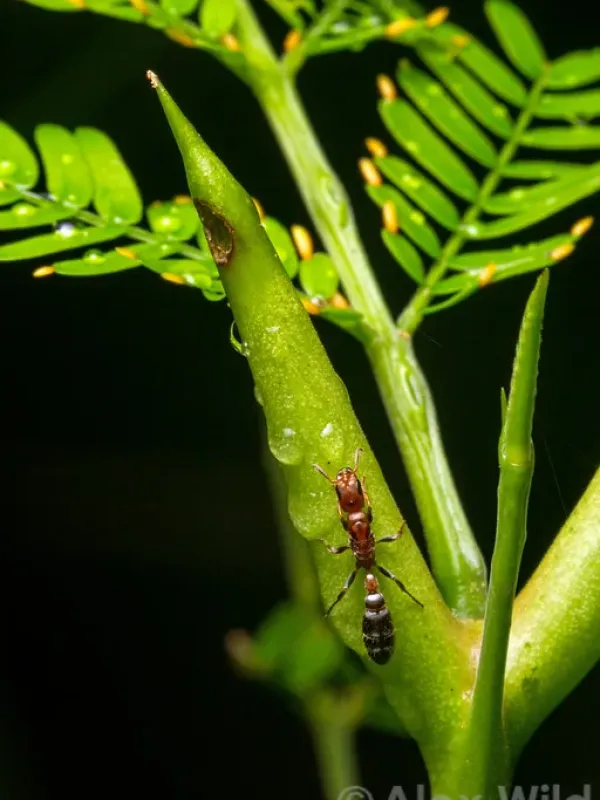
Description
How to identify
The genus Iridomyrmex belongs to the family Formicidae, order Hymenoptera. Known primarily as Australian ants, they are recognizable by their rapid, erratic movement and distinct metallic sheen, which often includes shades of green, blue, or purple.
Adult workers are typically small, ranging from 2 to 5 mm in length. They possess powerful mandibles and specialized glands that emit strong, distinctive chemical signals used for communication and defense.
These ants build colonies in a variety of environments, including underground nests, under rocks, or within decaying wood. Their social structure is highly organized, with aggressive workers protecting their foraging territories.
The life cycle proceeds from egg to larva, pupa, and finally, the adult worker. The queen is responsible for colony expansion, and many species within this genus have high reproductive rates, allowing for quick population growth.
Due to their highly adaptive nature, some species are considered invasive, capable of outcompeting native ant populations and disturbing the local ecological balance in managed gardens and farms.
What it damages
The primary damage caused by Iridomyrmex is indirect. They function as mutualistic partners to sap-sucking pests, most notably aphids, scale insects, and mealybugs, protecting them from natural predators like ladybugs.
In exchange for this protection, the ants consume honeydew, a sugary substance secreted by the pests. This relationship leads to increased pest feeding, which severely stresses the host plants by extracting essential nutrients.
The accumulation of honeydew on foliage provides an ideal environment for sooty mold, a fungus that covers leaves in a black layer, effectively blocking sunlight and significantly hindering the photosynthesis process.
Furthermore, if ant nests are located near plant roots, they can disturb the soil structure and cause root system damage. This results in stunted growth, yellowing foliage, and a general decline in plant vigor.
Mass infestations lead to significant yield losses, as plants are weakened and become more susceptible to secondary viral infections and bacterial pathogens exacerbated by pest feeding sites.
When it appears
Ant activity is heavily dependent on ambient and soil temperatures. Iridomyrmex typically emerge from their overwintering stage once temperatures consistently stay above 10–12°C.
The peak of their activity occurs during the late spring and summer months. During this time, workers are constantly moving up and down plant stems to manage their "herds" of sap-sucking pests.
As autumn approaches and temperatures drop, their foraging intensity decreases. They begin to retreat deeper into their nests, focusing on overwintering strategies to survive the colder season.
Climatic factors play a crucial role; for example, prolonged dry spells may force ants to congregate in well-irrigated garden beds, causing higher localized damage to those specific plants.
Early spring monitoring is essential, as the timing of the ants' emergence often coincides with the budding of fruit trees and the arrival of the first aphid generations of the year.
Signs of infestation
A key indicator of their presence is the formation of persistent ant trails along tree trunks and stems. These columns represent the primary routes from the nest to the feeding sites.
If a colony of aphids or mealybugs is found on a plant, look for the presence of ants nearby. If the ants actively defend the pest colony when approached, it confirms a mutualistic relationship.
Sticky, clear liquid (honeydew) on the leaves is a classic symptom. As time progresses, this sticky layer often turns black due to the growth of sooty mold, indicating a long-standing infestation.
Nests are often visible as small mounds of disturbed soil near the base of plants. In some cases, cracks in the bark may serve as entry points for the ants to access the upper parts of the plant.
- Visible ant trails along the branches and trunks.
- Dense clusters of aphids or scales on young growth.
- Sticky honeydew residues covering the foliage.
- Sooty mold growth on leaves and stems.
- Visible ant mounds near plant roots.
Control measures
The most effective control strategy involves a dual approach: eliminating the sap-sucking pests that provide the food source for the ants, and directly targeting the ant colony itself.
Mechanical barriers, such as sticky bands or specialized tree trunk barriers, are highly effective at preventing ants from reaching the canopy, effectively isolating the pests from their protectors.
Using slow-acting bait stations containing gels or powders allows foraging workers to carry the poison back to the queen and the rest of the colony, leading to the eradication of the entire nest.
Cultural practices, including regular weeding and soil cultivation in the root zones, disrupt the ant nest stability and limit their ability to thrive near sensitive plants.
When applying chemicals, choose products that are compatible with integrated pest management (IPM) to minimize harm to beneficial insects while effectively controlling the target species.
Taxonomy
- Latin name
- Iridomyrmex
- Order
- Hymenoptera
- Family
- Formicidae
- EPPO code
- IRIDSP
Discussion
No discussions yet — be the first.