
Iberoformica subrufa
Iberoformica subrufa
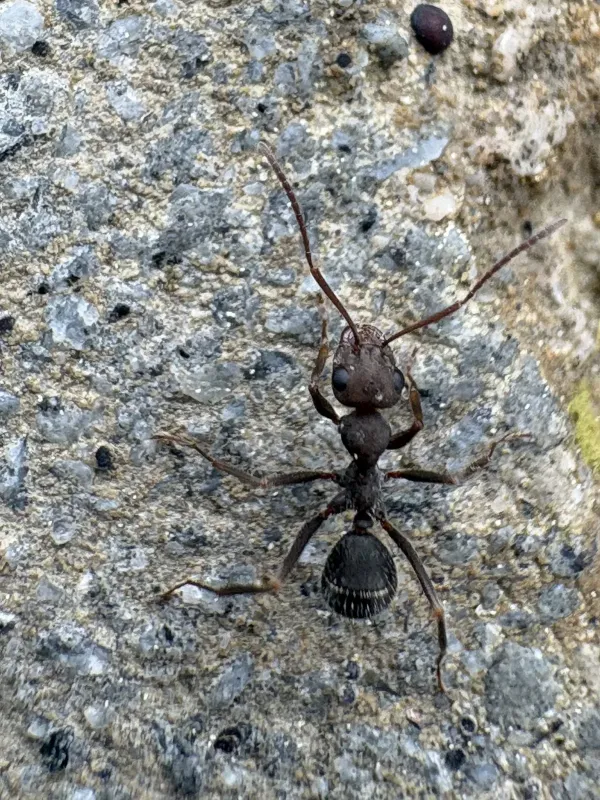
Description
How to identify
Iberoformica subrufa is a species of ant belonging to the family Formicidae and the order Hymenoptera, endemic to the Iberian Peninsula.
The worker ants are characterized by their reddish-brown coloration, which distinguishes them from other local ant species in the region.
They prefer living in arid and semi-arid environments, often establishing colonies in rocky areas or dry soil beneath debris to maintain optimal microclimate conditions.
The social structure follows a typical ant colony model with distinct castes, where workers are highly active throughout the day, particularly during sunny weather.
Their biological adaptations allow them to thrive in various habitats, and their presence in agricultural areas is often linked to their role as tenders of sap-sucking insects.
What it damages
The primary agricultural damage caused by Iberoformica subrufa is indirect, resulting from their mutualistic relationship with aphid and scale insect populations.
These ants protect the sucking insects from natural predators, such as ladybirds and hoverfly larvae, allowing aphid colonies to grow and thrive on crops.
By constantly tending and relocating aphids to fresh plant growth, the ants ensure the continued destruction of the plant's health and vitality.
Physical damage can occur when ants build nests around the root systems of plants, leading to soil disturbance and potential root drying or exposure.
In cases of high infestation, the ants themselves may damage flower buds or young shoots while foraging for plant sugars, affecting fruit development.
When it appears
Colony activity commences in early spring as temperatures rise, signaling the end of the winter dormancy period spent deep within the nest.
The summer months represent the peak of their activity, aligning with the rapid vegetative growth phase of crops and the peak population of aphids.
As autumn approaches and temperatures drop, the colony gradually reduces activity levels and eventually retreats to subterranean chambers to overwinter.
The nuptial flight, essential for the spread and establishment of new colonies, typically occurs during late spring or early summer when weather is stable.
Monitoring for their activity during the growing season is crucial, as this is when the link between ants and aphid-induced plant damage is strongest.
Signs of infestation
The presence of distinct ant trails moving up stems or trunks of plants toward colonized areas is a primary indicator of their activity.
Leaves that are curled, sticky due to honeydew, or covered in black sooty mold are clear signs of an underlying aphid infestation maintained by the ants.
The discovery of nest entrances or excavated soil mounds near the base of ornamental or food-producing plants confirms their presence.
A sudden decline in the effectiveness of natural biological control agents against aphids is often indicative of the ants' protective behavior.
Stunted plant growth and premature wilting in specific areas of a garden or orchard often correlate with heavy ant nesting and aphid farming.
Control measures
Effective management requires a multi-faceted approach focusing on both the ants and the associated aphid populations they protect.
- Deploying sticky barriers or physical traps on tree trunks to block ant access to the canopy.
- Using slow-acting bait stations that allow workers to carry toxic substances back to the queen and brood.
- Applying registered insecticide treatments directly to nest entrances when local regulations permit.
- Regular cultivation and soil disturbance near the root zone to disrupt nesting sites and discourage colonization.
- Utilizing botanical or biological aphidicides to break the mutualistic link and reduce the ants' interest in the plants.
Taxonomy
- Latin name
- Iberoformica subrufa
- Order
- Hymenoptera
- Family
- Formicidae
- EPPO code
- FORMSB
Discussion
No discussions yet — be the first.