
Shining guest ant
Formicoxenus nitidulus
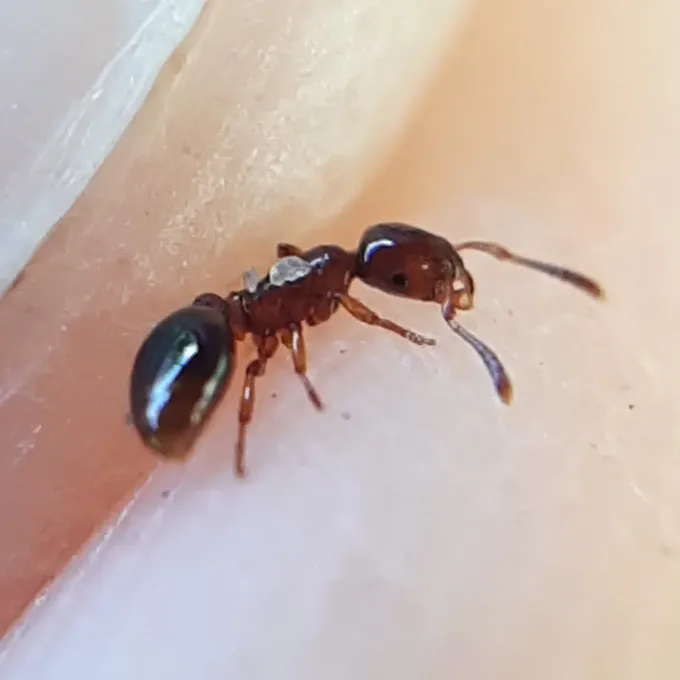
Description
How to identify
The shining guest ant, scientifically known as Formicoxenus nitidulus, is a tiny species belonging to the family Formicidae and the order Hymenoptera.
Workers are very small, typically measuring only 2–3 mm in length, with a shiny dark-brown or black exoskeleton that gives the species its name.
This species is an obligate inquiline, meaning it lives permanently within the nests of other ant species, particularly the wood ants of the genus Formica.
Because they spend their entire life cycle hidden inside the host's mounds, they are rarely seen by gardeners or farmers during routine field inspections.
Accurate identification requires professional entomological examination under magnification to verify specific structural characteristics of the thorax and head.
What it damages
The damage caused by this ant is indirect but economically relevant. By cohabitating with large mound-building ants, they help maintain colonies that protect aphids.
Aphids are significant agricultural pests that damage crops by extracting sap, which leads to stunted growth and leaf curling in fruit trees and ornamental shrubs.
The association between the host ants and aphids creates a protected environment for the aphids, preventing their natural predators from accessing them.
Excessive secretion of honeydew by aphids, promoted by ant tending, encourages the growth of sooty mold, which blocks photosynthesis in affected leaves.
Ultimately, this indirect relationship weakens the overall vigor of infested plants and can lead to yield losses in professional orchards and nursery settings.
Control measures
Management of the shining guest ant is integrated into general pest control programs focused on controlling aphids and ant movement on host plants.
Applying sticky bands around the trunks of fruit trees is a highly effective mechanical method to prevent ants from reaching the canopy and tending aphids.
Using systematic or contact insecticides to control aphid populations on crops remains the primary strategy for disrupting the ant-aphid mutualism.
Promoting a healthy ecosystem that supports natural predators of aphids, such as ladybugs and lacewings, helps suppress the aphid population naturally.
Avoid destruction of large ant mounds where possible, as they serve important ecological roles, and focus interventions on protecting specific crop structures.
Taxonomy
- Latin name
- Formicoxenus nitidulus
- Order
- Hymenoptera
- Family
- Formicidae
- EPPO code
- FORXNI
Discussion
No discussions yet — be the first.