
Japanese yellow ant
Formica yessensis
Description
How to identify
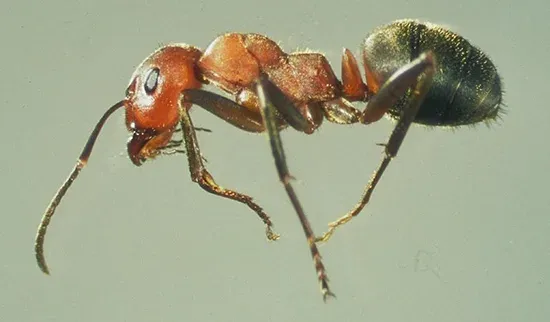
The Japanese yellow ant (Formica yessensis) is a member of the Hymenoptera order and the Formicidae family. It is a polygynous species, meaning its colonies are governed by multiple queens, leading to large and persistent populations.
Workers are typically yellowish-brown in color and display high levels of activity. They are known for their aggressive territorial behavior, defending their resources and nesting sites against potential intruders.
Their life cycle consists of complete metamorphosis: egg, larva, pupa, and adult. The colony structure allows them to expand rapidly across garden plots, making them a formidable presence in agricultural areas.
Nesting habits include creating extensive underground tunnel systems. These nests are often hidden beneath rocks, soil, or plant roots, making them difficult to locate without targeted observation.
The species is highly adaptable and capable of forming large supercolonies through the merger of multiple smaller nest units, allowing for significant dominance in garden ecosystems.
What it damages
The primary agricultural damage caused by these ants is the symbiotic relationship they maintain with aphids and scale insects, which they protect in exchange for honeydew.
By preventing natural predators like ladybugs from feeding on aphids, the ants allow the aphid populations to explode, causing severe stress to fruit trees, shrubs, and garden flowers.
Direct damage occurs through root disturbance, as the ants build galleries that expose roots to air, leading to drying and mechanical root system failure, especially in young seedlings.
The accumulation of honeydew on foliage creates an ideal environment for sooty mold growth, which inhibits photosynthesis and can weaken or eventually kill the host plant.
Gardeners often suffer from the reduced vigor of crops that are perpetually infested by ant-tended aphids, resulting in lower fruit yields and poor quality of ornamental flowering plants.
Signs of infestation
Visible trails of ants climbing up and down the stems and trunks of plants are the most common indicator of their presence and active patrolling.
Clusters of aphids concentrated on new growth points and soft shoots often appear protected by a guard of ants, which is a definitive sign of infestation.
Small mounds of soil appearing near the bases of plants or along garden paths are clear indicators of subterranean nest entrances.
The presence of a sticky, shiny substance (honeydew) on leaves, followed by the appearance of dark sooty mold, suggests that ants have successfully established their symbiotic aphid farms.
Wilting of healthy-looking seedlings during dry periods, often without clear fungal or insect attack above ground, can point to subterranean root damage caused by ant tunneling.
Control measures
Successful management of the Japanese yellow ant involves a multi-pronged approach that combines physical barriers, baiting, and cultural practices to minimize their impact.
Applying sticky adhesive barriers around the trunks of trees prevents the ants from accessing the upper parts of the plant, effectively cutting off their transport for aphids.
The use of slow-acting toxic baits is highly recommended, as the worker ants carry the bait back to the nest, allowing the poison to reach and eliminate the queens and the rest of the colony.
Regular cultivation of the soil around vulnerable plants is an effective cultural practice, as it disrupts nesting galleries and forces the colony to relocate elsewhere.
Promoting a healthy garden biodiversity by encouraging natural aphid predators helps reduce the need for harsh chemicals and makes the environment less hospitable to the Japanese yellow ant.
Taxonomy
- Latin name
- Formica yessensis
- Order
- Hymenoptera
- Family
- Formicidae
- EPPO code
- FORMYE
Discussion
No discussions yet — be the first.