
Silky field ant
Formica subsericea
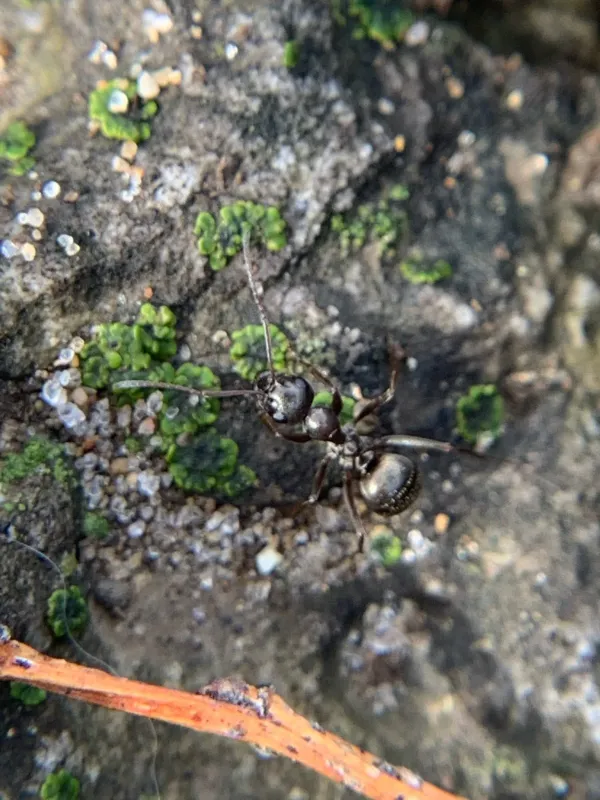
Description
How to identify
The Silky Field Ant, scientifically known as Formica subsericea, belongs to the Hymenoptera order and the Formicidae family. It is a medium-sized ant species, typically dark brown or black in color with a distinctive silky sheen on its body, which gives it its common name.
Workers of this species are highly active and possess strong mandibles. They are generally scavengers but are known for their habit of tending to sap-sucking insects like aphids, which makes them a concern in agricultural and garden environments.
Their colonies are usually located in the soil, often under rocks, logs, or in the root zones of trees and shrubs. They are capable of forming extensive underground tunnel systems that can disturb the soil structure around the plant's roots.
Like other ants, Formica subsericea follows a complete metamorphosis life cycle, consisting of eggs, larvae, pupae, and adults. The population size within a colony can reach thousands, with one or more queens overseeing the reproduction.
In terms of behavior, they are aggressive toward competitors and are highly attentive to their aphid "herds," which they protect vigorously from predators and parasites to ensure a steady supply of honeydew.
What it damages
The primary damage caused by Formica subsericea is indirect. By protecting aphids, mealybugs, and scale insects from natural predators like ladybugs, they allow these pests to proliferate, leading to severe infestation of garden plants.
The high concentration of aphids leads to excessive sap removal from the plant, causing stunted growth, leaf curling, and yellowing. In severe cases, the entire plant may weaken and become susceptible to secondary infections.
The secretion of honeydew by the aphids managed by these ants provides a substrate for sooty mold growth. This black fungus covers leaves and stems, significantly reducing the plant's ability to photosynthesize effectively.
In addition, their nest-building activity at the base of young plants or trees can damage fine root systems, leading to nutrient and water uptake issues. This can be particularly detrimental to seedlings and newly planted trees.
The ants effectively maintain pest populations that would otherwise be controlled by the garden's ecosystem, making them a significant factor in reduced fruit and vegetable yields.
Signs of infestation
The most visible sign of an Formica subsericea infestation is the constant movement of ants along stems and branches. They usually follow clear trails from the ground up to the infested foliage where aphids are active.
Sticky residue, known as honeydew, found on the upper surfaces of lower leaves is a strong indicator of aphid presence and the likely presence of ants tending to them.
You may also observe the physical presence of anthills or disturbed soil patches around the bases of trees, shrubs, or along garden walkways, indicating that a colony is established nearby.
Leaf yellowing or distortion on young plant tips is a classic symptom of high aphid density, which, in a garden context, is almost always associated with ant activity.
- High ant traffic on plant stems.
- Visible aphid colonies on new growth.
- Sticky leaves covered in honeydew.
- Presence of black sooty mold on foliage.
- Slow or stunted growth of young plants.
Control measures
Effective management starts with controlling the aphid population. Once the food source (honeydew) is removed, the ants will lose their primary motivation to occupy the plant and may relocate.
Applying sticky barriers or "tanglefoot" bands around the trunks of trees and shrubs is a highly effective, non-toxic way to prevent ants from reaching the foliage and protecting the aphids.
For more severe cases, using ant baits containing slow-acting insecticides is recommended. The workers carry the poisoned food back to the queen and the colony, which helps to eliminate the source of the infestation.
Regular cultivation and soil disturbance near the base of plants can disrupt established nests and tunnels, forcing the colony to relocate. This is a simple yet effective cultural control method.
Promoting a garden ecosystem that attracts natural predators of aphids, such as lacewings and ladybirds, will help naturally suppress the pest population, thereby reducing the ants' influence on your plants.
Taxonomy
- Latin name
- Formica subsericea
- Order
- Hymenoptera
- Family
- Formicidae
- EPPO code
- FORMSU
Discussion
No discussions yet — be the first.