
Red-backed ant
Formica rufibarbis
Description
How to identify
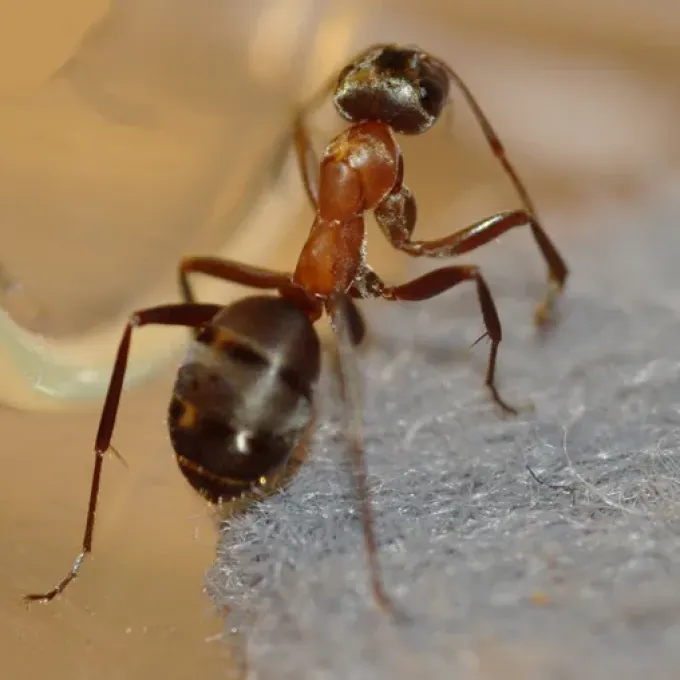
The red-backed ant (Formica rufibarbis) is a species of the Formicidae family within the order Hymenoptera. It is a medium-sized ant, distinguished by its characteristic reddish-brown coloration on the head and thorax, which serves as a key identification feature.
This species primarily leads a terrestrial lifestyle, favoring open, well-sunned areas with moderate moisture. They establish nests in the ground, often marked by small soil mounds or simple entry holes on the surface.
Red-backed ants are known for their diurnal activity and an aggressive temperament when defending their colony. They are commonly found in meadows, steppe regions, and agricultural landscapes where they forage for various food sources.
The biology of the species revolves around a social structure centered on one or more queens. The development process includes egg, larva, pupa, and adult stages, with worker ants providing constant care and protection for the brood.
In agricultural settings, they are often considered pests due to their strong symbiotic relationships with sap-sucking insects, which creates significant challenges for maintaining healthy crops and controlling secondary pest populations.
What it damages
The primary damage caused by red-backed ants is not direct herbivory, but rather the protection of honeydew-producing insects such as aphids, scale insects, and mealybugs. By guarding these pests, the ants enable them to proliferate rapidly.
Aphid colonies protected by ants cause severe stress to plants by extracting sap from tender shoots and leaves. This leads to stunted growth, leaf curling, and overall decline in plant vigor, rendering crops susceptible to secondary infections.
The honeydew secreted by aphids serves as a substrate for sooty mold fungi. These fungi cover leaves with a black film, blocking sunlight and hindering photosynthesis, which leads to substantial yield losses in fruit and vegetable gardens.
Additionally, ants may physically damage flowers and fruit buds while foraging. They can also disturb the soil around young seedlings, causing the roots to dry out or damaging delicate root systems during their nest construction activities.
Furthermore, their presence in the root zone can disrupt soil structure, potentially leading to issues with nutrient uptake and water retention, which are critical for the healthy development of young or sensitive agricultural crops.
When it appears
Activity of the red-backed ant begins in early spring as soil temperatures rise. Worker ants emerge to seek food and prepare the colony for the growing season, which aligns with the start of aphid reproduction cycles.
During the summer months, their activity reaches its peak. This corresponds with the period of rapid plant growth and high aphid populations, leading to increased ant traffic across stems and trunks as they manage their honeydew sources.
As summer wanes and autumn approaches, the colony shifts its focus toward accumulating resources for overwintering. Activity levels gradually decrease as the ants move into deeper soil layers where temperatures remain more stable.
Nuptial flights, during which new queens and males emerge for mating and colony dispersal, typically occur in the warm months of the year, allowing the population to expand its territory across the garden.
Because they overwinter deep underground, red-backed ants are highly resilient to cold temperatures. This ensures their survival throughout the winter, allowing for a rapid resurgence of the population as soon as the weather warms up again.
Signs of infestation
Frequent ant trails along the trunks of trees and stems of plants are the most visible indication that the ants are actively tending to aphid colonies. Monitoring these trails often reveals the primary locations of pest infestations.
An abundance of aphids on tender shoots, especially when they are not being predated by natural enemies like ladybirds, is a strong indicator that red-backed ants are actively protecting the pests.
The presence of a black, sooty fungal layer on foliage is a secondary but reliable symptom. This suggests that sap-sucking pests have been present on the plant for a significant time under the protection of the ants.
Small mounds of soil or entry holes near the base of shrubs and vegetable beds confirm the presence of a nest. These are often tucked away under mulch, garden debris, or rocks, making them easy to overlook.
The sudden wilting of young seedlings or ornamental plants, despite adequate irrigation, can be a sign that ant nest construction is causing physical damage to the root system, inhibiting water uptake.
Control measures
The most effective control strategy is to target the aphids themselves. By applying systemic insecticides to manage aphid populations, the ants lose their primary food source, often forcing them to relocate or reducing their numbers.
Installing sticky bands on the trunks of fruit trees provides a physical barrier that prevents ants from climbing to the canopy, effectively stopping them from transporting pests to new growth areas.
The use of bait stations containing slow-acting insecticides (gel or granules) is highly effective. Worker ants carry the toxic bait back to the nest, ensuring the elimination of the entire colony, including the queen.
Regular soil cultivation, such as hoeing or shallow tilling during the spring and autumn, disrupts ant galleries and nest structures. This persistent disturbance discourages ants from settling in the garden area.
Integrated pest management, including the introduction of natural predators of aphids and the use of natural repellents, can contribute to long-term control. However, these methods require consistency and monitoring to maintain their effectiveness throughout the growing season.
Taxonomy
- Latin name
- Formica rufibarbis
- Order
- Hymenoptera
- Family
- Formicidae
- EPPO code
- SERVRU
Discussion
No discussions yet — be the first.